
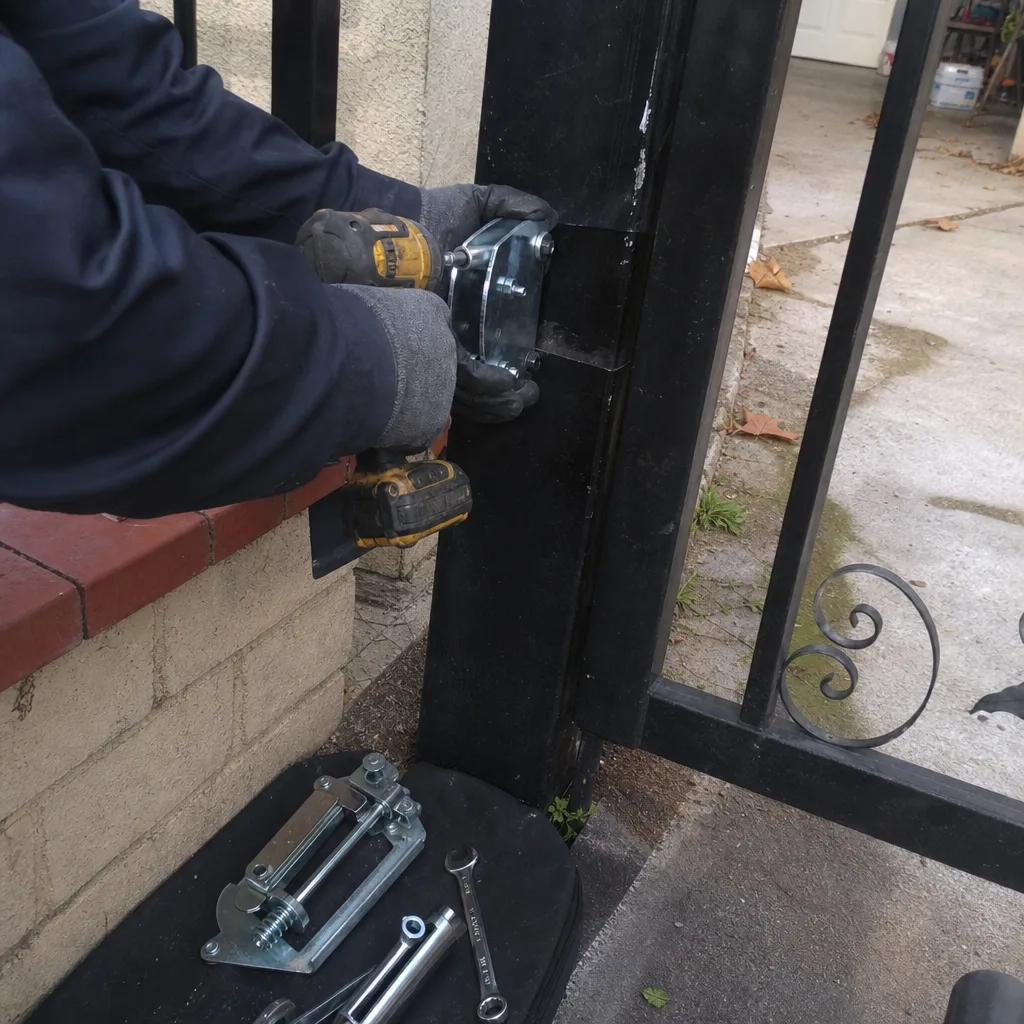
Last updated November 15, 2026
 Wrought iron
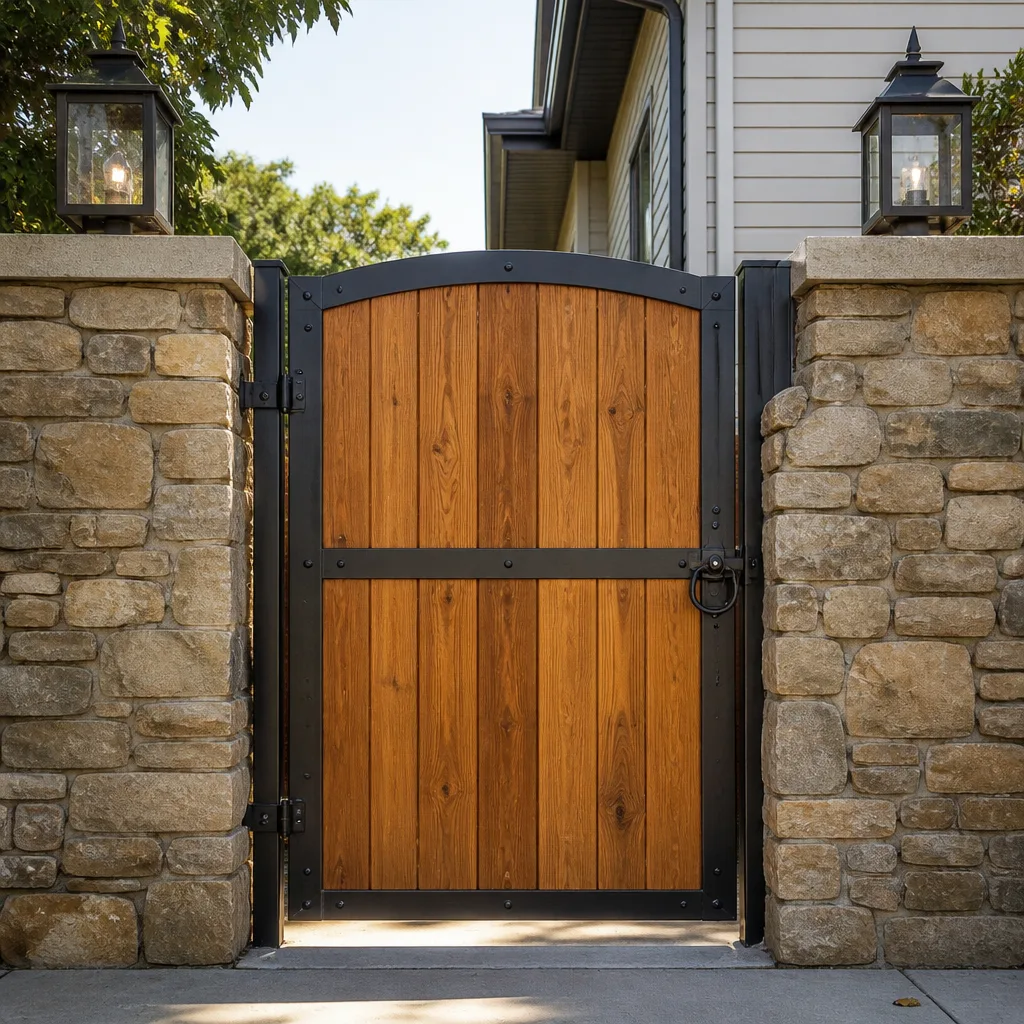 Wood & steel frame
 Farm & ranch
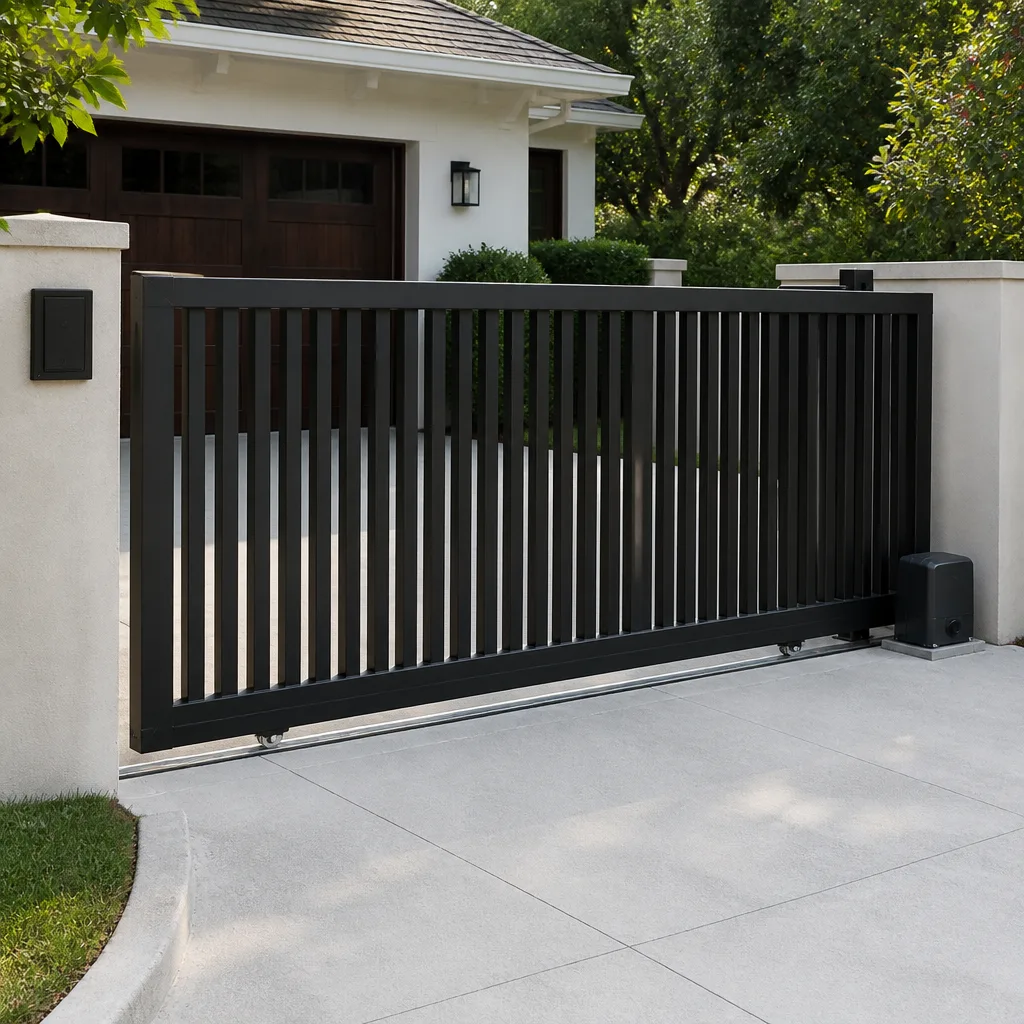 Sliding driveway gates
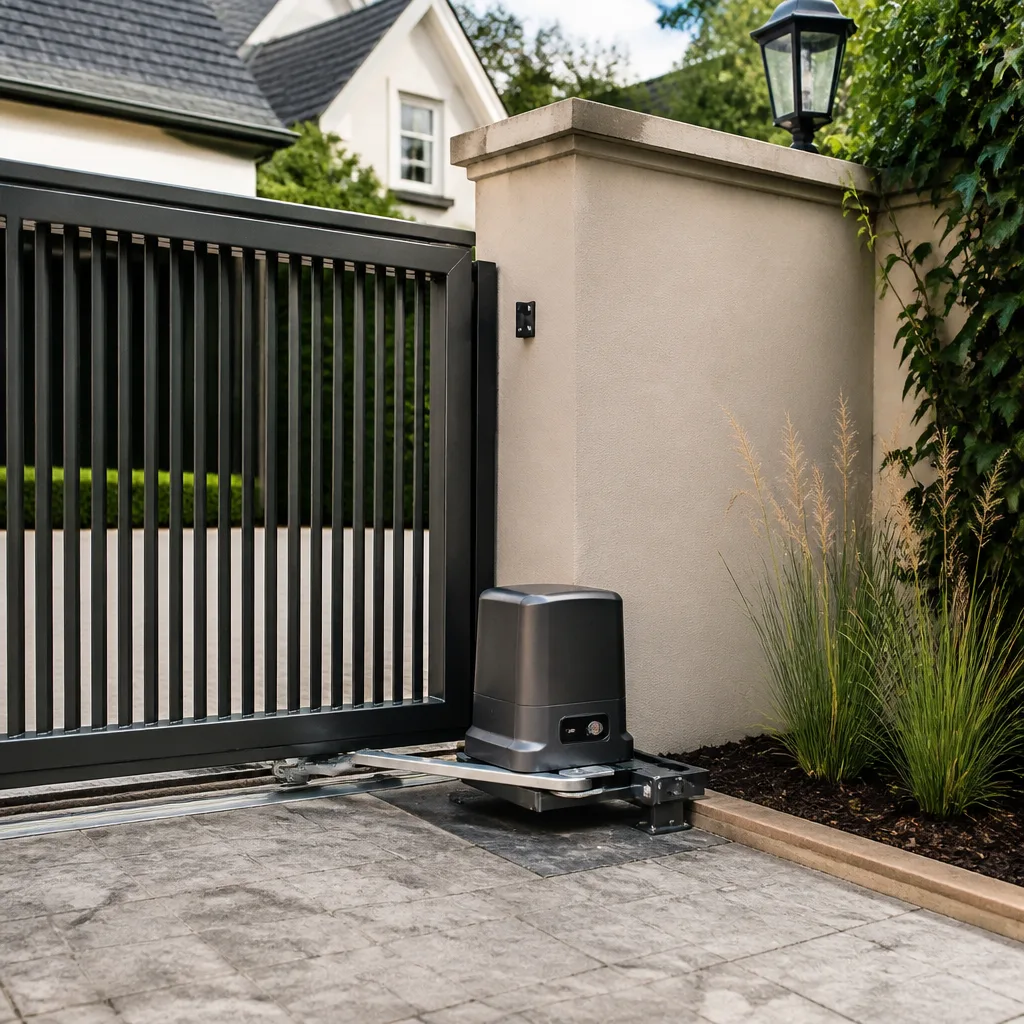 LiftMaster operators
Free on-site gate assessment - hinges, posts, and your LiftMaster or Nice gate operator checked before anything is quoted
The assessment is free and the quote is the invoice.
Get your free estimateGate Repair Warning Signs: A Fairfield Homeowner’s Reference Guide
A gate that reverses direction mid-cycle isn’t malfunctioning. It’s doing exactly what it’s designed to do when it detects an obstruction. But when there’s nothing in its path and it still reverses, the safety sensor has gone out of alignment, and that gate could strike a person or vehicle without stopping. Most homeowners treat every gate problem the same way: wait, wiggle the remote, hope it sorts itself out. That’s the wrong instinct. Some warning signs are cosmetic. Some are a 30-day scheduling item. And some mean you shouldn’t use the gate at all until a technician has looked at it. This guide sorts every common warning sign into one of those three tiers, so you know what you’re dealing with before you pick up the phone. We’ll cover what each sound points to, how to tell a mechanical fault from an electrical one without tools, and which visual clues on wood, iron, aluminum and vinyl gates are structural rather than cosmetic. We’re writing this from Fairfield, where a lot of older properties have gates working harder than their hardware was ever meant to handle.
Quick Answer
Gate warning signs fall into three urgency tiers. A gate that reverses with nothing in its path, falls off its track, or has a panel you can push out of alignment is a stop-use-immediately problem, because that’s a safety failure. Sluggish movement, a grinding noise, or a hinge that’s begun to sag is usually a schedule-within-30-days repair. Slight squeaks, small paint cracks, and a remote with a shorter range are monitor-and-adjust items. If you’re unsure which tier you’re in, describe what the gate does over the phone and a gate technician can tell you before anyone drives out.
Styles & brands we work with
- Wrought iron
- Wood & steel frame
- Farm & ranch
- Sliding driveway gates
- LiftMaster operators
Table of Contents
- The three-tier urgency system: how to classify any gate problem
- What each gate sound tells you about the failing component
- How to tell mechanical warning signs from electrical ones, without tools
- Visual warning signs on wood, iron, aluminum and vinyl gates
- Intermittent problems: the signs that only show up under certain conditions
- Which failures are genuine safety hazards and which can wait
- A homeowner’s walk-around check for your Fairfield gate
- What to have ready when you call about a gate problem
The three-tier urgency system: how to classify any gate problem
Every warning sign you’ll read about on this page gets sorted into one of three tiers. The tier tells you what to do next, not what’s wrong. Diagnosis is a separate job, and on electric gates it’s usually the harder half. Here’s the framework we use when a homeowner calls about gate repair in Fairfield and describes what their gate is doing.
Tier 1: Stop using the gate immediately. These are safety failures. The gate still moves, which is exactly what makes them dangerous. Typical Tier 1 signs:
- The gate reverses with nothing in its path, or stops short of fully opening or closing
- A slide gate has come off its track or is riding on a roller that’s left the rail
- A swing gate panel wobbles when you push it by hand, or a hinge post moves in the ground
- The gate moves while a safety edge or photo-eye is triggered
- You can hear the operator running but the gate doesn’t move, and the gate feels jammed
- A panel has dropped low enough to scrape the ground on every cycle
Tier 2: Schedule within 30 days. The gate still works, but a component is wearing in a way that gets more expensive the longer it’s ignored. These signs usually mean a repair that stays small if it’s booked soon and grows if it isn’t. Slow movement, a change in sound, a hinge that’s started to sag, a remote with reduced range that isn’t a battery issue, and a manual gate that drags on one corner all belong here.
Tier 3: Monitor and adjust. Slight squeaks, small paint cracks on a joint, a gate that needs a firmer push than it used to, and a chain with a touch more slack than you remember. Note them. Address them the next time you’ve got a technician out for anything else, or at the first sign they cross into Tier 2.
The reason this matters in Fairfield is the same reason it matters anywhere: the gap between a Tier 2 hinge and a Tier 1 panel is often a matter of weeks, not months, once a gate starts sagging on a post. When the tier is unclear, that’s the moment to ask.
What each gate sound tells you about the failing component
Sound is the most underrated diagnostic tool a homeowner has. You don’t need to identify the part. You only need to notice that the sound changed, and roughly where it’s coming from, and describe it. Here’s what the common gate sounds usually point to, and which tier they land in.
- A high, rhythmic squeal during movement: dry hinge pins or a roller bearing that’s lost its lubrication. Tier 3 on a manual gate, Tier 2 if it’s accompanied by any change in how the gate swings.
- A grinding or crunching from the operator: internal wear, most often in the gearbox or the drive mechanism. Tier 2 for most operators. It doesn’t stop today, but it usually means internal parts are already wearing.
- A clunk at the start or end of travel: a limit position or a physical stop is being hit harder than it should. On a swing gate this is often a hinge or a stop issue. On a slide gate it’s frequently the track or the roller. Tier 2, and sometimes Tier 1 if the clunk is accompanied by the gate bouncing.
- A metallic rattle from a slide gate: chain slack, a worn roller, or a track section with a loose mount. Tier 2 unless the gate is visibly off the track, which makes it Tier 1.
- A faint electrical hum with no movement: the operator is getting power but isn’t moving the gate. That’s usually Tier 1. Something mechanical is jammed, or a control board is holding the gate in a stopped state.
- A click from the housing but nothing else: typically the control board or a limit switch. Tier 2 unless the gate is standing open across a driveway, which makes it a security problem and more urgent.
- Silence where there used to be an electrical whine: no power reaching the operator, a tripped breaker, or a tripped internal overload. Check the breaker before you call, then call if it’s not that.
One sound deserves a separate note. If you hear the operator running and a slipping, ratcheting noise, and the gate moves partway and stops, that’s a mechanical load problem in the drive. It’s usually a slipping gear, a stripped drive component or something jammed in the track. Don’t keep cycling it. Each cycle scrubs a little more off whatever is failing. On a Mighty Mule or LiftMaster residential operator, this is often the point where a homeowner calls after a week of trying and the repair has grown. It’s a Tier 1 in practice, not because it’s a safety failure, but because running it makes the bill bigger.
How to tell mechanical warning signs from electrical ones, without tools
You can separate most gate problems into mechanical or electrical with your hands, your ears and a quick walk around the gate. No multimeter, no taking anything apart. The trick is to slow the gate down and separate what the motor is doing from what the gate is doing.
- Put the operator into manual release. Most residential and light commercial operators have a manual release key or lever. Read the operator’s own instructions for yours. Once released, push the gate through its full travel by hand. If it moves smoothly and easily, the mechanical side is likely fine and the problem is in the operator, controls or wiring. If it binds, drags, scrapes or feels heavier at one point, you’ve found the mechanical side and you can stop there.
- Listen at the operator, not the gate. With the gate in manual, run the operator briefly. Operator noise with no gate movement means the operator is trying to do its job, and the mechanical load is the problem.
- Check the power source. Residential operators from Ghost Controls and Mighty Mule are often solar or low-voltage, while LiftMaster and FAAC units are more likely to be line-powered. If your gate is solar, look at the solar panel and the battery condition before anything else. A gate that gets weaker as the day goes on and works better in the morning is telling you the battery isn’t holding up.
- Test the controls separately from the gate. Use the keypad, a wall button and a remote separately. If only one of them fails, the gate and the operator are probably fine and the problem is in the control or the receiver. If all of them fail equally, the problem is in the operator, its power, or a safety device holding the gate off.
- Look at the safety devices. On many systems, a photo-eye or safety edge that’s misaligned, dirty or blocked will prevent the gate from closing at all. If the gate opens but won’t close, and there’s nothing in the way, suspect a safety device before you suspect the operator.
The practical value here is that mechanical faults are almost always gate repair and electrical faults are almost always electric gate repair. They’re different jobs, different parts, and sometimes different technicians. Knowing which side you’re on before you call gets you a useful conversation instead of a description that has to be unpacked on site. For brands like FAAC and BFT in commercial use, the electrical side is often where the fault lives, simply because those operators carry more control logic and more safety inputs than a residential unit.
Visual warning signs on wood, iron, aluminum and vinyl gates
Visual damage on a gate is where homeowners misjudge severity most often. The rule of thumb: a crack in a coating is cosmetic, but a crack in a joint, a fastener or a weld is structural. Here’s what to look for on each material.
Wood gates
Wood is the material where early warning signs are most visible and most often ignored. Splitting across the grain at a hinge point, a stile or a rail is structural, because that’s where the load travels. Check for fasteners that have begun to pull into the wood and leave a dark ring around the head. That ring means the timber is compressing around the fastener and the joint is working loose. In Fairfield’s dry summers, wood posts shrink slightly and fasteners lose a little grip, which is normal. What isn’t normal is a post that’s moved but not cracked: that usually means the footing has shifted and the whole panel’s alignment has changed. That’s a Tier 1 if the panel has dropped, Tier 2 if it hasn’t yet.
Iron and ornamental metal gates
On iron and steel gates, look at the welds and the hinge plates. A weld with a hairline crack at its edge is a structural sign, not a cosmetic one, even if it’s only a few millimetres long. Open and close the gate slowly while watching that weld. If the two faces separate slightly under load, the weld is failing. Watch the hinge plates for any gap opening at the frame. Rust is not a local problem in most inland Fairfield neighborhoods, but rain pooling in a weld line over the wet months can start a crack that wasn’t there in summer.
Aluminum gates
Aluminum is lighter and ages well, but it doesn’t like being bent and straightened repeatedly. Look for a bow along a rail, or a panel that no longer sits square in the frame. Aluminum panels that pick up a wobble when pushed are usually fine at the fasteners and failing at the frame. That’s a Tier 1 issue if it’s a swing gate with a gap underneath, because a misaligned panel on an automatic swing gate is what the safety sensor is meant to catch.
Vinyl gates
Vinyl gates fail quietly. They don’t crack like wood or rust like iron. The common visual warning is a hinge that has pulled loose and started to tear the vinyl where it mounts, and a gate that has started to sag at its outer corner. If you can see a crease or a stress mark in the panel near the hinge, the hinge is carrying load it shouldn’t. That’s Tier 2 if it’s caught early and can become Tier 1 once the vinyl tears through and the panel drops.
Intermittent problems: why warning signs that come and go are often more serious
An intermittent gate problem is usually more serious than a constant one, and that surprises people. A constant fault is a fixed condition. You know what it is, you know how to work around it, and it’s easy to test. An intermittent fault moves. It hides on the day your technician arrives and shows up a week later, and it’s usually caused by something that is slowly changing: a connection, an alignment, a temperature-sensitive component, or a mechanical part that only binds once it’s at a certain angle.
The most common conditions that make a gate problem appear in Fairfield:
- Cold mornings. Metal contracts and lubricants thicken. A hinge that binds only on the coldest mornings in January and February is warning you that it’s near the edge. If it binds now, it will bind harder the next time it’s cold, and it may fail outright the year after.
- After rain. Wet weather gets into a photo-eye lens, a control box seam or a safety edge, and a gate that worked in dry weather starts reversing or refusing to close. The wet-day-only fault usually points to water ingress into electrical parts. That’s an electrical problem, and it gets worse each season it goes unaddressed.
- After a long period of not being used. A gate that sits unopened for weeks is a gate whose track collects debris and whose hinges dry out. The first cycle after a quiet holiday can bind or trip an obstruction response. If the first cycle after every quiet period is rough, the gate is telling you its mechanical condition has drifted.
- Only at certain times of day. If a gate works in the evening but not at midday, look at the solar panel and battery on a solar system, or heat on a control board. That pattern is an electrical warning sign, and it doesn’t resolve itself.
- Only with one control. A remote that works some days and not others is usually a battery, a receiver, or interference. If the keypad and the wall button still work fine, the gate itself is likely healthy.
When you call about an intermittent problem, describe exactly when it happens and what conditions are present. “It reverses on wet mornings” is a far more useful opening line than “sometimes it doesn’t work”, and it saves a return visit.
Which failures are genuine safety hazards and which can wait
The distinction that matters most in this guide is between a gate that’s inconvenient and a gate that’s dangerous. A gate that is slow, noisy or stiff is a wear issue. A gate that moves when it shouldn’t, or fails to stop when it should, is a safety issue. On an automatic gate, the safety devices are what stand between the gate and anyone in its path.
Treat these as stop-use-immediately:
- The gate reverses with no obstruction, or it fails to reverse when something does enter its path
- A photo-eye or safety edge is loose, cracked, misaligned or disconnected
- Something heavy has already bent a panel or dropped a gate onto the ground
- The operator responds to any remote or keypad while a person is standing in the gate’s travel
- A slide gate has left its track, or a swing gate’s post has visibly shifted
- An operator keeps running after the gate has hit its stop
These are normally safe to keep using while you schedule a repair:
- A gate that’s slower than it should be but still reverses correctly at an obstruction
- A grinding noise with the gate still completing its cycle cleanly
- A hinge that’s stiff but holding, on a gate that still closes squarely into its stop
- A remote with reduced range, where a new battery fixes it
One serious caveat: an automatic gate is a moving machine, and the most dangerous thing anyone can do is stand in its path to “test” a safety device. Never put a hand, a child or a vehicle where a gate travels to check whether it stops. A trained technician can test the safety devices with the gate open to traffic. That test is not a homeowner job. And on any electric gate, the operator wiring is a live power connection that should be worked on by a qualified technician, not by a homeowner with a screwdriver and a hunch.
A homeowner’s walk-around check for your Fairfield gate
Run through this sequence once a season and whenever something feels off. It takes ten minutes on a manual gate and about fifteen on an automated one, and it gives you a good written record of what changed.
- Walk the full travel of the gate. Open it and close it slowly by hand, or watch it through a full cycle if it’s automated. Listen for anything that wasn’t there before.
- Push the gate at its outer edge. A small amount of movement is normal. A wobble from the hinge or a post that moves is not.
- Look at the hinges, the rollers and the track. Check for pulled fasteners, dark rings around screw heads, and any wear marks in a different spot from the last time you looked.
- Watch the ground along the gate’s path. A panel that’s dropped sits lower than it used to. If the gap under the panel has changed, the gate or post has moved.
- Inspect the safety devices. Look for cracked photo-eye lenses, loose brackets and anything blocking the sensor’s line of sight. Clean dust and spider webs off the lenses.
- Test the controls one at a time. Remote, keypad, wall button. Any difference between them tells you which part of the system to describe when you call.
- On a solar or battery operator, look at the panel and note the battery’s performance under load. A gate that opens fine but slows down as the cycle continues may be a battery and not a gate problem.
- Note the brand and model of the operator. It’s on the housing and in the manual. Knowing whether yours is a LiftMaster, a FAAC or a Mighty Mule, and how old the operator is, makes the first conversation quicker.
What to have ready when you call about a gate problem
A good gate call is specific. Here’s what to have ready before you dial.
- The operator brand and model, if your gate is automated
- Whether the gate is manual or automated, and swing or slide
- The gate’s material: wood, iron, aluminum or vinyl
- What the gate does, in plain terms: it reverses, it stops short, it drags, it makes a particular sound
- Whether the problem is constant or intermittent, and if intermittent, the conditions when it appears
- Whether you’ve tried the manual release, and how the gate felt when you did
- Whether you’ve had a power interruption, a storm, or a long period without using the gate
With those details, a gate technician can usually tell you what tier the problem is in and what kind of repair it will need. That’s the reason we ask so many questions before we book a visit. Gate specialists work on the specific brand in front of them, and a few minutes of detail on the phone is worth more than a long guess on site. If you also want the wider picture on general repairs, our gate repair page covers the full service range. For automated systems, the operator, control board, sensors and wiring all get handled on the electric gate repair page.
Common Mistakes to Avoid
- Treating every problem as the same urgency. A reversing gate and a squeaky hinge are not the same event. The first is a safety failure; the second is a scheduling item. Sorting them by tier is what this whole guide is about, and it’s the most useful habit a Fairfield homeowner can build.
- Forcing a jammed swing gate by hand. Every time you push through a jam, you load a hinge, a weld or a post in a direction it wasn’t designed for. A small hinge repair can become a footing repair by the time the gate finally gives.
- Adjusting a safety sensor by eye and calling it done. A photo-eye nudged back into alignment may work today and fail the moment a vehicle changes the angle. The sensor is the one part where “it works now” is not the same as “it’s safe”.
- Ignoring a sound once it becomes normal. A grinding that’s been there for a month stops registering as a warning sign. Your gate hasn’t fixed itself, you’ve just stopped answering it.
- Chasing a wet-weather or cold-morning problem with lubrication and hoping. Intermittent signs that appear after rain or on cold mornings are usually an electrical fault or a bearing already at the end of its life. Grease can mask either for a season, and neither improves on its own.
- Assuming one failed control means the gate is broken. Check the remote, the keypad and the wall button before you call. If two of the three still work, the gate and operator are likely fine and the fault is in a cheaper part.
- Handling wiring or a live power connection yourself. The operator’s wiring is a live electrical connection on a line-powered gate. Turn the power off and leave it to a technician. This is not a part of the system where a homeowner should be exploring.
See the difference
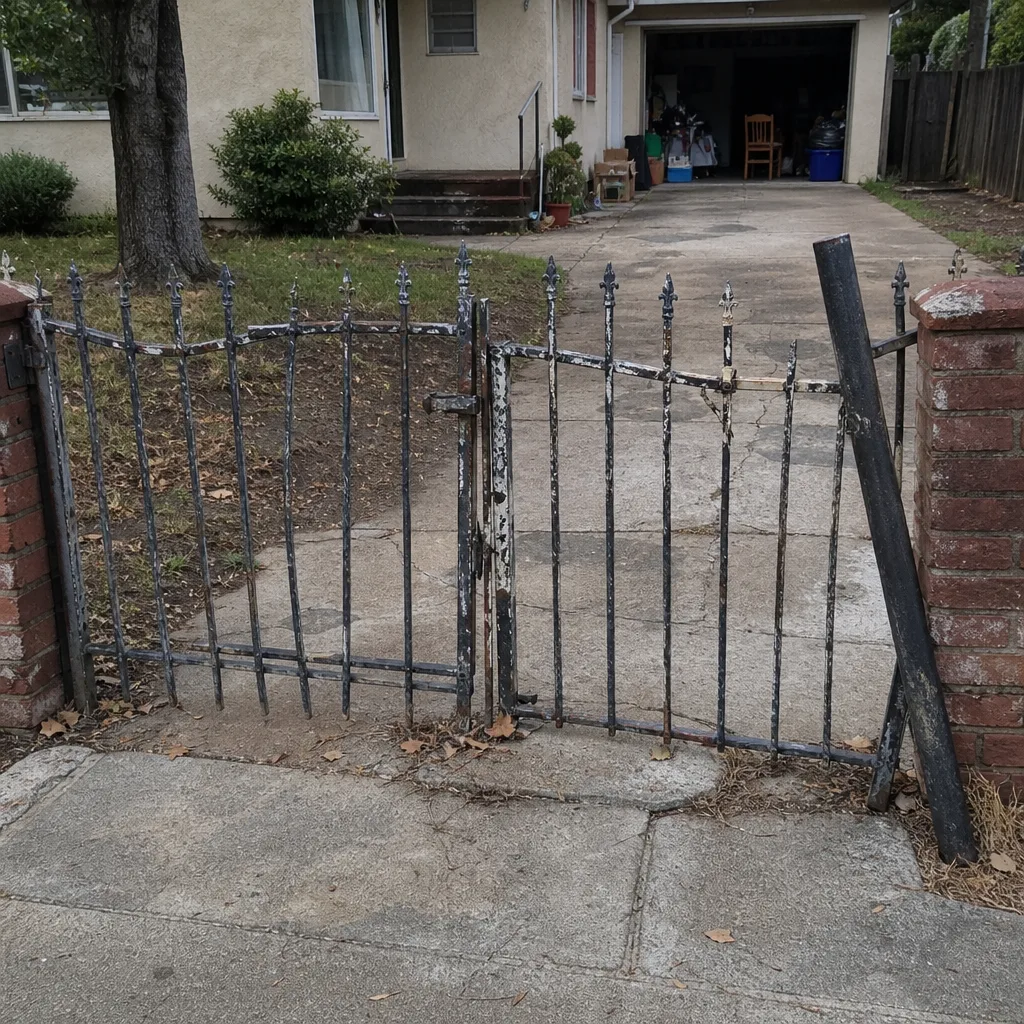 Before
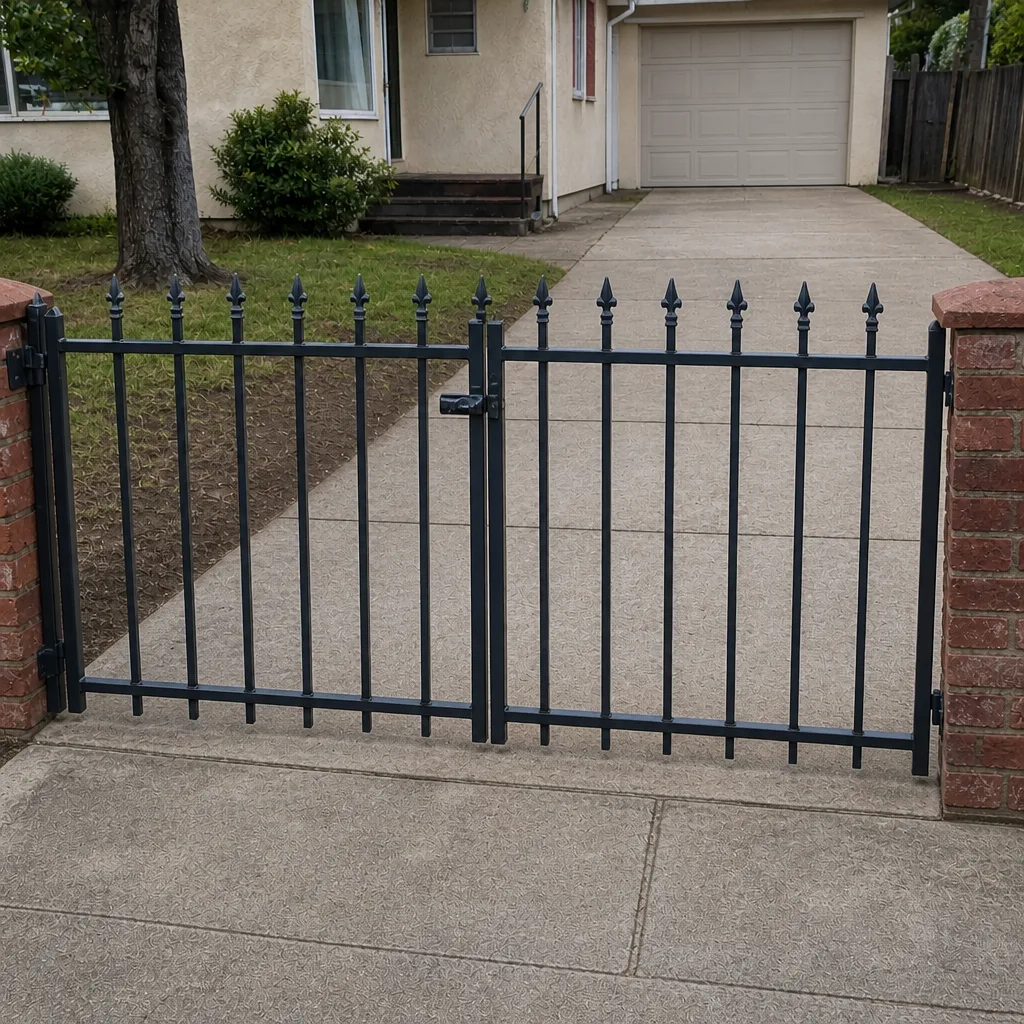 After
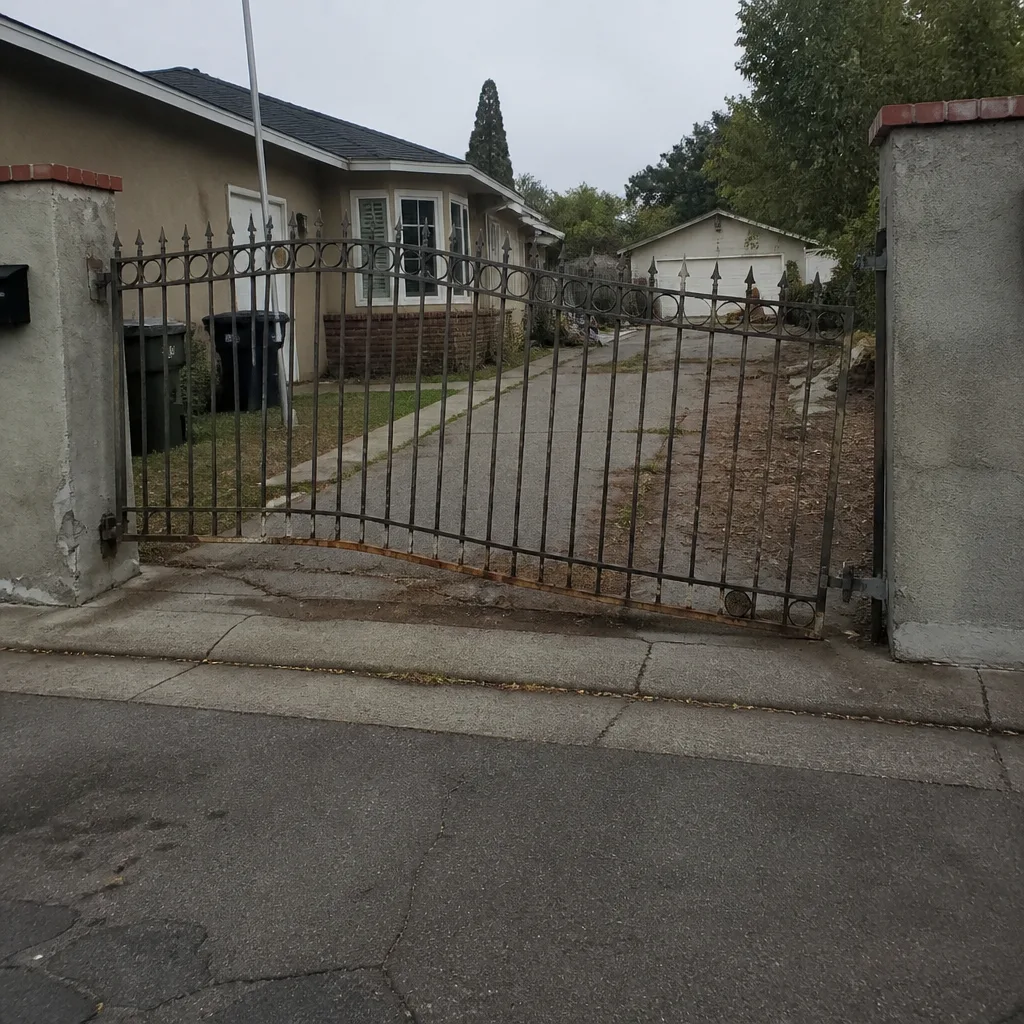 Before
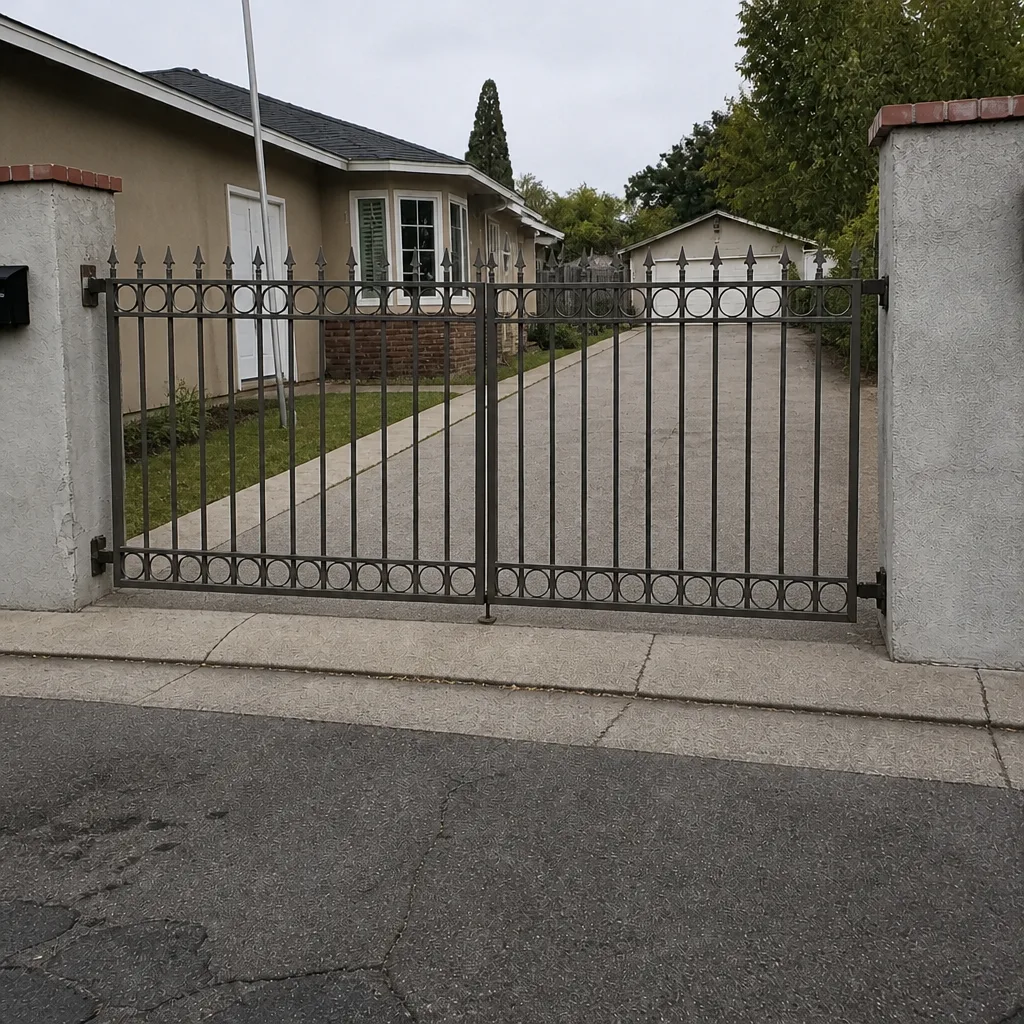 After
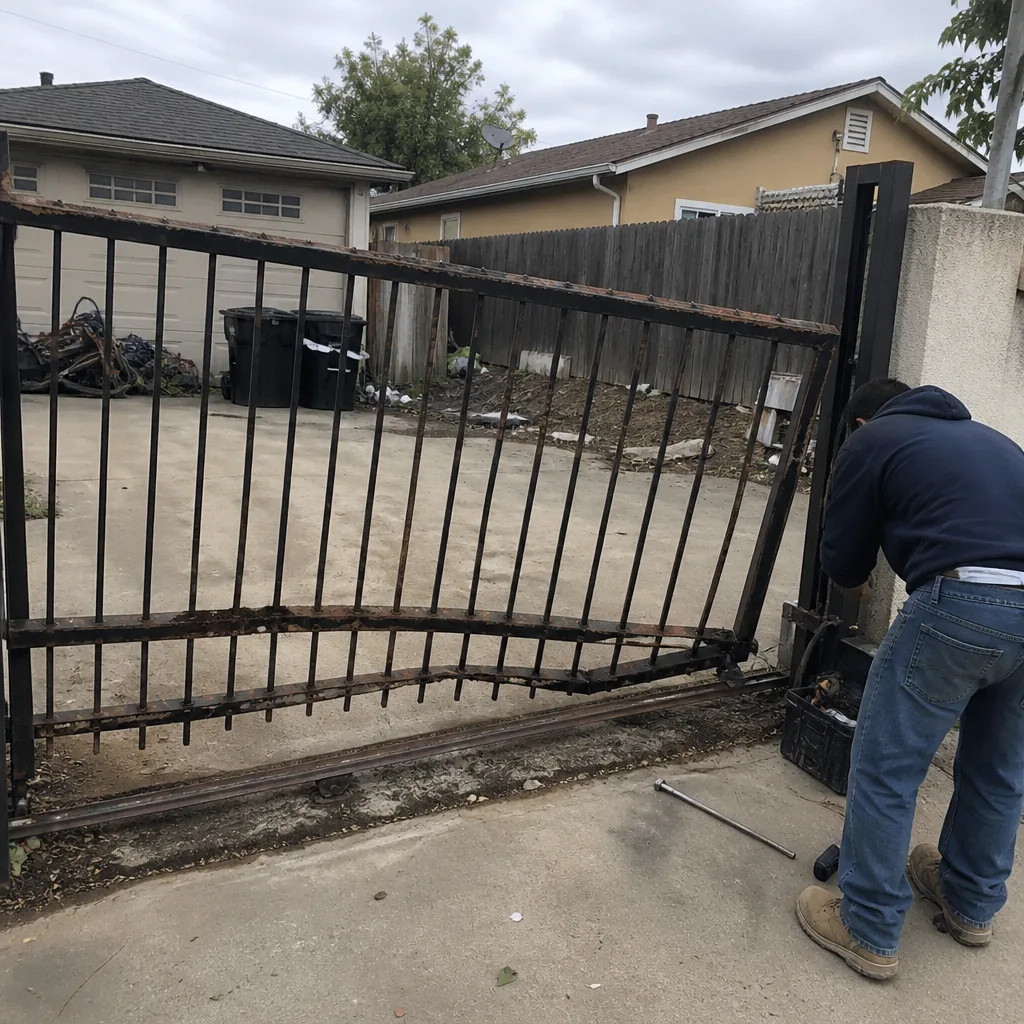 Before
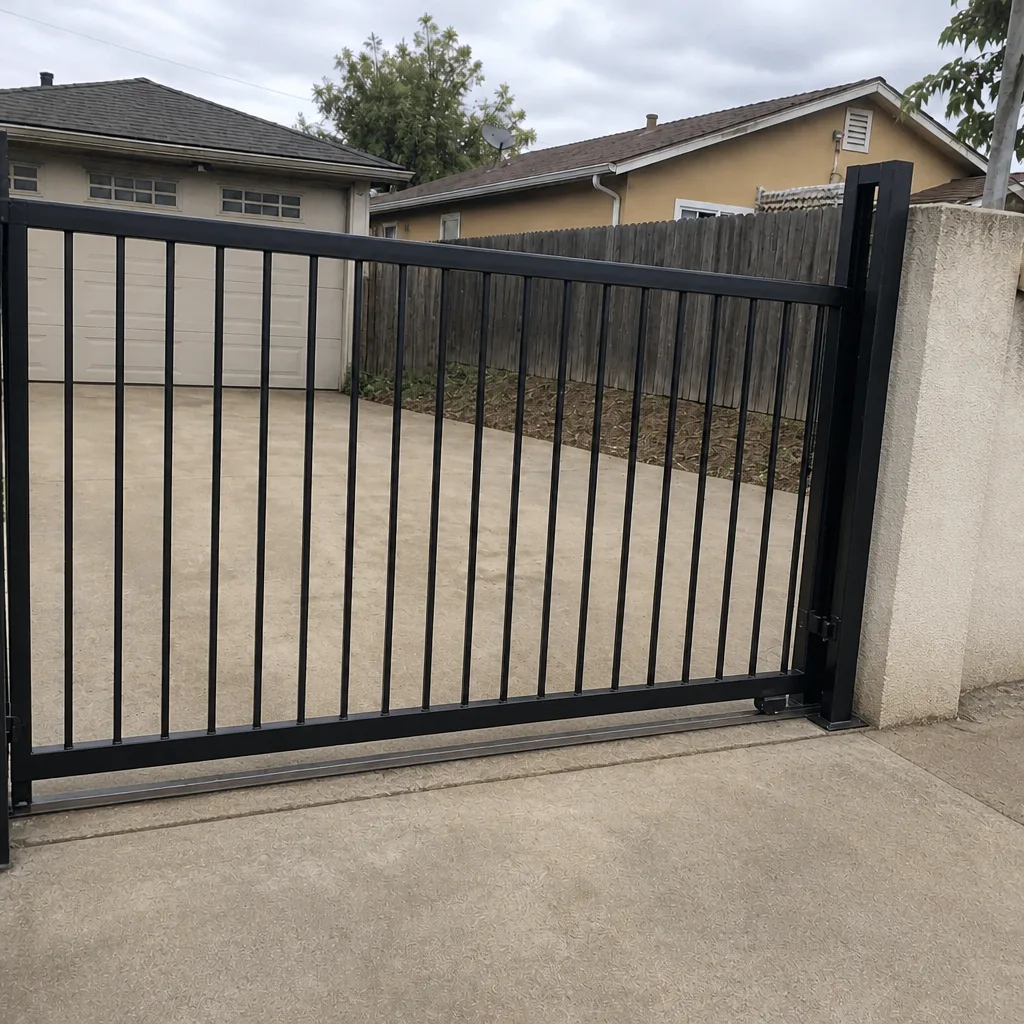 After
When to Call a Professional
Call a gate specialist when the gate reverses without an obstruction, when it has left its track, when a panel or post has moved, or when a safety device looks compromised. Those are stop-use issues, and they need a trained eye before the gate handles traffic again. Call sooner rather than later when you hear a new sound, when a hinge has started to sag, when a gate drags on one corner, or when an intermittent problem only shows up under specific conditions. Call as well when the operator runs without moving the gate, when a control board is clicking with nothing happening, or when the only thing wrong is that the gate has never been looked at properly. A gate problem that starts small is usually small. The ones that grow are the ones left alone. Gate Repair Fairfield offers free estimates in Fairfield. Call (888) 457-5442. We answer 24/7. Fast dispatch from 7am to 7pm, Sunday through Friday.
Frequently Asked Questions
Yes, treat it as one. A gate that reverses with nothing in the way is either a safety sensor that’s gone out of alignment or a control fault, and either can let a gate strike a person or a vehicle without stopping. Stop using the gate, block it, and get it looked at before it handles traffic again. Call (888) 457-5442 for a free estimate, and describe exactly when it reverses.
Often, yes. A slow gate is usually a wear problem, and on a solar or battery operator it can be a power issue rather than the gate at all. The test is not the speed; it’s whether the gate still responds correctly when something enters its path. If that part works, the gate is safe to use while a repair is scheduled within 30 days. If it doesn’t, that’s a different tier entirely.
Put the operator in manual release and push the gate by hand. If it moves smoothly through its full travel, the mechanical side is likely fine and the fault is in the operator, controls, or wiring. If it binds, drags or feels heavy at one point, the mechanical side is the problem. That quick test separates the job before you call.
It matters more than a constant fault. A problem that appears under specific conditions is usually caused by something that is slowly changing: a bearing near the edge, a connection taking on water, or an alignment that shifts with temperature. Those get worse, not better, and they’re often more serious than a fault that’s always there.
We work on the specific brands you’ll find on most residential and commercial gates in and around Fairfield, including LiftMaster, FAAC, BFT, Linear, Viking, Ghost Controls, DoorKing, Elite and Mighty Mule. Have the brand and model off the operator housing when you call. It helps us diagnose faster. Call (888) 457-5442 for a free estimate.
An on-site look at the gate, from the operator to the hardware. We run the gate through a cycle, test the controls and the safety devices, and trace the problem to the part causing it. The technician can then diagnose what’s wrong and give you a written price before any work starts. Estimates are free. Call (888) 457-5442 to book one.
The Bottom Line
Gate warning signs are only useful if you know which ones are urgent. Sort every problem into its tier before anything else. A gate that reverses, leaves its track or has a compromised safety device is a stop-use issue and needs a gate specialist. A gate that’s slow, noisy or stiff is a 30-day scheduling item. A squeak or a paint crack is a monitor-and-adjust note. The signs that only appear on cold mornings, after rain, or after a quiet spell are often the more serious ones, because they’re the ones that get worse while they hide. Do a walk-around once a season, keep a note of what changed, and don’t test a safety device with your own hands. When something crosses into Tier 1, or you just can’t tell where it sits, call a technician. Fairfield gate owners have free estimates waiting. Call (888) 457-5442. We answer 24/7. Fast dispatch from 7am to 7pm, Sunday through Friday. And if you want to see the full service picture, start with Gate Repair Fairfield and the section on Fairfield.
Written by the team at Gate Repair Fairfield.