
Ghost Controls Gate Repair in Fairfield: A Homeowner’s Guide
A Ghost Controls gate that ran perfectly for two years and then “just stopped” in January almost always has a battery problem, not an actuator problem. That’s the first thing we check, and it’s the first thing most people skip. The second thing: solar charging gets blamed for everything, even when the control board is the real culprit. This guide walks through what actually fails on Ghost Controls systems in Fairfield, how to test each part in the right order, and when a repair stops making financial sense.
Why Ghost Controls Gates Fail Differently
Ghost Controls builds primarily for rural and semi-rural properties, which means most of their residential operators are designed to run on solar with a battery backup rather than a hardwired 120-volt connection. That architecture is smart for a long driveway where trenching power is a major expense. It also means the system has a power budget, and every component competes for it.
When the battery voltage drops below the operator’s cutoff threshold, the board does what it’s designed to do: it refuses to move the gate. No amount of remote pressing, keypad entry or gentle encouragement changes that. What confuses people is that the gate may have opened fine the day before. Solar systems don’t fail gradually the way a dying car battery does. They hold a charge until they don’t, and then the whole system goes quiet at once.
Fairfield winters make this worse without being dramatic about it. Shorter days mean fewer charging hours, and a panel that’s shaded by a tree canopy or mounted at a shallow angle during the low-sun months may not push enough current to fully recharge the battery between cycles. The gate works. The battery slowly depletes. Then one morning it doesn’t open, and it looks like a catastrophic failure when it’s really an energy shortfall.
How Do You Test a Ghost Controls Solar Battery Correctly?
Test the battery under load, not at rest. A resting voltage reading tells you almost nothing. A battery can read a healthy number with no demand on it and collapse the moment the actuator draws current. The correct test is to measure voltage while the gate is cycling. If it sags hard during travel and recovers afterward, the battery is the problem, not the motor.
- Check solar panel output first. Disconnect the panel and measure its open-circuit voltage in direct sun. A panel reading low in full sun is either dirty, shaded, or failing. Clean it before you condemn it.
- Test the battery under load. Cycle the gate and watch the voltage. Significant sag during travel points to a battery that can’t deliver current anymore.
- Inspect the charging circuit. Corroded terminals and loose connections at the panel or battery are common and cost nothing to fix.
- Confirm the board’s low-voltage cutoff. If the battery tests fine but the gate still refuses to run, the board may be misreading voltage or the cutoff setting may be wrong.
Batteries are consumables. Expect to replace one periodically, and treat a three-year-old battery that won’t hold a charge as normal wear rather than a mystery. A homeowner who replaces the actuator first because “the motor must be dead” has usually spent money on the wrong part.
Actuator Arm Adjustment and Premature Motor Burnout
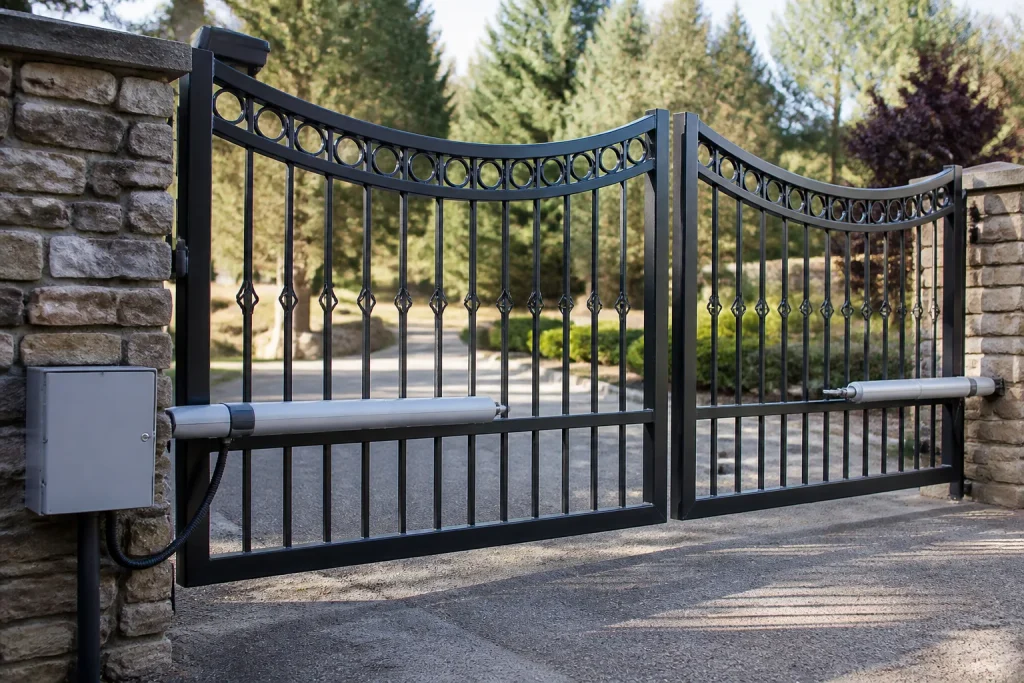
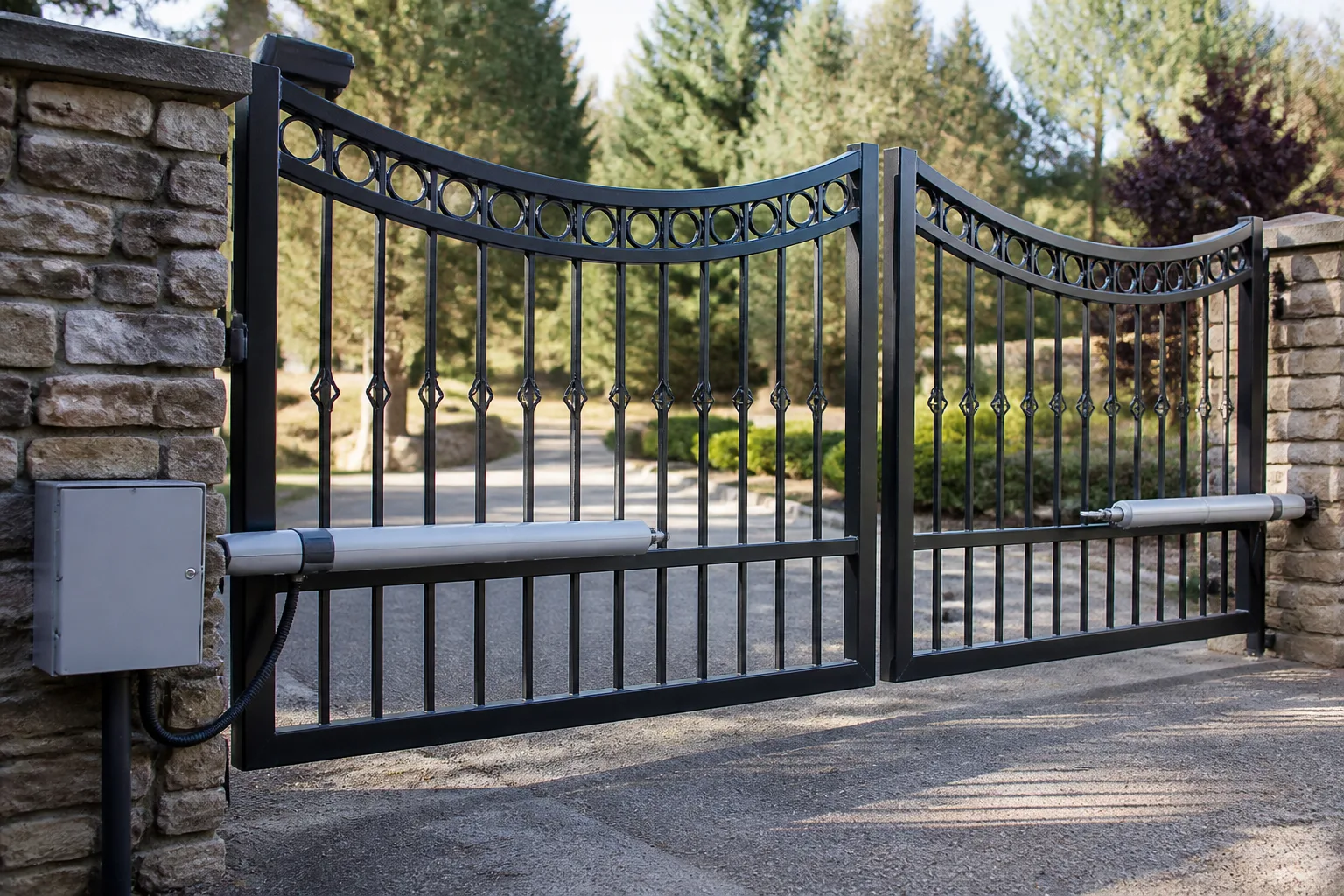
Ghost Controls single and dual swing operators use a linear actuator arm with adjustable limit stops. The limits tell the motor when to stop pushing. Set them too far out and the motor drives the gate into its own mechanical stop on every cycle, straining the gearbox and drawing excess current that shortens motor life. Set them too tight and the gate never fully opens or closes, which trips the safety reverse and frustrates everyone.
Proper adjustment means the arm extends and retracts to the point where the gate is fully seated, then stops with a small margin before any hard stop. On dual-gate systems, the two arms also have to be timed so one doesn’t fight the other during the overlap. That timing setting lives in the control board, and it’s a common source of binding, stalling and uneven travel that gets misdiagnosed as a weak motor.
- Gate binding from a sagging hinge or a post that’s shifted will overload the actuator regardless of limit settings. Fix the mechanical side first.
- Limit drift happens over time as hardware loosens. Re-check limits after any hinge or post work.
- Arm alignment matters more than most people realize. An actuator mounted at the wrong angle pushes at an inefficient point in the swing and works harder than it should.
If the arm is grinding, stalling mid-travel, or the motor housing gets hot to the touch after a single cycle, stop cycling it. Continuing to run a binding actuator is how a repairable adjustment becomes a motor replacement.
Remote and App Connectivity Problems: Antenna, Receiver, or Interference?
A Ghost Controls remote that works from ten feet but not from the driveway is an antenna or receiver issue, not a dead remote. A remote that works sometimes and not others is usually interference. Knowing which one you have saves you from buying the wrong part.
Start with the cheapest possibility: the remote battery. Then check the antenna connection at the operator, since a loose or corroded antenna lead kills range without any other symptom. If the antenna is intact and range is still poor, the receiver board is the next suspect. On app-connected systems, a loss of WiFi or Bluetooth pairing is separate from the radio remote problem entirely, and resetting the network connection should always be tried before replacing hardware.
Frequency conflicts are real on properties with multiple gate systems nearby. If a neighbor’s gate opens when you press your remote, you’re on the same frequency and you’ll need to re-pair to a different channel or update the receiver. That’s a programming fix, not a hardware failure. It’s also the one gate problem that makes for a genuinely awkward conversation over the fence.
Ghost Controls Parts: What You Can Replace and What You Can’t
Some Ghost Controls parts are genuinely user-replaceable, and some aren’t worth the trouble. Batteries, remotes, antennas, and solar panels are straightforward swaps. Limit switches and control boards are replaceable but require you to match the correct board revision for your model, which is where most DIY attempts go wrong.
The actuator itself is the tricky one. On many models the actuator is sold as part of a kit rather than as a standalone component, which means a “cheap” motor replacement often turns into buying more than you expected. Genuine Ghost Controls parts cost more than off-brand substitutes, but the board compatibility and connector differences make aftermarket parts a gamble. We’ve seen plenty of gates with a bargain replacement board that never quite worked right because the firmware didn’t match the model. The other repair brands we work on, including gate repair for Mighty Mule and LiftMaster systems, have their own quirks along the same lines.
Before buying anything, confirm your exact model number and board revision. A photo of the control board label is worth more than a phone call to the parts counter. If the replacement part costs a significant share of a new system, that changes the math on repair, which we cover below.
What Does Ghost Controls Repair Cost in Fairfield?
Typical Ghost Controls repairs in Fairfield fall into a few predictable ranges. Battery replacement is the lowest-cost fix. Control board and receiver board replacements sit in the middle. Actuator and arm replacement is the top of the residential range, and dual-gate systems run higher than single. Solar panel replacement on its own is modest, but combine it with a battery and the total climbs.
| Repair | Typical Estimated Range |
|---|---|
| Battery replacement | Lower range |
| Solar panel and charging circuit | Lower to mid range |
| Remote, antenna, and receiver repair | Lower to mid range |
| Control board replacement | Mid range |
| Single actuator and arm | Mid to upper range |
| Dual actuator system | Upper range |
These are estimates, not quotes, and the written estimate from your property is what sets the final price. The price is quoted and agreed before any work starts, so there’s no surprise invoice at the end. If you’d rather not chase a solar fault through the winter yourself, that’s exactly what we do all day.
For a full diagnosis of the operator, board, sensors and wiring on an automated gate, see our electric gate repair page.
Should You Repair a Ghost Controls System or Replace It?
Repair wins when a single component has failed and the rest of the system is solid. Replace when the board, the actuators, and the battery are all degraded at once, or when the system is undersized for the gate it’s moving. A heavy driveway gate on an operator sized for a lighter one will keep eating actuators no matter how many times you replace them.
The solar-integrated design shifts this decision more than it does for hardwired operators. If your property has reliable 120-volt power available near the gate, a hardwired system removes the battery dependency entirely and tends to be a better long-term fit. If trenching power isn’t realistic, staying with solar makes sense, and repairing the existing system is usually the right call. For homeowners on the fence, comparing repair costs against a fresh install is the honest way to decide. We handle both, along with new system installs, so we can walk through the numbers without steering you either way.
When to Call a Pro
Call a professional when the fault is inside the control board or the wiring, when the actuator itself needs replacement and the model code is unclear, or when you’ve tested the battery and it’s fine but the gate still won’t run. Automated gates carry real safety risk: heavy swing panels, actuators that move with force, and safety sensors that must trip correctly. A poorly adjusted limit or a bypassed sensor on a gate near a driveway where children play is a serious hazard. Don’t bypass safety sensors to get the gate working “for now.” If the gate is binding, stalling, or reversing randomly, the safest move is to disconnect it from service and have it looked at.
If you’re in Fairfield, Gate Repair Fairfield offers free estimates. Our technicians have up to 12 years of experience with Ghost Controls, Mighty Mule, LiftMaster, and other operators across residential and commercial systems. Call (888) 457-5442 to book an on-site estimate.
The Bottom Line
- Ghost Controls failures in Fairfield are usually battery or solar-related, not actuator-related. Test the battery under load before buying a motor.
- Incorrect limit settings and arm alignment cause premature motor burnout. Fix the mechanical side before replacing electric parts.
- Remote problems fall into three buckets: antenna, receiver, or interference. Test in that order.
- Some parts are user-replaceable, but actuator and board replacements require matching the correct model and revision.
- Repair is usually the right call when one component fails. When the whole system is degraded or undersized, a replacement with a hardwired operator removes the solar dependency.
If you’re in Fairfield and need help, Gate Repair Fairfield offers free estimates – call (888) 457-5442. We answer 24/7. Fast dispatch from 7am to 7pm. For gate repair anywhere in the Fairfield area, we’re a call away.
Frequently Asked Questions
Test the battery under load while the gate is cycling. If the voltage sags hard during travel and recovers afterward, the battery is failing; replace it first. If the battery holds voltage under load and the motor still won’t move the gate, the actuator or control board is the suspect. Call (888) 457-5442 for an exact quote – estimates are free.
Shorter winter days reduce solar charging hours, so a battery that was marginal in summer can’t keep up in winter. Clean the panel, check for shade, and test the battery under load. If it won’t hold a charge, replace it. Call (888) 457-5442 for an on-site diagnosis – estimates are free.
Sometimes, yes. Many Ghost Controls actuators are sold as part of a kit rather than a standalone part, so confirm your model number and board revision before ordering. An incorrect match is a common and expensive mistake. If you’re not certain, call (888) 457-5442 for a free estimate.
Repair makes sense when one component has failed and the rest of the system is healthy. Replacement makes sense when multiple parts are worn out at once, or when you have reliable power available at the gate and want to move to a hardwired operator. Call (888) 457-5442 for a free on-site estimate.
Written by the team at Gate Repair Fairfield.
Need Gate Repair Help?
Call Gate Repair Fairfield - licensed & insured, here with fast help in Fairfield.
(888) 457-5442