
Last updated November 15, 2026
 Wrought iron
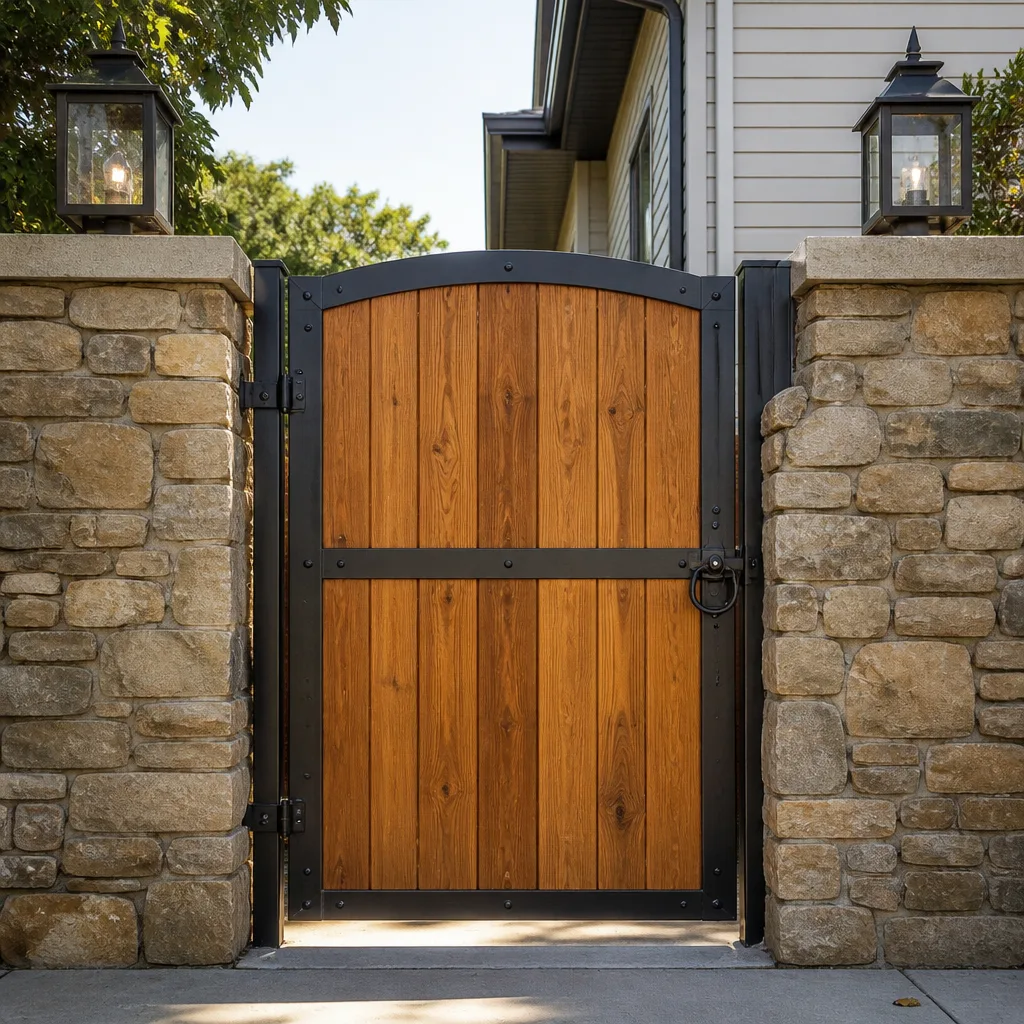 Wood & steel frame
 Farm & ranch
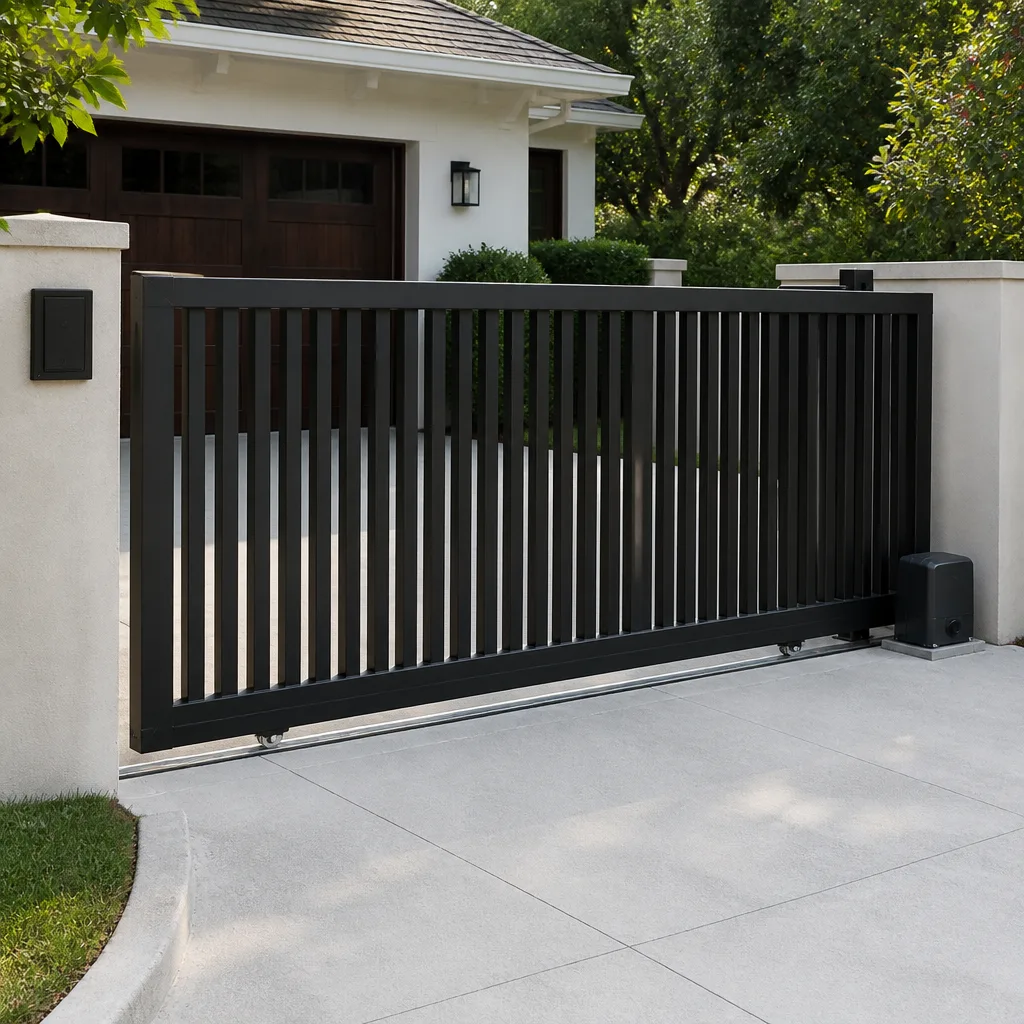 Sliding driveway gates
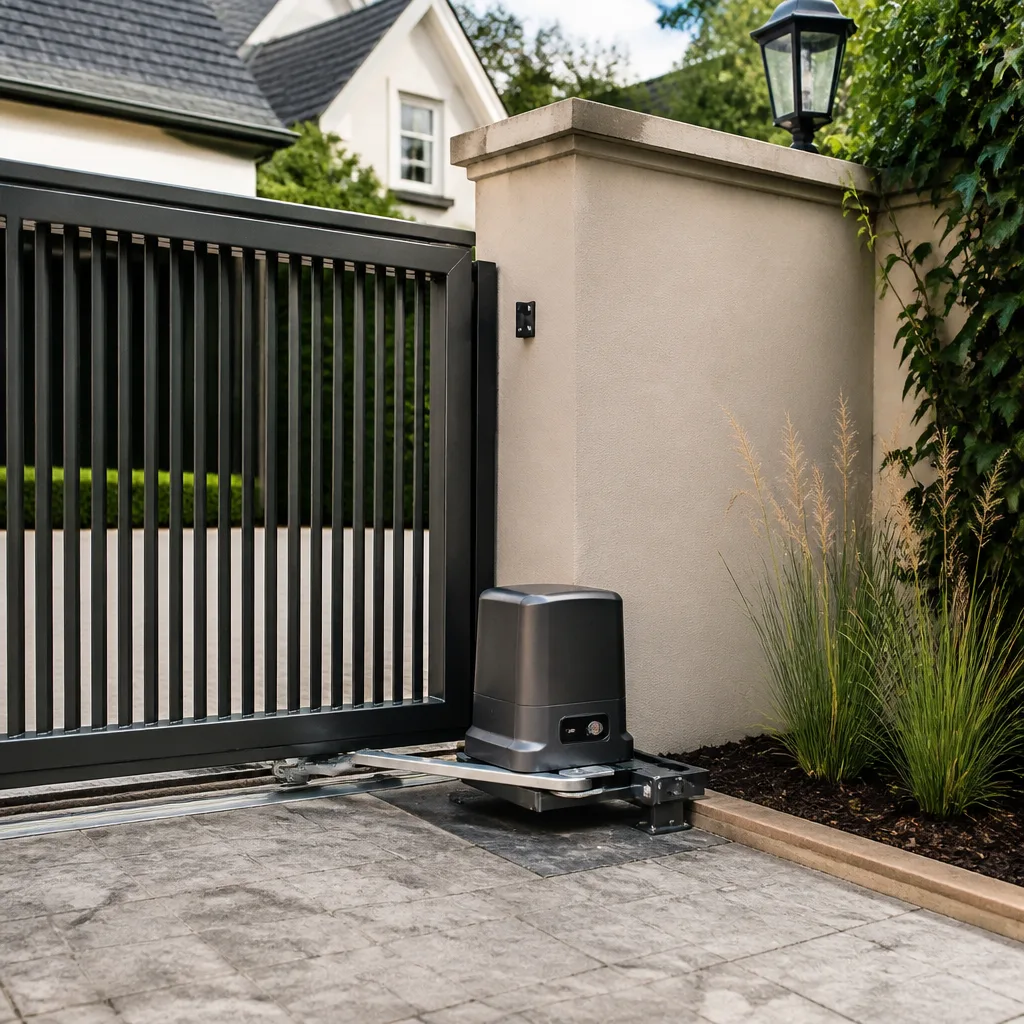 LiftMaster operators
Free on-site gate assessment - hinges, posts, and your LiftMaster or Nice gate operator checked before anything is quoted
The assessment is free and the quote is the invoice.
Get your free estimateDIY vs Professional Gate Repair: The Fairfield Homeowner’s Decision Guide
Most homeowners approach gate repair with the wrong question. They ask “am I handy enough to fix this?” when the better question is “what happens if I get this wrong?” Those are different questions with different answers. A sticking manual latch and a misconfigured entrapment sensor both look like minor hardware problems, but one is a Saturday afternoon task and the other is a liability decision. In Fairfield, where driveways sit close to sidewalks and kids cut through gates on their way to school, the stakes get real fast. This guide draws the line clearly: what we’ve seen homeowners safely handle, what requires a trained gate technician, and how to tell the difference before you pick up a wrench.
Quick Answer
Manual gate repairs involving visible hardware (latches, hinges, handles, alignment on swing gates) are usually safe for a careful homeowner to attempt. Anything touching an automated operator, its control board, wiring, safety sensors, or entrapment protection settings should be handled by a trained professional, both because of the injury risk and because of the liability and warranty consequences. In California, automated gate operators fall under UL 325, and the settings that stop a gate from crushing a person are not a DIY adjustment.
Styles & brands we work with
- Wrought iron
- Wood & steel frame
- Farm & ranch
- Sliding driveway gates
- LiftMaster operators
Table of Contents
- Why This Decision Matters More Than You Think
- Gate Repairs That Are Genuinely Safe to Do Yourself
- Gate Repairs That Require a Trained Professional
- The Hidden Cost of DIY Gate Repair
- How to Tell if a YouTube Tutorial Applies to Your Gate
- The Middle Path: Prep Work That Lowers Your Bill
- When to Stop and Call
- Frequently Asked Questions
Why This Decision Matters More Than You Think
Automated gate operators are classified by UL 325 as inherently dangerous machinery. That’s not marketing language and it’s not a lawyer covering themselves. It’s the same regulatory category applied to industrial equipment, and the standard exists because improperly configured gates have caused serious injuries and deaths. When a swing gate closes on a child or a slide gate pins someone against a fence, the operator’s entrapment protection is the only thing that stops it.
That context should reframe the “can I just watch a video?” conversation. Most gate repair content online treats the gate as a mechanical puzzle. We treat it as a machine that moves heavy things under power near people.
Fairfield adds its own layer of complexity. The mix of older manual swing gates on residential lots and retrofitted automated systems on commercial properties means the same neighborhood can have wildly different gate technology side by side. Pulling into a Fairfield driveway, you might have a Mighty Mule on one side of the street and a commercial-grade DoorKing slide gate on the other.
Here’s what we want any homeowner to walk away with: gate repair isn’t a single skill. It’s a spectrum from “reasonable Saturday project” to “call a professional today.” The rest of this guide draws that spectrum clearly. If you’re already sure you need a hand, our Gate Repair Fairfield team is a phone call away, but read on if you want to understand where the boundary sits and why.
Gate Repairs That Are Genuinely Safe to Do Yourself
The safe-DIY category is narrower than most people expect, but it’s real. These are hardware repairs where the gate is not under stored force and not tied to any powered system. If your gate is manual and you’re comfortable using basic tools, the following are within reach for a careful homeowner in Fairfield.
- Adjusting a manual gate latch. If the latch catches but doesn’t fully seat, a small adjustment to the strike plate or latch bar often fixes it. No stored energy, no wiring, no risk.
- Tightening or replacing hinge bolts. Loose hinges cause gates to sag and drag. Tightening a hinge bolt or replacing a worn hinge on a manual gate is a straightforward task.
- Lubricating a manual gate’s hinges and latch mechanism. Rattle and squeal often come down to dry metal. A proper gate lubricant applied to hinges and the latch strike is maintenance, not repair, and it’s safe for a homeowner to handle.
- Clearing obstruction from a gate’s travel path. A gate that “sticks” is often dragging on dirt, gravel, overgrown grass, or a raised paver. Clearing the path is entirely safe and often makes the problem disappear.
- Replacing a manual gate handle. A broken handle on a manual gate is a bolt-on replacement. Match the bolt pattern and you’re done.
- Straightening a bent decorative picket on a manual gate. Cosmetic only. Cosmetic work on a manual gate does not touch anything structural or powered.
- Touch-up painting and rust treatment on manual gates. Cosmetic maintenance is yours to handle. Rust prevention on manual gates extends service life.
Notice the pattern: manual, visible, cosmetic or alignment-only. The moment a task touches an operator, wiring, or a spring-loaded mechanism, it leaves the safe zone. We’ve been called to more than a few Fairfield properties where a homeowner’s “small” adjustment on an automated gate ended up requiring a full operator reset and sensor recalibration.
What “Safe DIY” Really Means
It means you can do the work without being injured if something goes wrong, and without creating a condition where someone else gets injured later. A latch that doesn’t quite align is annoying. A gate that closes without stopping is dangerous. The dividing line is whether the repair affects how the gate moves under power.
Gate Repairs That Require a Trained Professional
This is the section we wish more homeowners would read before opening a toolbox. Every item below is on the wrong side of the line, and the reasons go well beyond “it’s hard.”
- Any adjustment to entrapment protection sensors or safety edges. These are the components that tell the operator “stop, something’s in the way.” Misconfiguring them removes the gate’s ability to detect a person in its path. In California, automated gate safety is treated with the seriousness of industrial machinery, and entrapment protection is the core of that standard.
- Control board diagnosis or repair. Modern operators from LiftMaster, Elite, DoorKing, and similar brands run on control boards that coordinate motor timing, sensor input, and safety logic. Board-level work is diagnostic work. Guessing at a board problem with a multimeter and a hunch usually damages the board further.
- Operator wiring and power connections. Line voltage and low-voltage safety runs occupy the same enclosure on most residential operators. The risk here is genuinely dangerous, and the troubleshooting is not intuitive. This is work for a trained technician with the right tools.
- Any repair that requires opening the operator housing. Once the housing is off, you’re in the middle of a powered machine. Even with the power off, capacitor discharge and stored mechanical energy are real concerns.
- Slide gate track and roller realignment on a heavy gate. A commercial or heavy residential slide gate panel can weigh hundreds of pounds. If it comes off the track while you’re working under it, the injury can be severe. The alignment math is also not obvious: a fraction of an inch in the wrong direction and the gate binds harder than before.
- Replacing gate operator components. Motor, gearbox, control board, receiver, or safety sensor replacement all fall here. Even a like-for-like swap on a LiftMaster or Elite operator usually requires re-learning travel limits and re-verifying entrapment settings.
- Any post-installation recalibration after a repair. If something was touched, the operator has to be re-taught. This is not a “test it a few times” process. Proper recalibration verifies the gate reverses correctly against an obstruction and stops within the correct force boundaries.
- Adding or replacing remotes, keypads, or access control on a commercial system. On residential operators this is often a homeowner task. On a DoorKing or commercial access system, there are usually multi-user codes and audit trails that have to stay intact.
We don’t list these to scare anyone. We list them because the consequences of getting them wrong aren’t “the gate still doesn’t work.” They’re “someone gets hurt.” That’s the honest version, and we’d rather say it plainly than hedge. If your manual gate starts to involve any of these, stop and call a gate repair specialist instead of pushing through.
The Hidden Cost of DIY Gate Repair
The math on DIY gate repair looks simple: parts cost less than a service call, and you already own the tools. The math gets less simple once you account for what a failed DIY attempt actually costs.
- Voided operator warranties. Most gate operator manufacturers void coverage when a non-approved party opens or modifies the operator. If your LiftMaster or Elite is still under manufacturer warranty and you go in for a board swap, you may be trading a covered repair for a full replacement out of pocket. Check the warranty terms before you touch the housing.
- Permit complications. Automated gates often require a permit at installation, and in Fairfield you should always check with the city’s building department before any structural change. An unpermitted DIY modification to a gate that has an existing permit can create problems when you sell, refinance, or have the property inspected. A pro repair keeps the paper trail clean.
- Diagnostic time spent untangling the attempt. This one shows up on almost every DIY-gone-wrong call. When a homeowner has opened a control board, swapped a sensor lead, or tried to retime the travel limits, the technician’s first hour is spent reversing the changes and identifying what’s actually original. That diagnostic time is real, and it’s billable. It almost never costs less than having called in the first place.
- Collateral damage to working components. A ham-fisted board removal breaks connectors. A socket slipped on a tensioned bolt strips a fastener. An over-lubricated operator drags debris into a gearbox. Small mistakes on a gate operator compound fast.
- Time. The Fairfield homeowner who spends two weekends watching tutorials, ordering the wrong part, and getting further from a working gate has spent time they can’t get back. Multiply by the cost of a rental car while the gate stays locked.
- Injury risk. Heavy gate panels, loaded hardware, and line-voltage wiring do not care about good intentions. This is the part of the cost that can’t be recovered.
None of this means “never touch your gate.” It means “know which tasks cost you nothing to try and which cost you eventually.”
How to Tell if a YouTube Tutorial Applies to Your Gate
We get asked about YouTube tutorials more than almost anything else. The honest answer: some of them are excellent, some are useless, and some are actively misleading because they were made for a completely different system. Here’s how to vet a video before you trust it.
- Identify your operator brand and model first. Open the operator housing cover (or read the label) and find the brand. LiftMaster, Elite, DoorKing, Mighty Mule, and the rest all have distinctive operator families, and the internal layout varies dramatically between them. A tutorial filmed on a LiftMaster often shows nothing useful about an Elite or a Mighty Mule.
- Match the gate type. A tutorial for a slide gate usually doesn’t transfer to a swing gate, and vice versa. The mechanics, the travel limits, and the sensor placement are different. If the video shows an obviously different gate type, stop.
- Check the year or firmware version. Control boards get revised. A 2015 tutorial on a board that’s been redesigned twice since then may show you a layout that doesn’t match what’s in your housing. Look for a video posted well after your operator’s model year.
- Confirm the installation configuration. Push-to-open and pull-to-open swing gates have reversed travel logic. A video made for one configuration gives dangerous (or simply non-functional) guidance for the other. If the video doesn’t mention configuration, assume it’s for the common case and verify yours before proceeding.
- Look for the entrapment protection line. If the tutorial is showing you how to “bypass” or “disable” a safety sensor, or how to “save time” by skipping recalibration, close the tab. That video is teaching you how to remove a life-safety feature.
- Check whether the comments mention injury or damage. The comment section on gate repair videos is a surprisingly useful diagnostic. If multiple commenters report the same failure mode after following the tutorial, the tutorial doesn’t work.
- Cross-check with a second source. If the video’s advice contradicts the manufacturer’s manual for your operator, trust the manual. Manufacturer documentation is the reference standard for how a specific operator should be serviced.
Our technicians have up to 12 years of experience with these systems, and the single most common reason a video doesn’t apply is a mismatch between the tutorial gate and the homeowner’s gate. The information is out there, it’s just not always about the gate in front of you.
The Middle Path: Prep Work That Lowers Your Bill
There’s a category between “DIY it” and “wait for a technician” that most homeowners never hear about: prep work. It won’t let you do the repair yourself, but it can genuinely reduce the time a professional spends on your property, and in Fairfield we’re always glad to see it.
- Write down the symptom in detail. “The gate reverses halfway through closing” is far more useful than “the gate is broken.” Specificity shortens diagnosis.
- Locate your operator’s brand and model label. The plate or sticker is usually on the operator housing or on the inside cover. Have it ready. Photograph it with your phone.
- Note when the problem started and what changed. A new car, a power outage, a landscaping change that moved a sensor, a recent storm. Correlating events narrows the diagnosis fast.
- Collect the original remote(s). If a remote suddenly stopped working, the technician will need it to test. Missing remotes send technicians on a wild goose chase.
- Clear the gate’s travel path. Move bikes, tools, planters, and anything else out of the way before the technician arrives. This is not the repair, but it removes a variable.
- Write down any changes you or another contractor made recently. If you swapped a battery, replaced a photo-eye, or touched the board, say so up front. It saves a diagnostic hour.
- Have a utility locate scheduled if a post or trench is involved. For installs or major structural work, a utility locate can be arranged ahead of time to avoid rescheduling.
Prepared properly, a service visit becomes a straightforward diagnostic repair instead of an investigative project. On a modern operator from FAAC, BFT, or LiftMaster, the difference can be significant. Our technicians have up to 12 years of experience with these systems, and the difference between a well-prepared call and an unprepared one is genuinely noticeable.
When to Stop and Call: A Safety Checklist
If any of the following describe your situation, close the toolbox and call a technician. Every one of them is a sign that you’re outside the safe-DIY range.
- The gate moves on its own. Random opening or closing usually means a sensor, limit switch, or board fault. This is dangerous and diagnostic.
- The gate doesn’t reverse when something is in its path. This is the safety feature failing, and it’s the most urgent category on this list.
- You smell burning, see scorch marks, or hear buzzing from the operator. These are electrical fault signs. Stop.
- You’ve opened the operator housing and you’re not sure what you’re looking at. That uncertainty is a warning, not a temporary state.
- Your repair involves line voltage, any sensor wiring, or the control board. No exceptions on this one.
- The gate is a heavy commercial or multi-family slide gate. The panel weight alone changes the risk profile. DoorKing and Viking installations on commercial properties should not be a homeowner project.
- You’ve already tried and it’s worse. A second attempt on a partially disassembled operator almost always compounds the damage.
Any of these, and it’s time to hand it off. We’d much rather see a Fairfield homeowner call early and pay a fair price for a proper repair than call after a serious mistake with a harder (and more expensive) problem on our hands.
Frequently Asked Questions
You can safely handle cosmetic and hardware tasks on the gate itself: latches, hinges, handles, path clearing, painting. What you shouldn’t touch is the operator, its wiring, or its entrapment protection settings. That line is about the consequences of a mistake, not about ability. For anything on the operator side, an electric gate repair technician is the right first move. Call (888) 457-5442 for a free estimate. We answer 24/7.
The technician’s first task becomes diagnosing what you changed, then reversing it before the real repair begins. That diagnostic time is billable, so a “quick peek” can turn a straightforward repair into a longer job. The cost of a partial DIY attempt almost always exceeds the cost of an original service call.
Often, yes. Manufacturers like LiftMaster and Elite typically void warranty coverage when the operator has been opened or modified by a non-approved party. Before touching the housing, read the warranty terms for your specific model. If the operator is still under warranty, the DIY risk is much higher than it looks.
Check the plate or sticker on the operator housing, or on the inside of the cover. A phone photo of that label gives a technician everything needed to prepare. Common residential brands include Mighty Mule, Ghost Controls, and LiftMaster; commercial systems often carry DoorKing, FAAC, or Viking labels. If you’re in Fairfield and unsure, we can identify it on-site.
Gate repair in Fairfield is priced per job after a diagnostic look, and we don’t quote a number over the phone because the range is too wide. A hinge adjustment and a control board replacement are not the same category. The estimate is free and the written price is agreed before any work starts. Call (888) 457-5442 to schedule an estimate.
For most manual gate hardware problems, DIY is genuinely reasonable. For anything that requires lifting the panel, repositioning posts, or realigning a heavy track, professional help is the safer path, because a heavy panel that slips can cause serious injury. If you’re not sure which category you’re in, a free estimate settles the question faster than a weekend of guessing.
See the difference
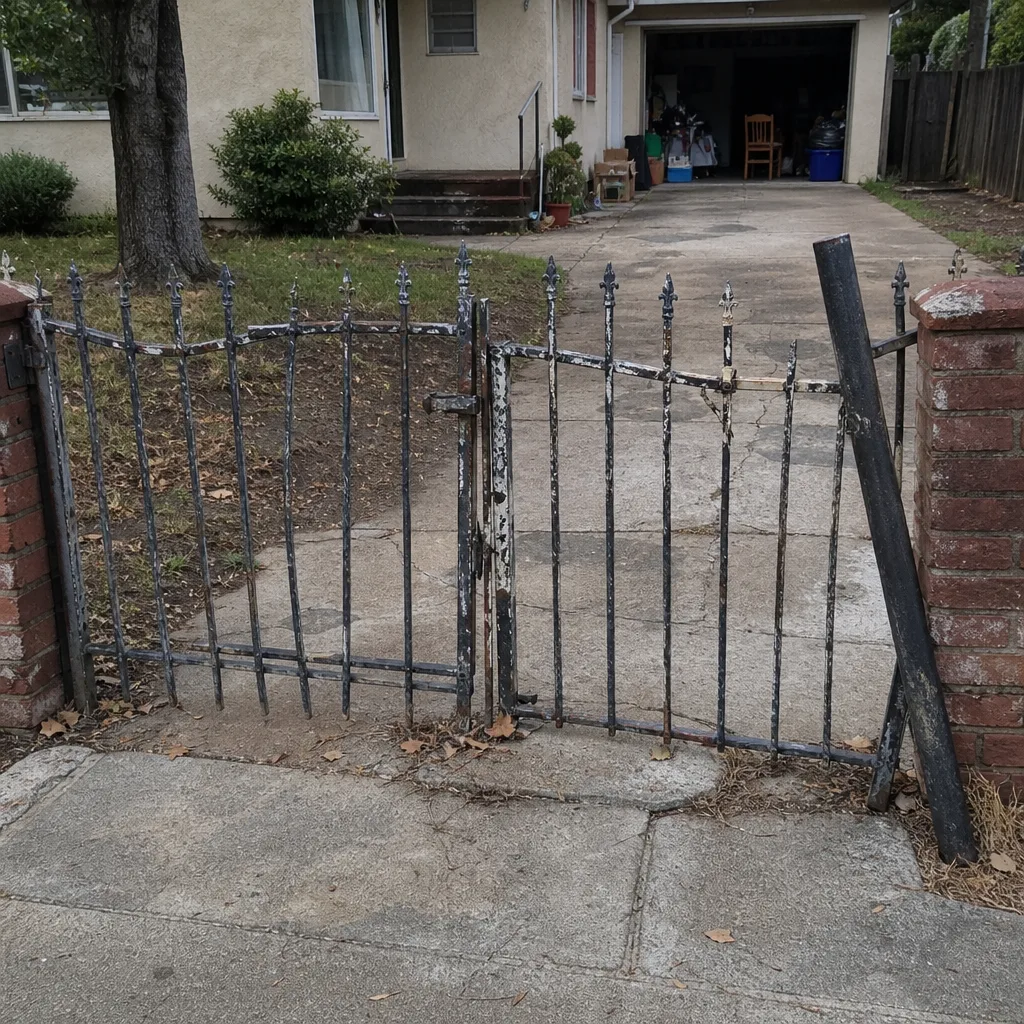 Before
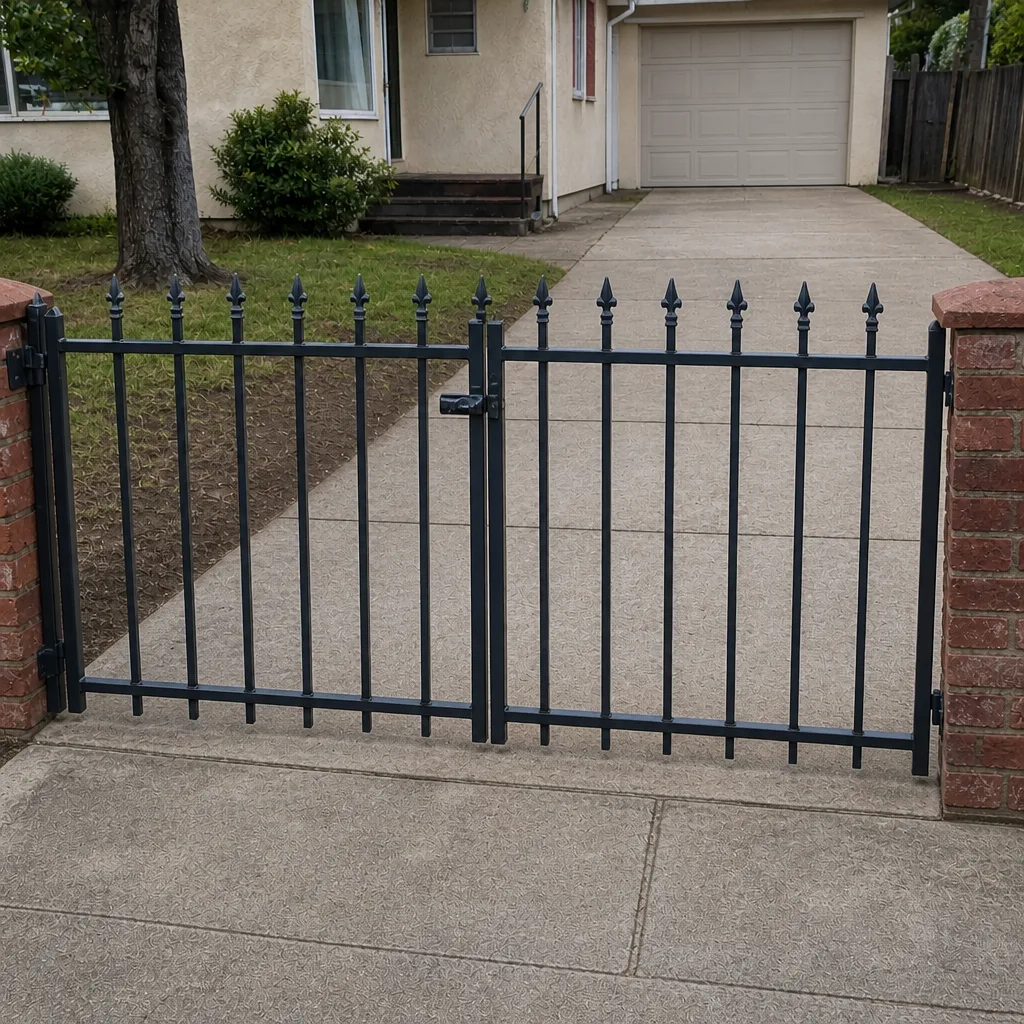 After
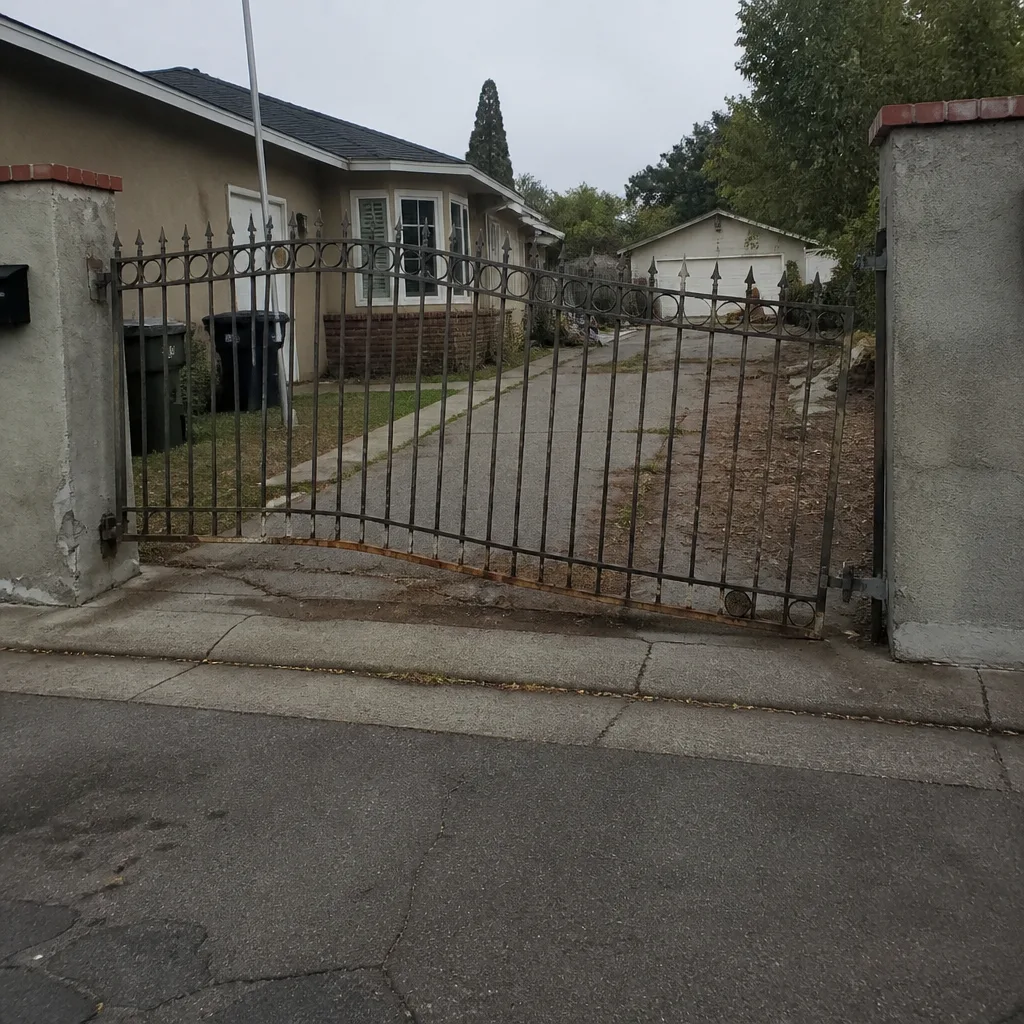 Before
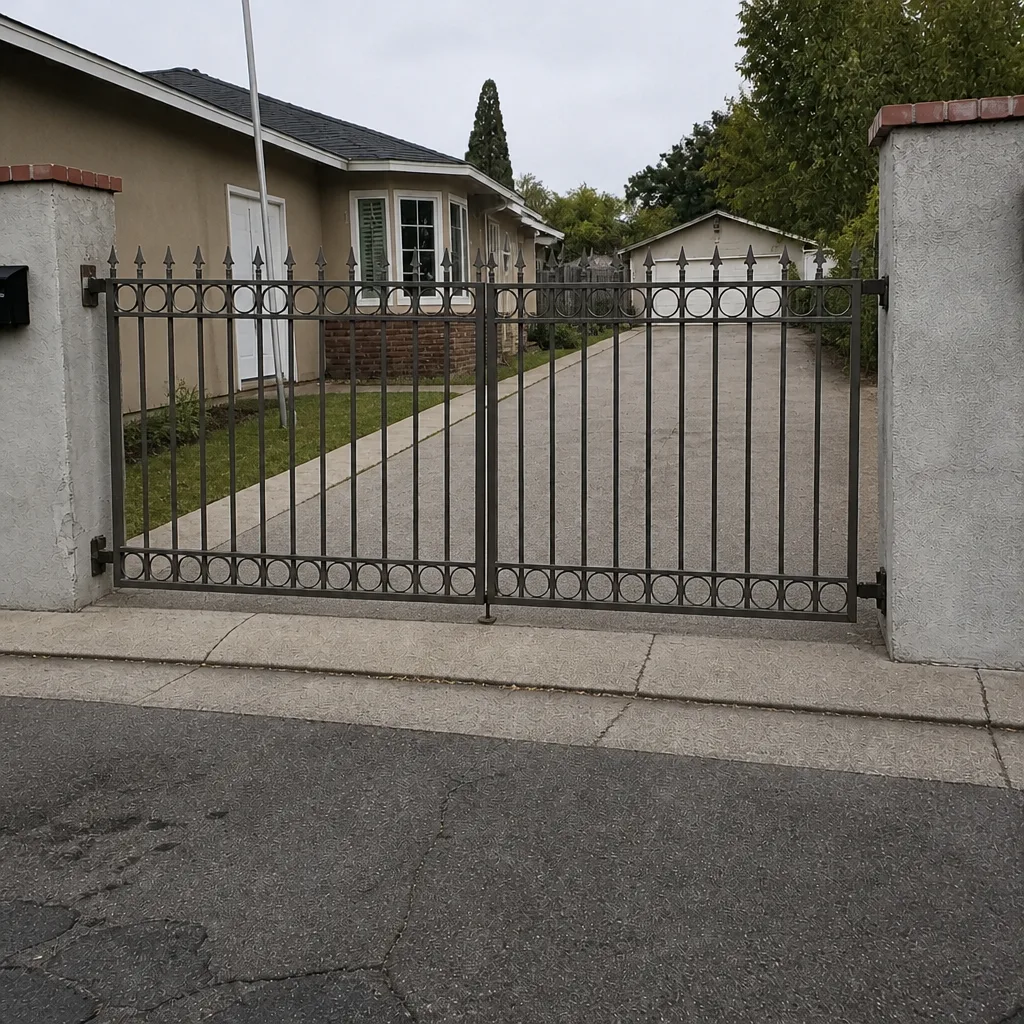 After
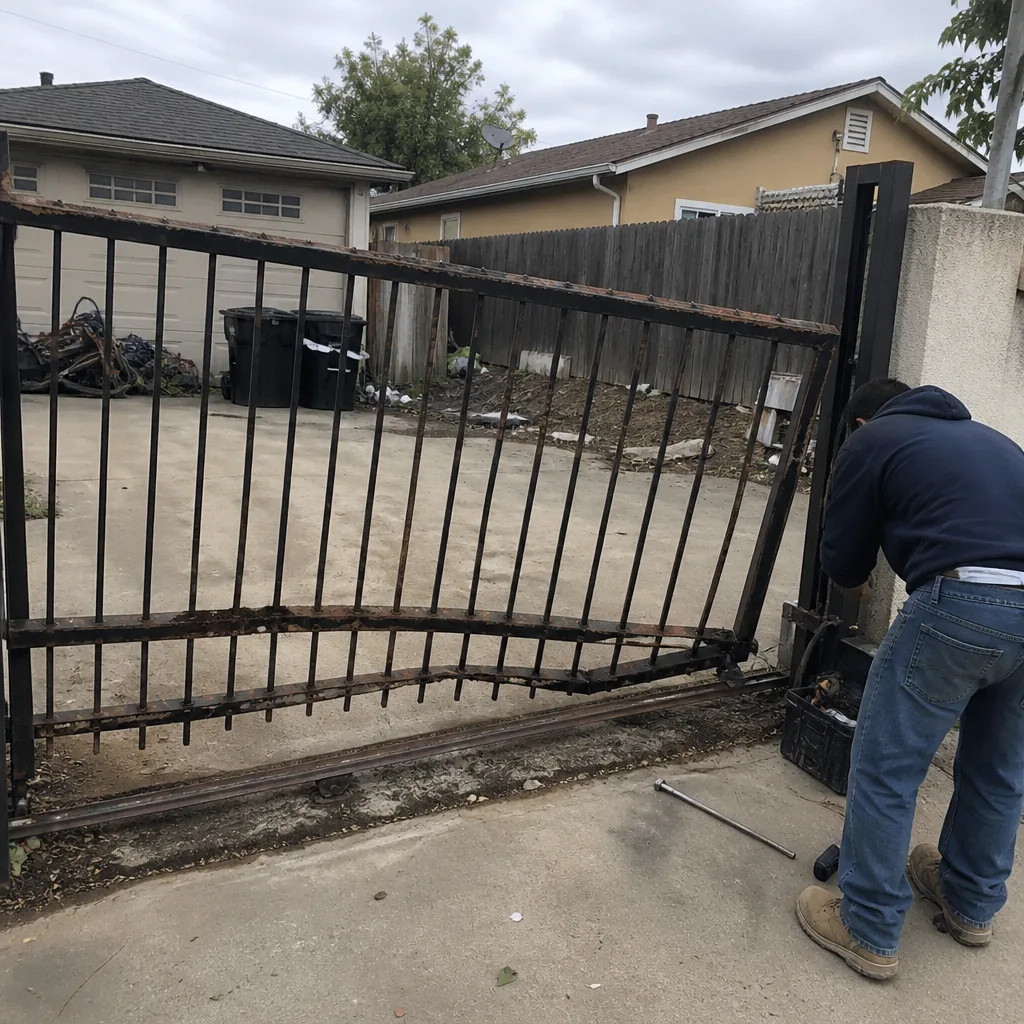 Before
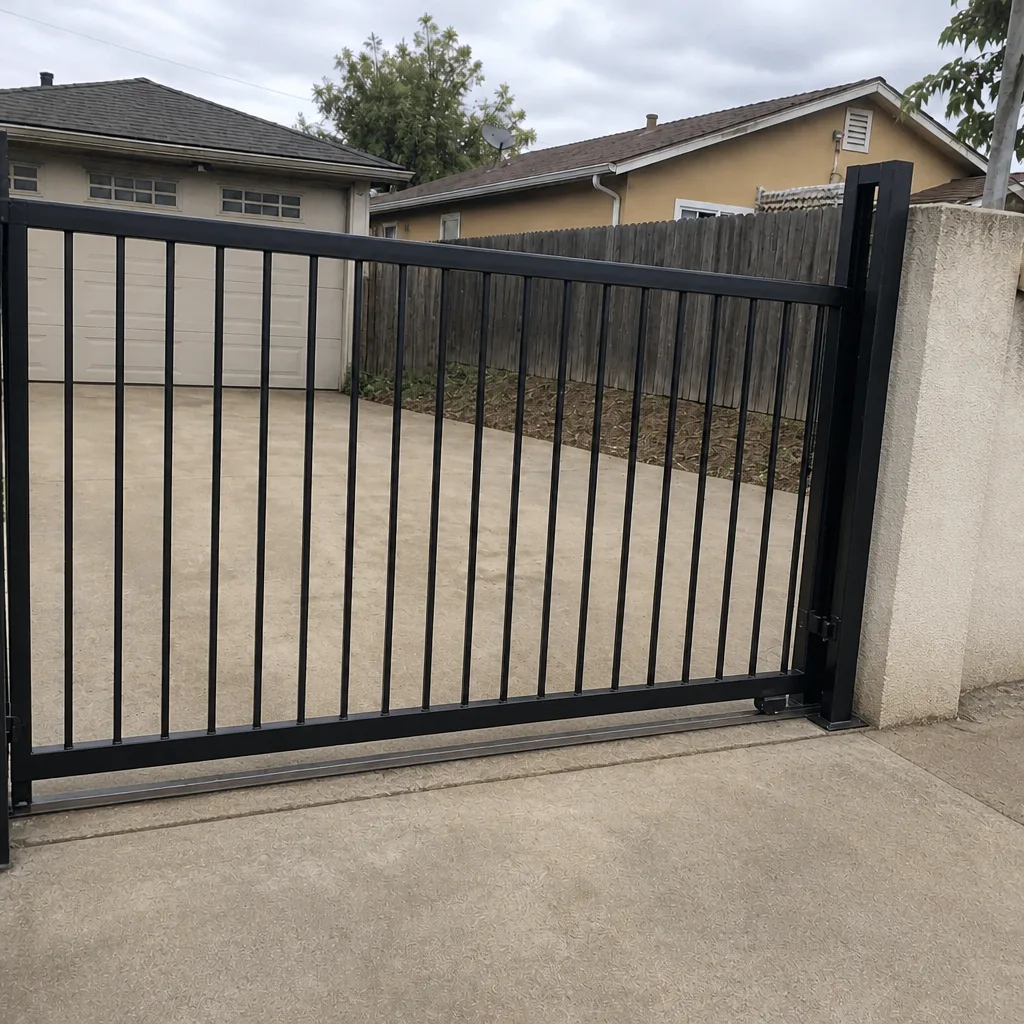 After
Common Mistakes to Avoid
- Treating an automated gate like a manual one. The gate surface looks the same, so homeowners assume the repair is the same. It isn’t. The operator is a machine with stored energy and safety logic; the visible gate is only the output.
- Bypassing entrapment sensors to “make the gate work.” We see this most often after a sensor gets bumped and the gate refuses to close. Bypassing the sensor makes the gate move; it also makes it unable to stop for a person. This is the single most dangerous DIY move on an automated gate.
- Trusting a tutorial filmed on a different operator brand. A Fairfield homeowner with an Elite operator applying a video made for a Mighty Mule is asking for trouble. The board layout, sensor wiring, and travel limit process may all differ.
- Assuming Same-Day availability from a generalist. A handyman dispatched between plumbing and fencing jobs will not have the brand familiarity for your operator. Gate-only technicians are the correct category for a gate problem.
- Skipping the manufacturer’s manual. Every gate operator ships with documentation that describes its service procedures, and that documentation beats any video every time. Read it before you touch anything.
- Ignoring permit requirements for structural changes. Automated gate installations often require a permit in Fairfield, and homeowners should always check with the city’s building department before altering posts or gates that were permitted. Unpermitted changes create problems at sale or refinance.
- Calling after the weekend instead of during it. A gate stuck open is a security issue, not just a nuisance. We answer 24/7. A call outside dispatch hours is booked into the next opening, Sunday through Friday, 7am to 7pm, so a Friday night call still gets you on the schedule.
When to Call a Professional
If your gate involves an automated operator that’s misbehaving, requires you to open the housing, needs sensor work, or fails to reverse on an obstruction, that’s a professional call. If the gate is a heavy commercial or multi-family slide gate, treat it as a professional call even for what looks like minor damage. If you’re unsure of the brand, the model, or what you’re looking at, a professional visit is cheaper than a wrong DIY attempt. Our technicians have up to 12 years of experience and handle gate repair, electric gate repair, and gate installation as dedicated gate specialists rather than as one line among many trades. Gate Repair Fairfield offers free estimates in Fairfield. Call (888) 457-5442. We answer 24/7. Fast dispatch from 7am to 7pm, Sunday through Friday.
The Bottom Line
DIY gate repair and professional gate repair aren’t a skill contest. They’re two different answers to two different questions. Manual hardware belongs to the homeowner; controls, wiring, and safety behavior belong to a gate technician. Fairfield has a mix of older manual gates and modern automated systems, and every property needs a clear-eyed look at which category it’s in. Understanding the boundary is the whole point of this guide, and once you can place your gate on that map, the decision becomes obvious. Get it right the first time, and your gate keeps working without putting anyone at risk.
If you’d like your gate looked at, our team is ready. Across the Fairfield area, we provide free estimates with a written price agreed before any work starts. Call (888) 457-5442. We answer 24/7. Fast dispatch from 7am to 7pm, Sunday through Friday.
Written by the team at Gate Repair Fairfield.