
Last updated November 15, 2026
 Wrought iron
 Wood & steel frame
 Farm & ranch
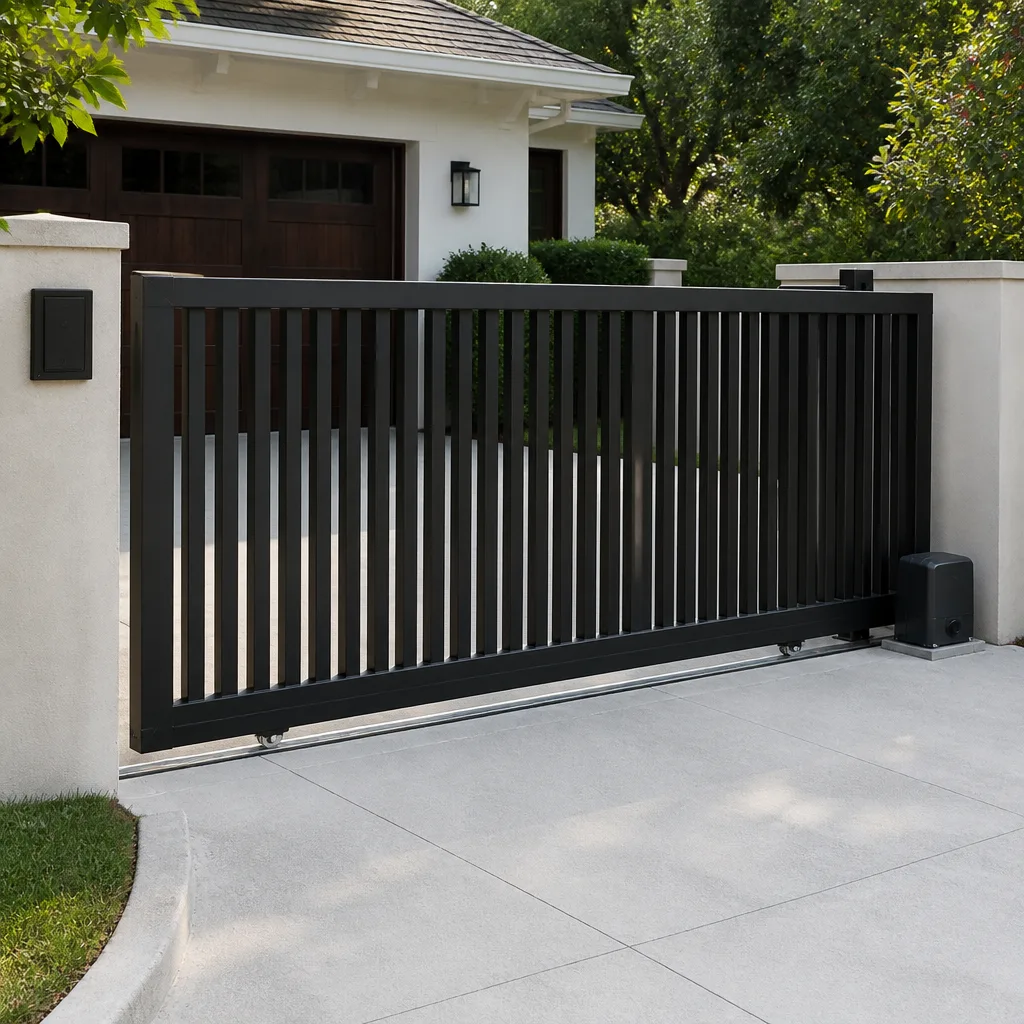 Sliding driveway gates
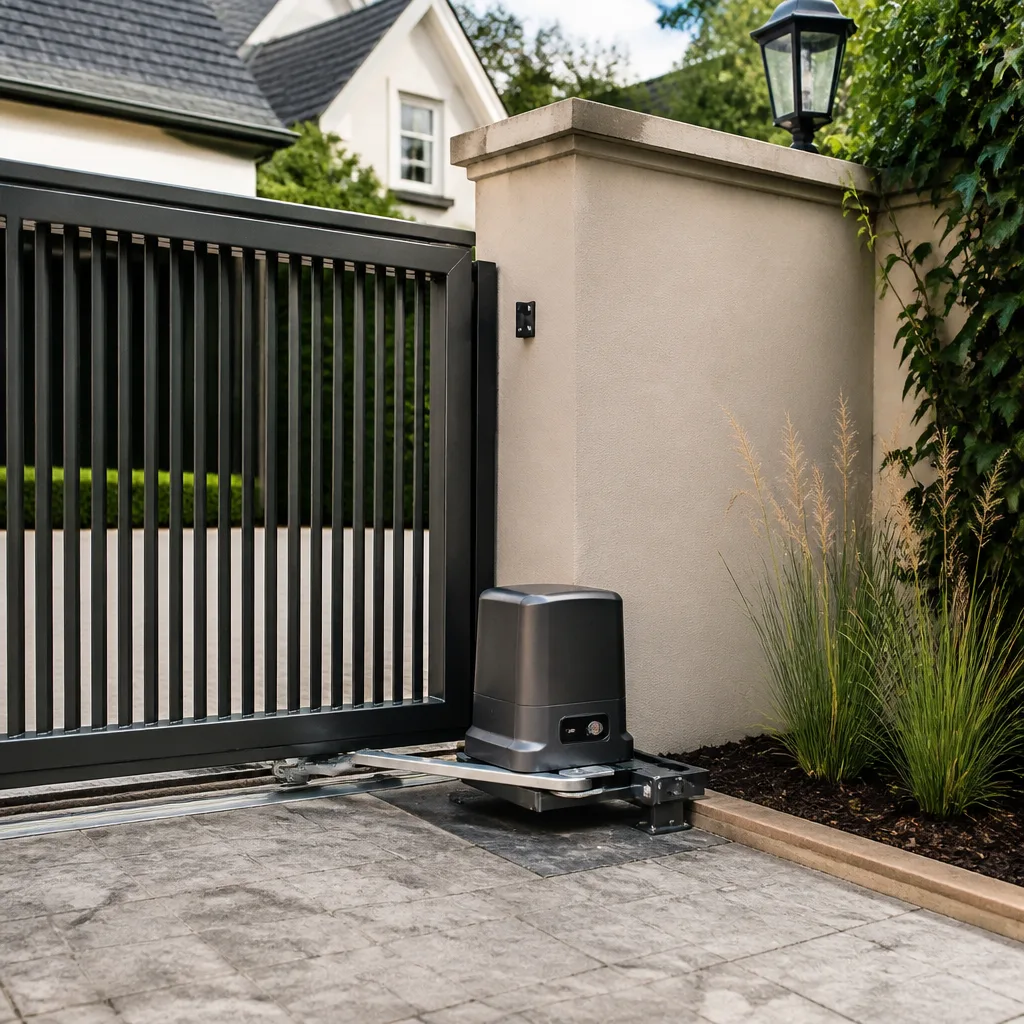 LiftMaster operators
Free on-site gate assessment - hinges, posts, and your LiftMaster or Nice gate operator checked before anything is quoted
The assessment is free and the quote is the invoice.
Get your free estimateChoosing the Right Gate Repair Brand: A Buyer’s Guide for Fairfield
Most people pick a gate operator the way they pick a color for the front door: by what looks good and what fits the budget that month. That works fine for paint. It works badly for a machine that will sit outdoors opening and closing a few thousand times a year for the next decade. The truth is that gate brand selection is a 10 to 15 year decision, and the factors that decide what your repair bills look like over that stretch – parts availability, the density of the local service network, and operator compatibility – are rarely on the spec sheet the contractor hands you. This guide breaks down those factors for Fairfield, so the brand you end up with is one you can actually live with.
Quick Answer
Choosing the right gate repair brand in Fairfield comes down to three things: whether the brand’s parts can be sourced locally or need factory-direct ordering, whether the operator is correctly matched to your gate’s weight, cycle frequency, and power source, and whether local technicians are familiar enough with that brand to diagnose it the first visit. A brand that scores well on all three keeps long-term repair costs predictable. A brand that scores well on price alone usually doesn’t.
Styles & brands we work with
- Wrought iron
- Wood & steel frame
- Farm & ranch
- Sliding driveway gates
- LiftMaster operators
Table of Contents
- Why Brand Choice Is a 10 – 15 Year Decision
- Parts Availability: Local Stock vs. Factory Ordering
- Matching the Operator to Your Gate: The Specs Nobody Asks About
- Gate Panels vs. Gate Operators: Two Separate Decisions
- Brand-Specific Failure Patterns and What They Cost
- Evaluating the Local Service Network in Solano County
- A Step-by-Step Way to Choose Your Brand
- Common Mistakes to Avoid
Why Brand Choice Is a 10 – 15 Year Decision
An automated driveway gate is not a one-time purchase. It’s a mechanical system with a finite service life, and the brand you select determines how that system ages. Two operators that look identical on an estimate sheet can behave very differently in year six, when the control board needs replacing or the limit switch stops registering. One brand’s part is on a shelf within driving distance. The other has to be ordered from the factory, and the gate sits open until it arrives.
That divergence is the heart of the problem. In Fairfield, we see a wide range of brands on the same kind of residential driveway assembly – Viking, Ghost Controls, DoorKing, Elite, LiftMaster, and others – and the repair experience is rarely the same across them. A brand that’s cheap up front can cost more over its life because the parts are proprietary, the local service network is thin, or the operator was undersized for the gate in the first place.
Here’s the mental shift worth making: you’re not buying a gate. You’re buying into a brand’s ecosystem for the next decade or so, including its parts pipeline, its service familiarity, and its compatibility with the panels and hardware already on your property. Judge it that way and the “cheapest” option often stops being the cheapest option.
Parts Availability: Local Stock vs. Factory Ordering
Parts availability is the single most underrated factor in gate brand selection. It determines how long your gate is out of commission after a failure, and it directly affects repair cost because a part that has to be ordered is a part that has to be waited for. In our experience, the brands fall into three rough buckets: widely stocked, regionally stocked, and factory-direct.
- Widely stocked brands – common operators like LiftMaster and Linear tend to have parts that move quickly through distribution, so a control board, remote, or limit switch can often be sourced without long lead times. That shortens downtime on a repair.
- Regionally stocked brands – some brands maintain solid dealer coverage across the Bay Area and Solano County, so a part is usually a phone call away but not always on the shelf at a local retailer. Lead time is measured in days, not weeks.
- Factory-direct brands – less-common or proprietary systems sometimes require the part to come straight from the manufacturer. That can mean a 1 to 2 week lead time for a component that decides whether your gate opens tomorrow or next week.
For a Fairfield homeowner, that distinction is not academic. A gate that won’t close is a gate that stays open until the part arrives. If you have a driveway that needs to be secure, a two-week parts wait is a real problem. The brands with poor local parts availability aren’t bad machines – they’re just harder to keep running quickly when something breaks. Ask your installer, plainly: “If the control board fails in three years, where does the replacement come from, and how long will I be waiting?” The answer tells you more than any marketing brochure.
If you’re already sitting on a brand with a thin parts pipeline, that’s exactly the situation our gate repair service is built to handle – diagnosing the actual failure before anything gets ordered, so you’re not replacing parts on a guess.
Matching the Operator to Your Gate: The Specs Nobody Asks About
A surprising number of gate failures aren’t failures at all. They’re an operator doing its best with a gate that’s too heavy, too wide, or too frequently cycled for what it was specified to move. The brand matters here, but the match matters more. Three specs drive the decision, and most homeowners have never been asked about any of them.
- Gate weight and width. An operator rated for a 400-pound gate will run that gate fine for a while, then start straining, overheating, and wearing out. Every brand publishes a weight and width rating. The installer should be checking your panel’s actual weight, not estimating it from looks.
- Cycle frequency. A residential driveway gate that opens and closes a handful of times a day is a light-duty application. A multi-family or commercial gate that cycles hundreds of times a day needs a heavy-duty operator with a duty rating to match. Putting a residential-grade brand on a high-traffic gate is a fast track to repeat repairs.
- Power source. Solar-capable operators (Ghost Controls makes solar-friendly residential systems) behave differently from hardwired AC units, and some brands are far stronger in one category than the other. If your gate is far from a power source, that’s a specification you need to state up front, not discover later.
The brand you choose should be the one whose product line actually covers your combination of weight, cycles, and power – not the one that happens to be on the contractor’s truck. If you’re unsure what your gate weighs or how often it cycles in a day, we can help work that out during an on-site estimate before any brand gets picked. That conversation is much easier before the operator is installed than after.
Gate Panels vs. Gate Operators: Two Separate Decisions
Here’s a distinction that trips up a lot of Fairfield buyers: the gate panel and the gate operator are two different products, made by two different companies, and choosing one does not choose the other. The panel is the physical gate – the steel, aluminum, or wood structure that swings or slides. The operator is the motorized unit and control system that moves it. You can put a great operator on a flimsy panel and get nothing but trouble, or a sturdy panel with an undersized operator and wear it out early.
It helps to picture them as the two halves of a working gate. The panel determines how much force the operator has to apply, how the gate balances, and how much wind load it meets. The operator determines whether the gate moves reliably, how it’s controlled, and how it stops if something’s in the way. When the two are compatible, the assembly runs smoothly for years. When they aren’t – a heavy slide gate on a light-duty operator, or an operator whose hardware doesn’t match the panel’s mounting – every repair is a workaround.
- Choose the panel first based on the opening, the property, and the look you want, then specify an operator rated for that panel’s weight and cycle.
- Confirm the operator’s mounting and control hardware line up with the panel. Some operators are built for swing gates, some for slides, and some handle both.
- Don’t let either decision override the other. If the gate is already there, the operator must fit it. If you’re installing both new, they should be chosen together, as a system.
When we take on a new gate installation, the panel and the operator are spec’d as a pair, precisely because a mismatch is the most avoidable kind of long-term cost. If you’d rather start from the operator side and work out, that works too – the goal is that the two decisions agree.
Brand-Specific Failure Patterns and What They Cost
Every brand has a weak spot. Knowing what tends to fail first on the systems sold in the Fairfield area helps you predict long-term repair cost and decide whether a brand’s typical failure is a cheap fix or an expensive one. These are general tendencies from working on these systems, not predictions about any specific gate.
- LiftMaster. Residential operators that are common and well supported, with control boards, remotes, and limit switches that are widely available. When a LiftMaster system needs a part, the wait tends to be short. The most common repairs land on the electronics side – boards and sensors – rather than exotic mechanical parts.
- FAAC. Often found on heavier residential and commercial gates. FAAC operators are capable, but when a proprietary component fails, the part can require ordering rather than local shelf stock, so downtime can stretch. The lesson is to source the repair through a technician who knows the FAAC line and can order correctly the first time.
- Viking. Common on residential and light-commercial swing gates. Viking systems have a reputation for sturdy mechanical build, but control boards and sensors are the electronics that eventually need attention, the same as any operator. Familiarity with the Viking control hardware is what keeps those repairs from dragging.
- Elite. A brand many Fairfield properties use for slide gates. Elite operators are built for the duty cycle of a sliding gate, which means the mechanical components handle the load well. The failure pattern to watch is the usual electronics and safety-sensor territory.
- DoorKing. A commercial and multi-family staple, often on high-cycle gates where access control, keypads, and telephone entry systems are part of the assembly. DoorKing failures tend to be electronic and access-control-related, so the repair depends on a technician who knows the DoorKing ecosystem, not just the motor.
The takeaway isn’t that one brand is bad. It’s that the life cost of a brand depends on whether its typical failure is a stocked part or an ordered one, and whether local technicians know that failure pattern. A gate operator whose control board is on a shelf nearby costs less to keep running than one whose board is a two-week order, even if the initial price was the same.
Evaluating the Local Service Network in Solano County
A brand is only as good as the network of technicians who work on it locally. In Solano County, the density of that network varies widely by brand, and it directly affects how responsive repairs can be. Dense local coverage means a technician can often reach the site quickly and the part is a short drive away. Thin coverage means fewer qualified hands, longer waits, and sometimes travel surcharges baked into the call. Fairfield sits in the middle of that map, and it’s a fair question to ask any brand’s representative what local service looks like.
Here’s how to judge a brand’s local service network without a spreadsheet:
- Ask who works on it locally. Not who sells it – who repairs it. A brand with a strong local repair presence is a brand you can keep running.
- Ask about typical lead time on the common wear parts. Boards, remotes, sensors, and limit switches are the components that fail most often. If those are quick to source, downtime stays short.
- Ask whether the local technician has worked on your exact model line. General familiarity with a brand is good. Specific experience with the sub-line or vintage is better.
- Ask about travel. In a brand with only distant support, travel can become a cost factor. In a brand with good local coverage, it doesn’t.
For a Fairfield resident, this is where a dedicated gate specialist earns their keep. We work on your brand across the full range of residential and commercial systems common in the area, so the density question gets answered by the technician who shows up, not by a distributor’s map. When the network is thin on a particular brand, we say so up front rather than after the part is ordered.
A Step-by-Step Way to Choose Your Brand
If you want a repeatable process instead of a gut feeling, here’s the one we walk customers through before a new gate or operator goes in. It keeps the decision grounded in the factors that actually drive long-term repair cost.
- Identify the gate’s real specs first. Weight, width, type (swing or slide), and how many cycles a day it will run. This is the foundation for everything else.
- Match the operator category to the specs. A residential swing gate has different needs than a commercial slide gate, and the brand should have a product line that fits the category rather than being pushed into one it doesn’t.
- Check parts availability. Ask specifically about control boards, sensors, and remotes. If those require factory ordering with a 1 to 2 week lead, factor that into the decision.
- Check local service familiarity. Confirm that local technicians work on the brand and have experience with the model line, not just the manufacturer’s name.
- Confirm panel-and-operator compatibility. Make sure the operator’s mounting, control hardware, and duty rating match the panel you’re installing or keeping.
- Get the written estimate and keep it. The written estimate sets the final price, and it should spell out the brand selection and why it fits. Get it before any work starts.
That sequence sounds simple, and it is – but it’s the opposite of how most brands get picked, which is “what did the installer bring?” Fairfield homeowners who run this process end up with a gate they can live with, not just a gate that looked good on the quote.
See the difference
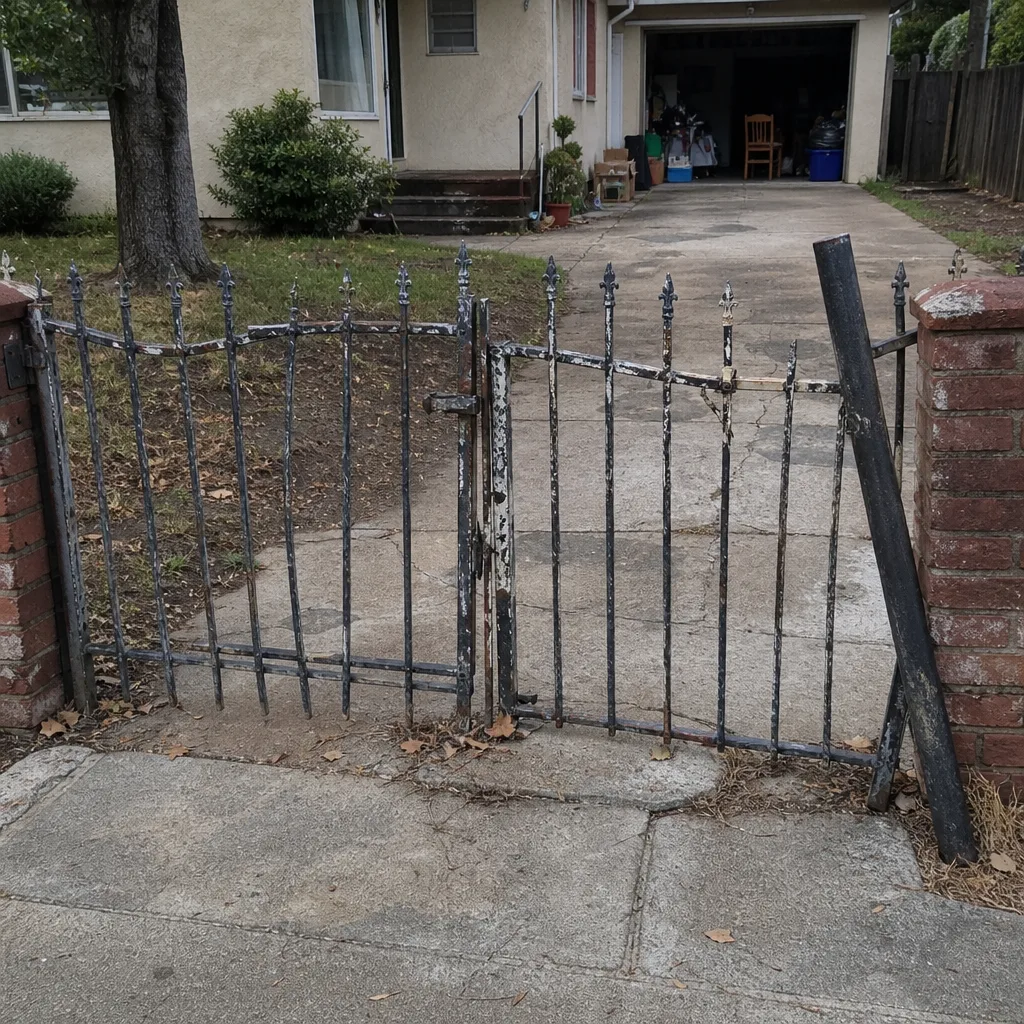 Before
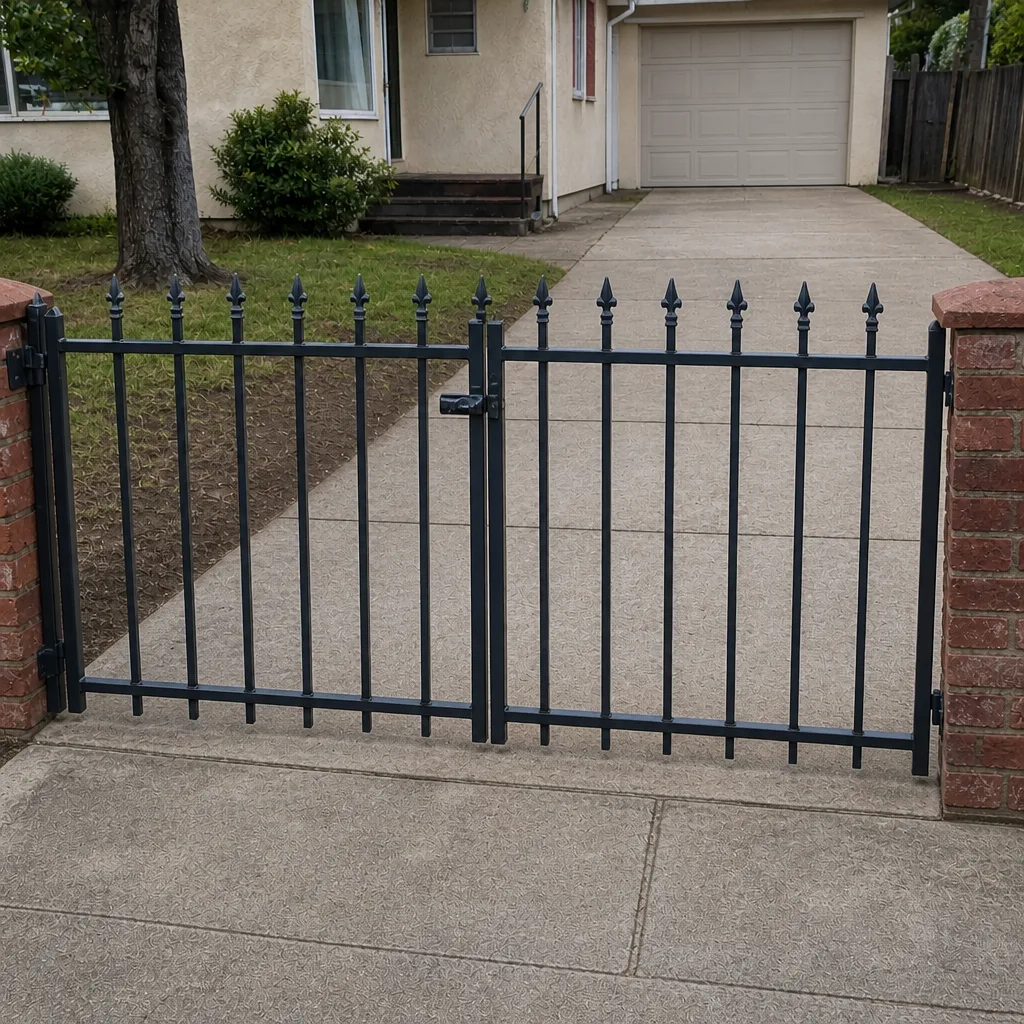 After
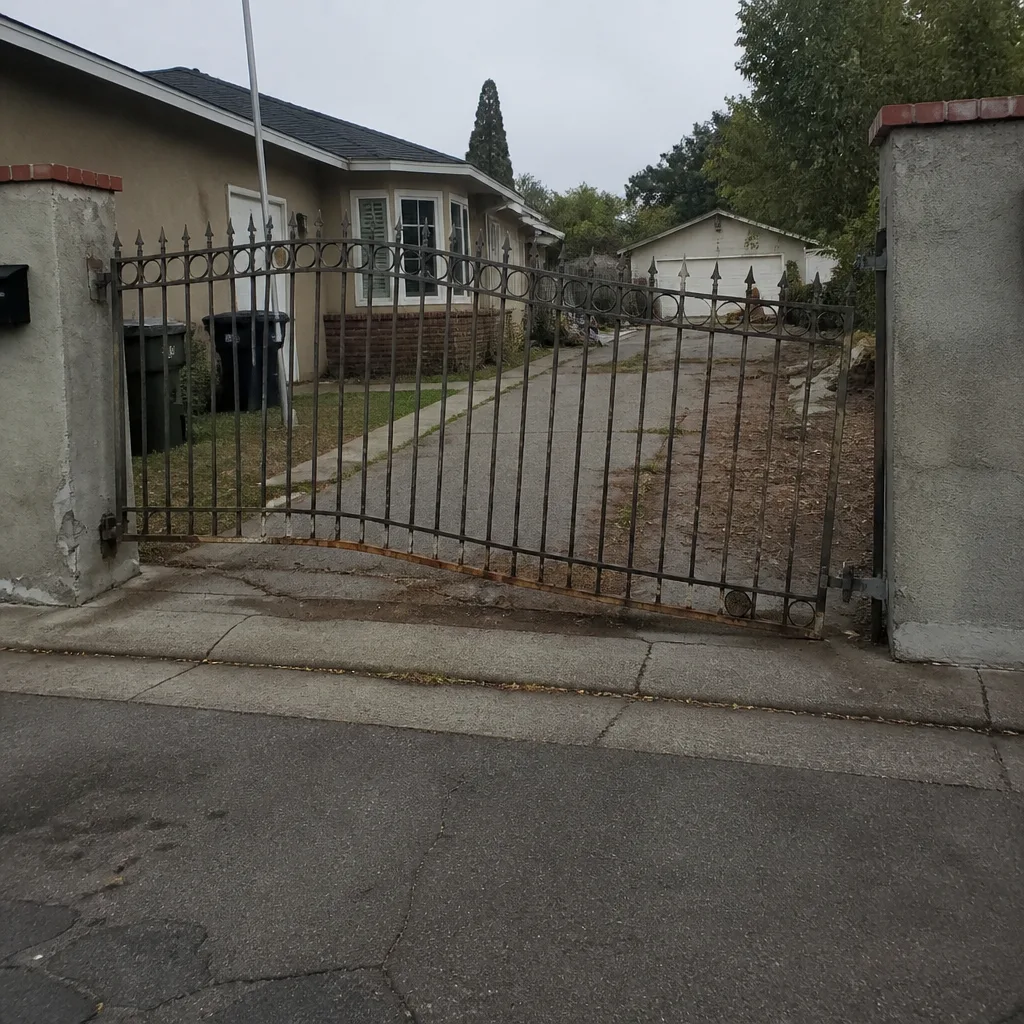 Before
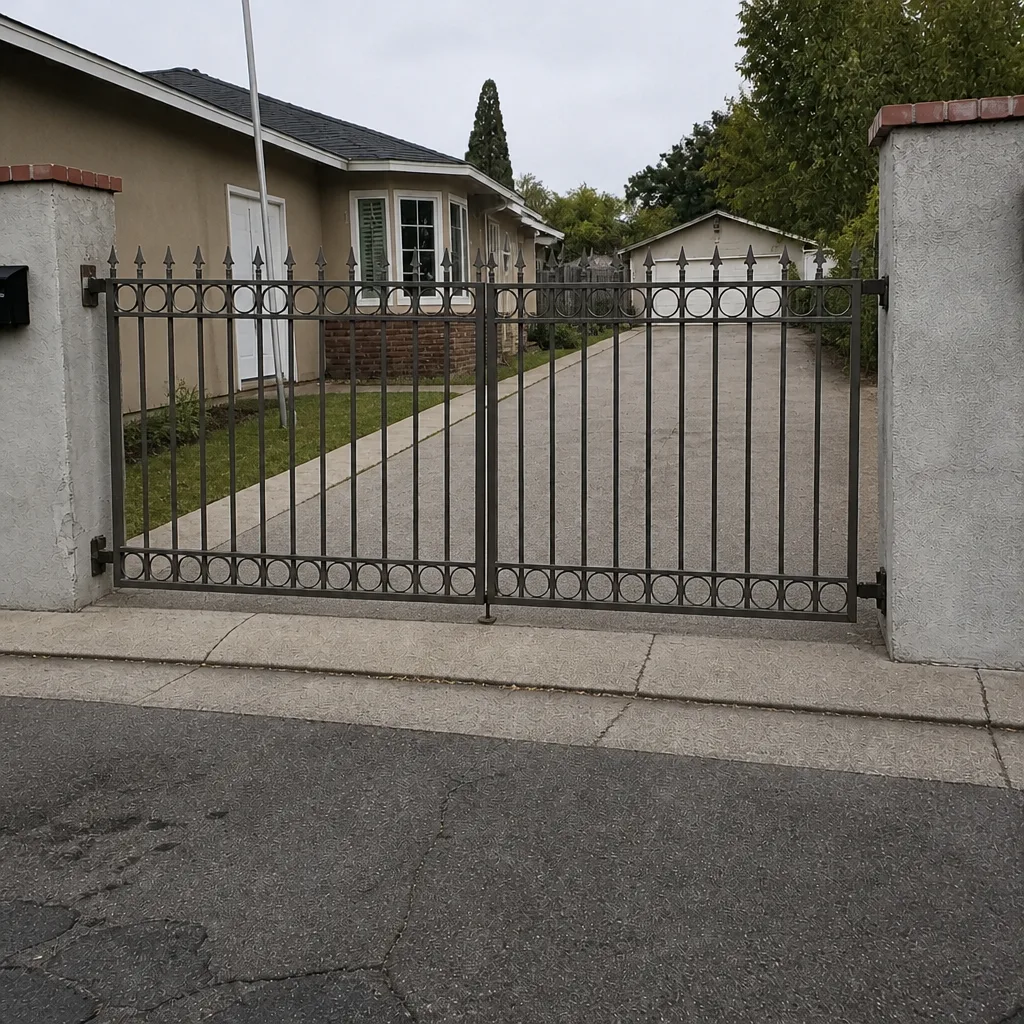 After
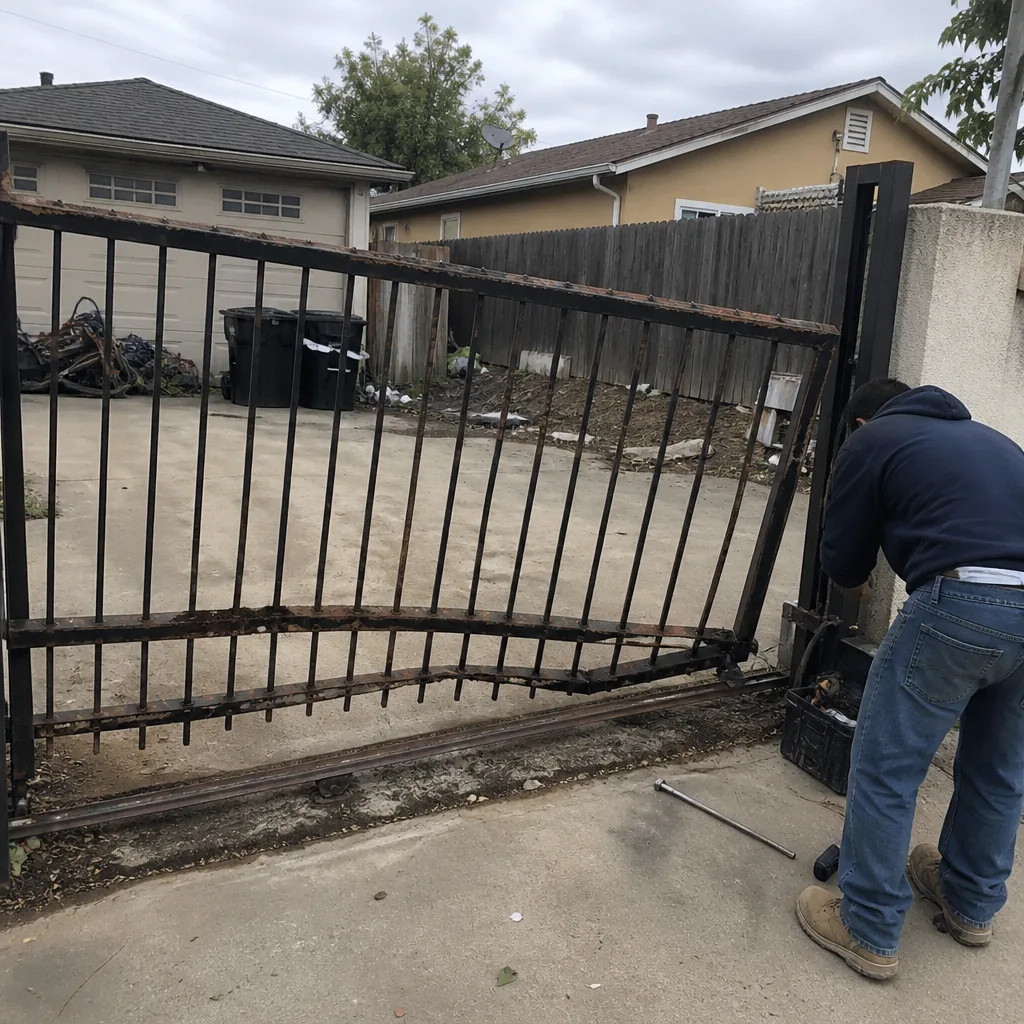 Before
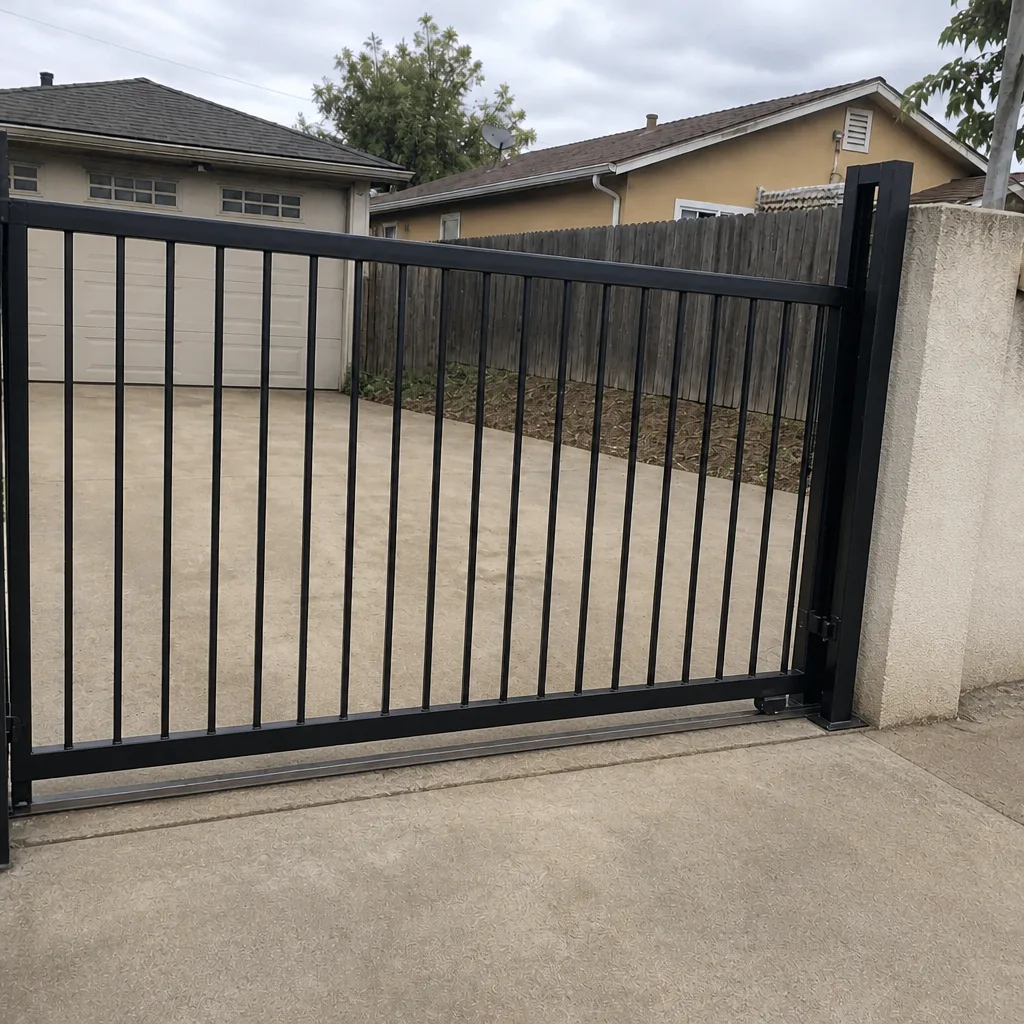 After
Common Mistakes to Avoid
- Choosing on up-front price alone. The cheapest operator quote often hides a proprietary-brand parts pipeline that costs more over the gate’s life. Judge the total ten-year picture, not just the invoice today.
- Confusing the panel brand with the operator brand. They’re separate decisions made by separate companies. Treating them as one is how mismatches get installed.
- Skipping the weight and cycle check. An operator picked without confirming the gate’s actual weight and daily cycle count will wear out early. In Fairfield, a high-cycle multi-family gate needs a very different operator than a residential driveway.
- Ignoring local parts availability. A brand whose control board arrives in a week or two is a brand that keeps your gate open when it fails. Ask about lead time before you buy, not after.
- Assuming any gate tech knows your brand. A generalist may be learning the DoorKing access-control side of your system on the job. Ask whether the technician works on that brand and model line regularly.
- Letting the contractor pick the brand without you. It’s tempting to let the installer decide everything, but the brand choice is the one factor you’ll live with for years. Stay in that conversation.
- Not getting the price in writing before work starts. On any repair or install, the written estimate should set the final price. A verbal ballpark is not that.
When to Call a Professional
Some things you can check yourself: whether the remote’s batteries are fresh, whether the gate is visibly off its track, whether there’s an obstruction blocking the safety sensor. Beyond that, the danger inside a gate assembly is real. Automated gates carry live wiring and operators that can move with surprising force, and heavy panels can crush. If your gate is misbehaving electrically, if the operator isn’t responding, or if you’re hearing grinding or strain, that’s a job for a trained technician who knows the brand. Our electric gate repair team works from the operator to the hardware, diagnosing both the mechanical structure and the control board, sensors, and wiring. Gate Repair Fairfield offers free estimates in Fairfield – call (888) 457-5442. We answer 24/7. Fast dispatch from 7am to 7pm, Sunday through Friday.
Frequently Asked Questions
There’s no single “best” brand – the right pick is the one that matches your gate’s weight, cycle frequency, and power source, and whose parts are locally serviceable. For a light-duty residential driveway, widely stocked brands like LiftMaster and Ghost Controls (which offers solar-capable systems) tend to make sense. The fix isn’t the label; it’s the match. Call (888) 457-5442 for a free estimate and we’ll work out the right category with you.
It depends entirely on the brand. Common brands like LiftMaster and Linear often have parts available quickly through distribution, while proprietary or less-common systems may require factory-direct ordering with a 1 to 2 week lead time. That gap is the reason parts availability belongs in the brand decision. If you’re unsure about your brand’s pipeline, call (888) 457-5442 and we’ll tell you.
The panel is the physical gate structure; the operator is the motorized unit and control system that moves it. They’re made by different companies and chosen separately, and they have to be compatible for the system to run reliably. Picking one brand for both, or assuming they’re bundled, is a common mistake. Call (888) 457-5442 for a free estimate before you commit.
Viking operators are known for sturdy mechanical build, with control boards and sensors being the first electronics to need attention. Elite systems handle slide-gate duty well, with electronics and safety sensors as the usual wear points. DoorKing is a commercial and access-control brand, so failures tend to center on keypads, telephone entry, and boards. Every brand fails – the question is whether the part is stocked locally. Call (888) 457-5442 for an exact quote; estimates are free.
Usually not, unless there’s a specific reason (a commercial application where the brand’s strengths outweigh the network). Thin local coverage means fewer qualified hands, longer waits, and sometimes travel costs. A brand with solid local service density in Solano County keeps repair bills predictable. Call (888) 457-5442 and we’ll talk you through what local service looks like for your brand.
Yes. We install gates and operators from the major brands common in Fairfield, including LiftMaster, FAAC, BFT, Linear, Viking, Ghost Controls, DoorKing, Elite, and Mighty Mule. Installation is measured and scheduled, not same-day, so we promise an on-site estimate and a written price rather than a rushed visit. Call (888) 457-5442 for a free estimate. A nearby Fairfield property manager or homeowner can also reach us through our main Gate Repair Fairfield line.
The Bottom Line
A gate is a machine you’ll live with for a decade or more, and the brand you choose decides what those years cost. The decision comes down to three checks: can the parts be sourced locally or do they need factory ordering; is the operator correctly matched to your gate’s weight, cycle frequency, and power source; and does the local service network in Solano County include technicians who actually know that brand. Brands with all three in place – a stocked parts pipeline, a compatible operator, and local familiarity – keep repair bills predictable. Brands that score well on price alone usually don’t. What makes the biggest difference is a company that works on your brand, and a gate specialist with up to 12 years of experience on ours. Call (888) 457-5442 for a free estimate.
For a broader look at how we approach the trade, see Gate Repair Fairfield, and if you’re weighing a new install against repair, our gate repair page covers that decision.
Written by the team at Gate Repair Fairfield.