
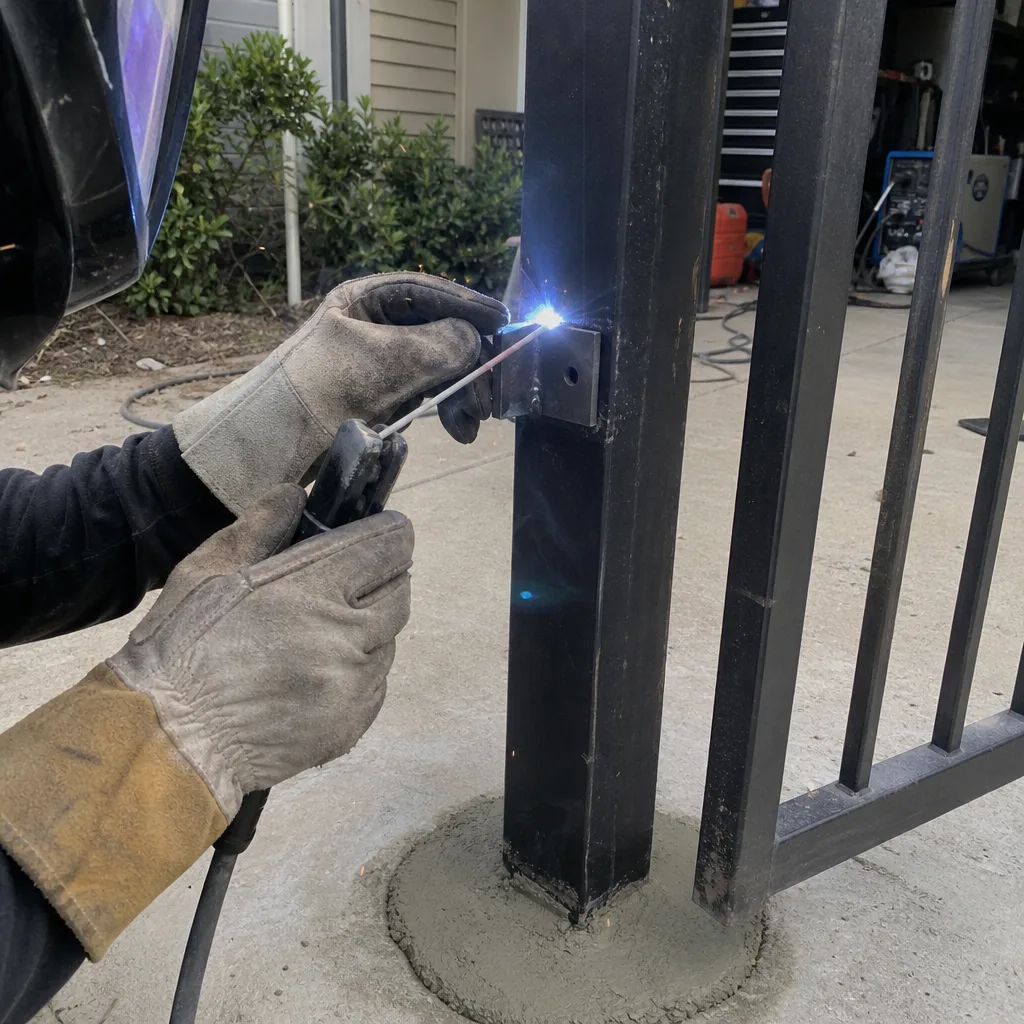
Last updated November 15, 2026
 Wrought iron
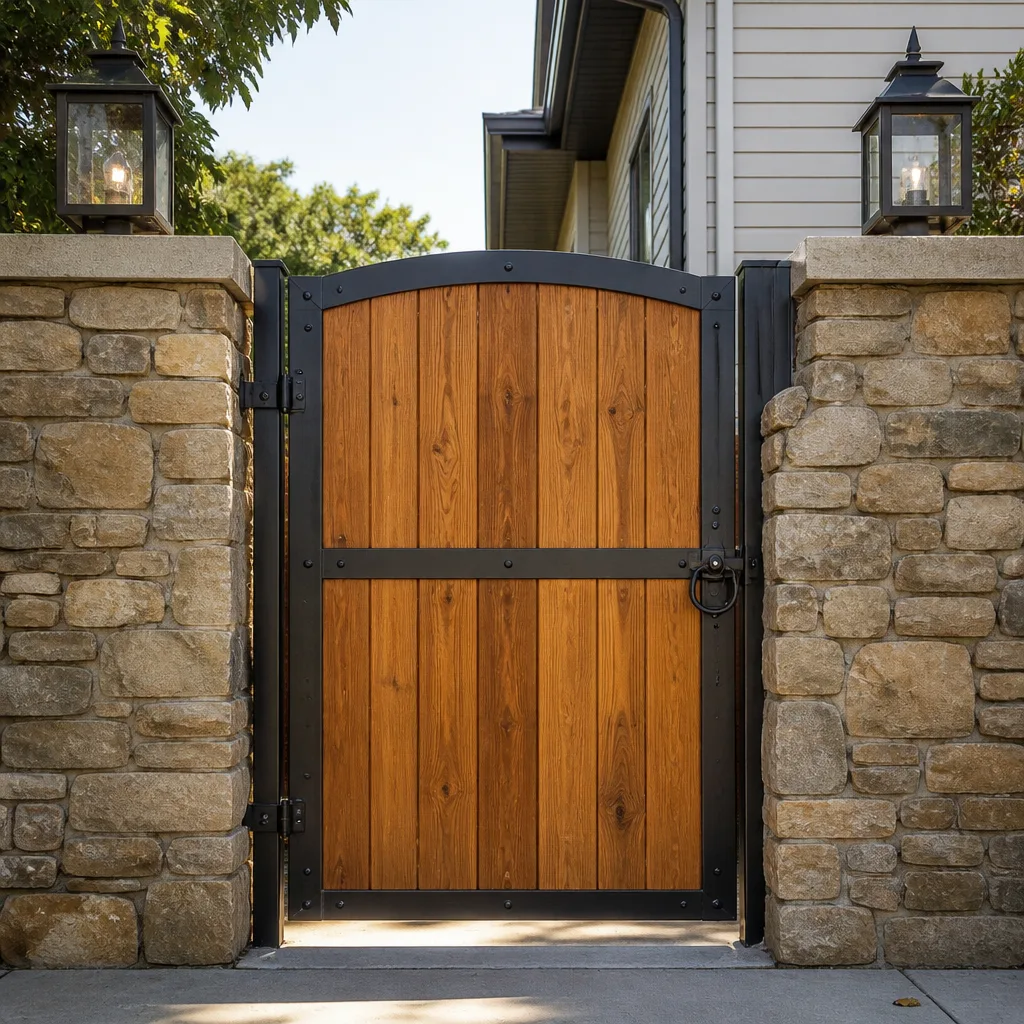 Wood & steel frame
 Farm & ranch
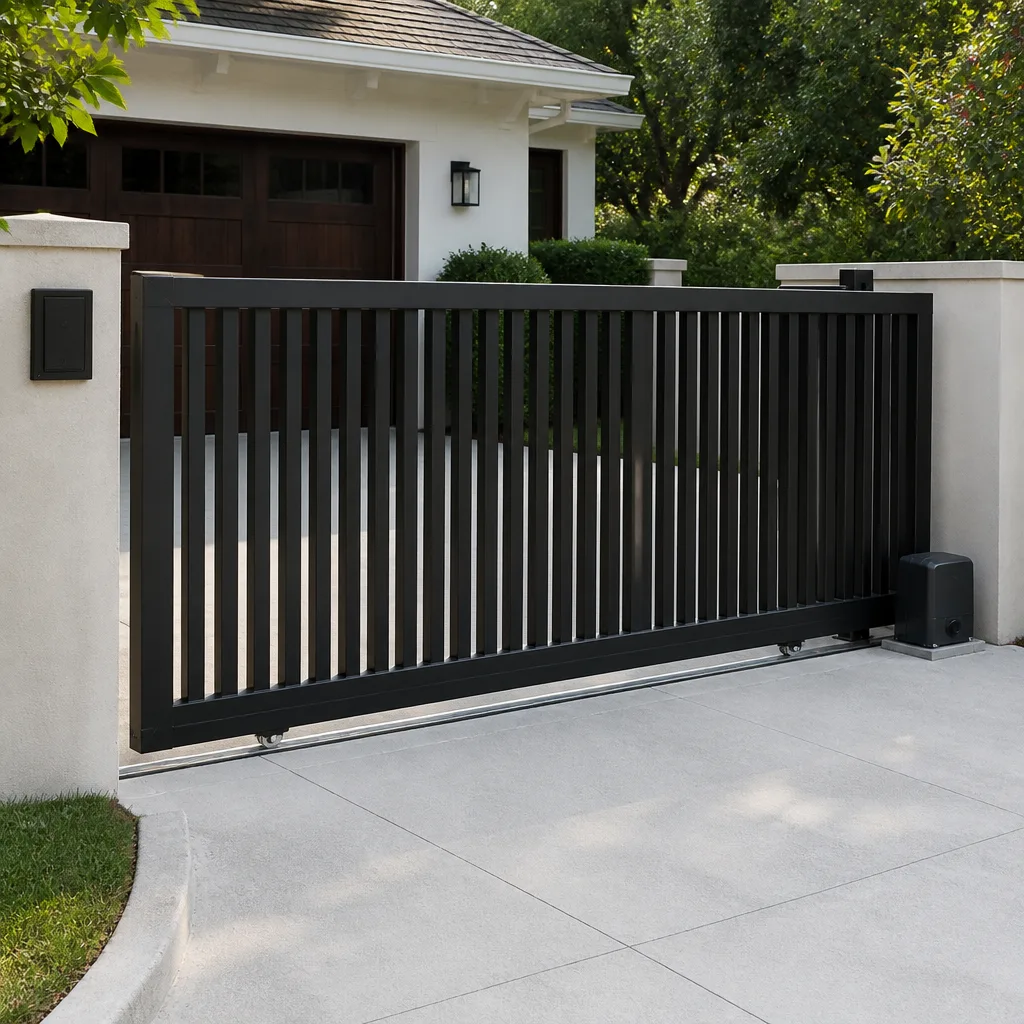 Sliding driveway gates
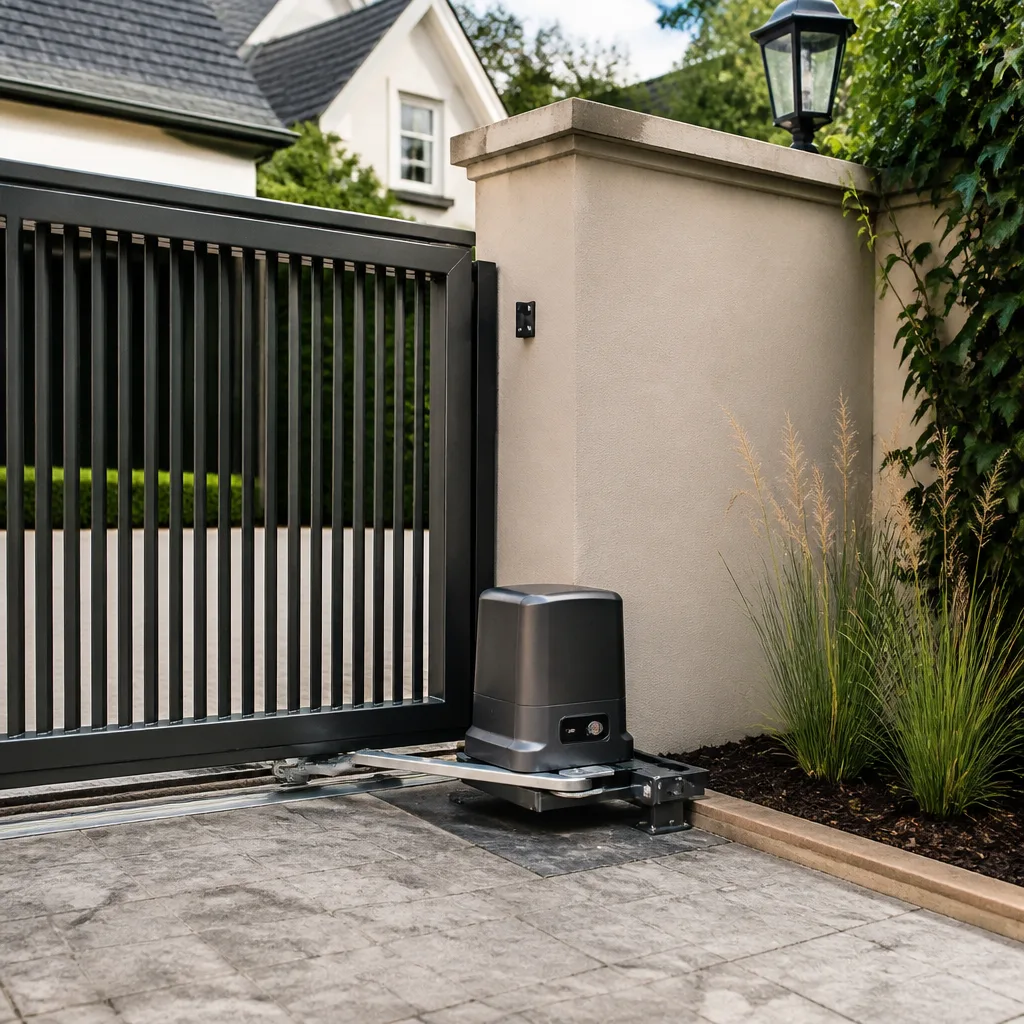 LiftMaster operators
Free on-site gate assessment - hinges, posts, and your LiftMaster or Nice gate operator checked before anything is quoted
The assessment is free and the quote is the invoice.
Get your free estimateGate Repair Troubleshooting in Fairfield: Common Problems and How to Fix Them
The gate that “randomly stopped working” almost never stopped randomly. In our experience, there is always a chain of cause and effect, and the reason most gates stay broken is that the first link in that chain gets misread. A gate that won’t open looks identical whether the culprit is a $12 hinge pin, a misaligned limit switch, or a control board that’s given up. Guess wrong at step one and you replace components that were fine, over and over, while the actual fault sits untouched. This guide teaches you to diagnose from the root cause rather than the symptom. We cover the three failure families, what Fairfield’s climate does to gates in our area, and the first test to run before you touch a wire.
Quick Answer
Most residential and commercial gate problems in Fairfield fall into three root families: electrical or control-board failures, mechanical wear in hinges, rollers and tracks, and operator overload from a gate that’s physically straining. The fastest way to tell them apart is to release the gate from the operator and see whether the leaf moves freely by hand. If it does, the mechanical side is probably sound and the fault is electrical. If it doesn’t, you’re usually looking at binding hardware, and the operator was only telling you so by stopping. That one test saves most people a wrong diagnosis.
Styles & brands we work with
- Wrought iron
- Wood & steel frame
- Farm & ranch
- Sliding driveway gates
- LiftMaster operators
Table of Contents
- The Three Failure Families (and Why They Look the Same)
- The Manual Release Test: Your First Diagnostic Step
- How Fairfield’s Climate Ages a Gate
- Symptom-to-Root-Cause Chart by Brand
- What a Homeowner Can Safely Check First
- When the Problem Is the Operator, Not the Gate
- How to Document Symptoms So the Quote Is Accurate
The Three Failure Families (and Why They Look the Same)
Nearly every gate call we handle starts the same way: the customer describes a symptom, not a fault. “It opens halfway and reverses.” “The remote stopped working.” “There’s a clicking noise and nothing moves.” Those are symptoms. Underneath them sit three distinct failure families, and each one demands a completely different fix.
Family one is electrical and control-side. This includes the operator’s control board, safety sensor drift, keypad and remote pairing, and degraded wiring at the operator connections. A failing control board often produces the same symptom as a binding gate: the gate reverses mid-travel. But the cause is entirely inside the head unit.
Family two is mechanical wear. Hinges that have lost their tolerance, rollers flat-spotted, slide-gate track that’s warped, worn bushings, a sagging post. These faults create drag, and drag makes the operator work harder than it was set up to. Mechanical wear rarely announces itself. It accumulates until the gate runs to a stop.
Family three is operator overload. Here the gate is physically fine; the operator is undersized, the force setting is wrong, or the duty cycle has been exceeded. A high-cycle commercial gate running an operator that wasn’t spec’d for the traffic behaves exactly like a broken one. None of these three look different from the keypad side of the gate.
We see all three in Fairfield every week, and in a lot of cases the original fault was simple – but two or three wrong parts got swapped in first, which made the actual problem harder to isolate. That’s why our gate repair approach starts with diagnosis from the source, not from a parts list.
The Manual Release Test: Your First Diagnostic Step
Before anyone touches a wire, opens the operator cover, or calls for a service visit, release the gate from the operator and move it by hand. This is the single most useful diagnostic step in gate work, and almost no homeowner does it. Every automated operator has a manual release – a lever, key, or handle, depending on the brand. It exists so the gate can be operated during a power failure. It also functions as a free diagnostic.
Here’s what it tells you.
- Release the operator. Use the release lever or key, following the operator manufacturer’s procedure. On most residential systems this is a lever that disengages the drive; on commercial slide operators it may be a chain hoist or a keyed release.
- Move the gate through its full travel by hand. Open it all the way, close it all the way. You want the whole arc, not just a few inches.
- Feel for drag, binding, or a change in resistance. A gate in good mechanical condition rolls or swings with light, even resistance. It may not glide, but you shouldn’t feel it catch or heave.
- Check whether it stays where you put it. If the gate rolls back open on its own, the track or post has shifted. If it binds at one point, that’s where the wear lives.
- Listen. Grinding or a heavy metal-on-metal sound is bearings or track. A creak is usually hinge or pivot friction.
If the gate moves freely by hand, you can pretty much rule out a mechanical cause. Your fault is electrical or in the operator – sensor drift, control board, wiring, or remote/keypad pairing. If it doesn’t move freely, the operator isn’t the problem; it’s the messenger. Fix the binding hardware and the gate usually runs again.
One safety note for slide gates especially: they’re heavy, and a leaf that comes off the track under manual movement can seriously injure the person moving it. If the gate leans, wobbles, or feels unstable when you try to move it, stop and leave it where it is. Heavy gate work is not a homeowner task.
How Fairfield’s Climate Ages a Gate
Fairfield sits at the edge of the Suisun Valley, where the Delta breeze moves cool marine air through most summer afternoons. The result is a wide daily swing: hot afternoon, cool night, back to hot the next day. That swing repeats for months, and it’s exactly the sort of cycle that slowly works a metal gate out of true.
Here’s what we see from it. Steel and aluminum gates expand and contract a little every day, and while a single cycle is microscopic, thousands of them accumulate. The pivot points take the most strain. Over a few summers, gates that were perfectly aligned start to sag at the far post, and slide gates develop a low spot in the track because the concrete pad underneath behaves differently in the heat than the track above it. The gate doesn’t fail. It drifts.
The second Fairfield pattern is sensor drift. Photoelectric safety sensors and their alignment don’t care about temperature, but the brackets holding them do, and those brackets are mounted on the gate structure or the ground beside it. When the ground shifts – or when a gate post expands and contracts – the sensor beam moves a fraction of an inch out of alignment. The gate controller reads that as an obstruction and refuses to close. On residential brands like Ghost Controls and Mighty Mule, the symptom shows up as a gate that opens fully but won’t close, or closes a few feet and reverses. Nothing is broken. The beam is just off.
Summer heat also pushes operator duty cycles. A gate that ran comfortably in spring now runs for the same duration in 100-degree heat, but the operator’s internal thermal protection kicks in sooner. On a heavy day, the operator cuts out mid-travel and refuses to restart until it cools. That’s not a fault; it’s a protection feature telling you the operator is working near its limit. We see plenty of this in Fairfield, and a lot of gates get replaced because of it when a force-setting adjustment or an operator upgrade is the real answer.
If you want to understand the full range of what we diagnose and repair – from hinges to control boards – see our main Gate Repair Fairfield page.
Symptom-to-Root-Cause Chart by Brand
Different brands tend to fail in recognizably different ways, which helps narrow the diagnosis before we’ve seen the gate. We work on LiftMaster, FAAC, BFT, Linear, Viking, Ghost Controls, DoorKing, Elite, and Mighty Mule, and each has its patterns.
What each symptom usually points to
- Gate opens fully, won’t close, or closes partway and reverses. Most often safety sensor alignment or a sensor that’s been obstructed. On Ghost Controls and Mighty Mule residential systems, this is the number-one cause. Check the sensor lenses and brackets before assuming the control board.
- Remote works from close range only, or not at all. Usually remote pairing or the receiver antenna. Re-pairing the remote is a five-minute fix on LiftMaster and Linear. If the remote pairs but still won’t work, the antenna wire has usually shifted position.
- Operator clicks but gate doesn’t move. Mechanical binding or a worn drive; on older slide-gate operators, a snapped chain or worn sprocket. Release the gate and check by hand.
- Gate reverses mid-travel, sometimes at the same point every time. On DoorKing and FAAC commercial operators, a misaligned limit switch. The gate travels to a point, the limit switch reads “open,” and the controller thinks it needs to reverse. This is why it’s often the exact same spot.
- Gate buzzes, hums, or clicks and shuts off. Operator overload. The gate is binding, the force setting is maxed, or the operator is undersized for a heavy leaf. On Elite and Viking units, the thermal cutout activates and the gate runs again after a cooldown.
- Keypad or intercom works intermittently. Wiring at the operator’s low-voltage terminals, or moisture in the keypad housing. On a south- or west-facing post, sun exposure can degrade the housing gasket over time.
Notice that not one of those symptoms tells you on its own whether the problem is a $12 part or a full operator replacement. That’s the point of the manual release test and the diagnostic process – we get from the symptom to the root cause before we quote parts.
What a Homeowner Can Safely Check First
Plenty of the calls we get resolve on the phone after the homeowner checks three or four things. Here’s what’s reasonable to check yourself, and where the line is.
Safe for a homeowner
- Sensor alignment. Look at the safety sensors at the gate opening. If the indicator light isn’t steady, they’re misaligned or obstructed. Clear any debris, wipe the lenses, and see if the light settles. Don’t reach across the gate’s path to do this; walk around it.
- Remote re-pairing. Replace batteries first, then re-pair the remote following your operator’s manual. If it pairs but still won’t open the gate, that rules out the remote.
- Hinge and pivot lubrication. A few drops of gate-appropriate lubricant on the hinges and pivots is fine and often quiets a noisy gate. Check which product your hardware manufacturer recommends rather than reaching for whatever’s in the garage; heavy grease attracts grit.
- Obstruction check. Nothing in the gate’s path, no leaves jammed in the track or under the slide, no kid’s toy wedged against the bottom. Sounds obvious; it accounts for a lot of calls.
- Power check. Confirm the operator is receiving power at the outlet. A tripped GFCI or a tripped breaker in the panel is a common cause of “dead gate.” Don’t open the electrical panel to check the wiring – just reset the breaker from outside.
Not a homeowner job
- Opening the operator housing. Control boards hold mains voltage. There is no safe DIY access to a live operator.
- Adjusting limit switches. We see this get recommended online, but on commercial operators like DoorKing and FAAC, a limit switch that’s set wrong causes the gate to crash into its stops with force. That’s a hardware damage risk and an injury risk.
- Touching the gate’s drive mechanism or chain tension. A slide gate chain under tension can amputate fingers when it snaps loose. This is a technician-only area.
- Electrically modifying sensors or loop detectors. Your gate’s loop detector and sensor wiring are considered part of the safety system, and modification without proper testing can leave a gate that fails to reverse on an obstruction.
- Post or track adjustment on a heavy gate. A 400-pound commercial leaf, or a sagging residential gate, can fall when the hardware that holds it up comes apart.
One more note on limit-switch adjustment: our teams diagnose limit switch issues on almost every brand as part of a scheduled visit. We can fix them in the process of a repair, but the safest sequence is: get the visit booked, let the technician verify the gate is running the way it should, and don’t adjust force or limit settings in the interim.
When the Problem Is the Operator, Not the Gate
The gate is the visible part. The operator is the part that actually fails. In our experience on residential systems, at least half of the “gate is broken” calls turn out to be operator-side. On commercial and multi-family gates, the ratio climbs higher, because commercial operators carry far more cycle load than any residential gate will ever see.
What’s inside that box, and where it fails:
- Control board. The board receives signals from the remote receiver, keypad, sensors, and safety edges, and drives the motor. A board that’s failing often produces intermittent symptoms – sometimes open-only, sometimes close-only, sometimes a gate that reverses at random. Board diagnosis without proper brand knowledge is guesswork; we know the board layout for LiftMaster, FAAC, DoorKing, and BFT.
- Safety sensors and safety edges. A sensor that’s decided it’s seeing an obstruction will refuse to close. A safety edge on a moving gate that’s shorted or incorrectly wired will do the same. Sensors are adjustable; edges are replaceable.
- Keypad, remote, and receiver. Intermittent keypad access is usually a wiring or pairing issue. On Linear systems, the receiver’s antenna position can matter more than people realize.
- Wiring and connections. Low-voltage control wiring is the most common source of “the remote works from inside but not from the driveway” calls. The wire at the operator’s terminals may have loosened or corroded.
- Motor and drive components. Chains, belts, drive gears, sprockets. Wear on a high-cycle commercial gate is constant; wear on a residential gate is usually from undersized equipment.
This is the work we consider core. Our electric gate repair service covers the operator, control board, sensors, keypads, and remotes, not just the visible hardware. We also install new gates and gate operators when a repair isn’t the right answer. If you want to see how we handle those installations, our installation page walks through the process.
On the safety side of the operator specifically: on newer operators, the safety sensors and safety edges are considered life-safety equipment. A gate that fails to reverse when an obstruction is present isn’t just inconvenient – it’s a serious injury risk. Never bypass or defeat a sensor “just to close the gate.” We’ve seen what a moving slide gate does when the sensor is bypassed, and it’s not something we’ll help anyone do.
How to Document Symptoms So the Quote Is Accurate
Accurate quotes come from accurate symptom descriptions. Here’s a documentation checklist you can use before you call anyone. It costs you a few minutes and it usually saves a return visit.
- Write down the exact symptom. “Gate opens fully but won’t close” tells a technician something different from “gate opens partway and reverses.” Be specific.
- Note when it happens. “Every time,” “after twenty minutes of use,” “only in the afternoon,” “only when the sun hits the sensor” all point to different causes.
- Record what you’ve already tried. “New batteries in the remote,” “sensor lights look steady,” “checked the breaker,” “lubricated hinges.”
- Note whether the gate moves freely by hand. Did you run the manual release test? What did it feel like?
- Photograph the operator. The brand and model plate on the outside of the housing; the keypad; the sensors; and the gate itself in its closed position, taken from the driveway. Brand identification is the first step in a quote.
- Note any recent changes. New fence work, irrigation, driveway work, a landscaping change that moved a sensor or gate post, or anything that might have shifted the gate’s alignment.
- State the gate type. Slide, swing, double swing, barrier arm. Residential or commercial. Shared driveway or private.
With this written down, we can often narrow the likely cause, give you a realistic range, and schedule the right visit the first time. That’s how you avoid the diagnostic fee you shouldn’t be paying: you get the diagnosis right, and the first visit is the visit that fixes it.
You don’t need to be an expert on your brand. If you’re not sure what operator you have, the brand plate is the answer. We can also verify what we’re looking at when we’re on-site, since we work on Gate Repair Fairfield’s service area covering all of Fairfield and we’ve seen just about every configuration in the area.
Common Mistakes to Avoid
- Replacing the remote when the sensor is misaligned. The remote is almost never the failure on a sensor-related gate. Try re-pairing; if the gate still opens but won’t close, you’re chasing the wrong part. Two sentences in, you can tell the difference.
- Maxing out the force setting. When a gate binds, the instinct is to dial up the operator’s force so it pushes through. That hides the binding, wears out the operator faster, and defeats the safety system. Fix the cause.
- Ignoring sensor alignment after a gate post settles. Fairfield’s temperature swings settle posts slowly. If your gate worked last summer and doesn’t this summer, check the sensor brackets before you look at the operator.
- Spraying grease on a slide gate track. Grit collects in grease and the track gets worse, not better. Follow the manufacturer’s recommendation for your track type.
- Adjusting limit switches on a commercial operator without testing. On DoorKing or FAAC systems, a badly set limit switch will drive the gate into its mechanical stops at force. We’ve seen the damage on both the gate and the operator. Don’t.
- Calling a general handyman for an operator fault. A gate operator’s control board, power wiring, and safety system aren’t in a general handyman’s standard scope. An incorrect diagnosis costs more than the repair.
- Living with intermittent failures for months. A gate that fails one time in ten is already telling you something. The cost of an early repair is almost always lower than the cost of an emergency one – not to mention the security gap from a gate that’s stuck open.
See the difference
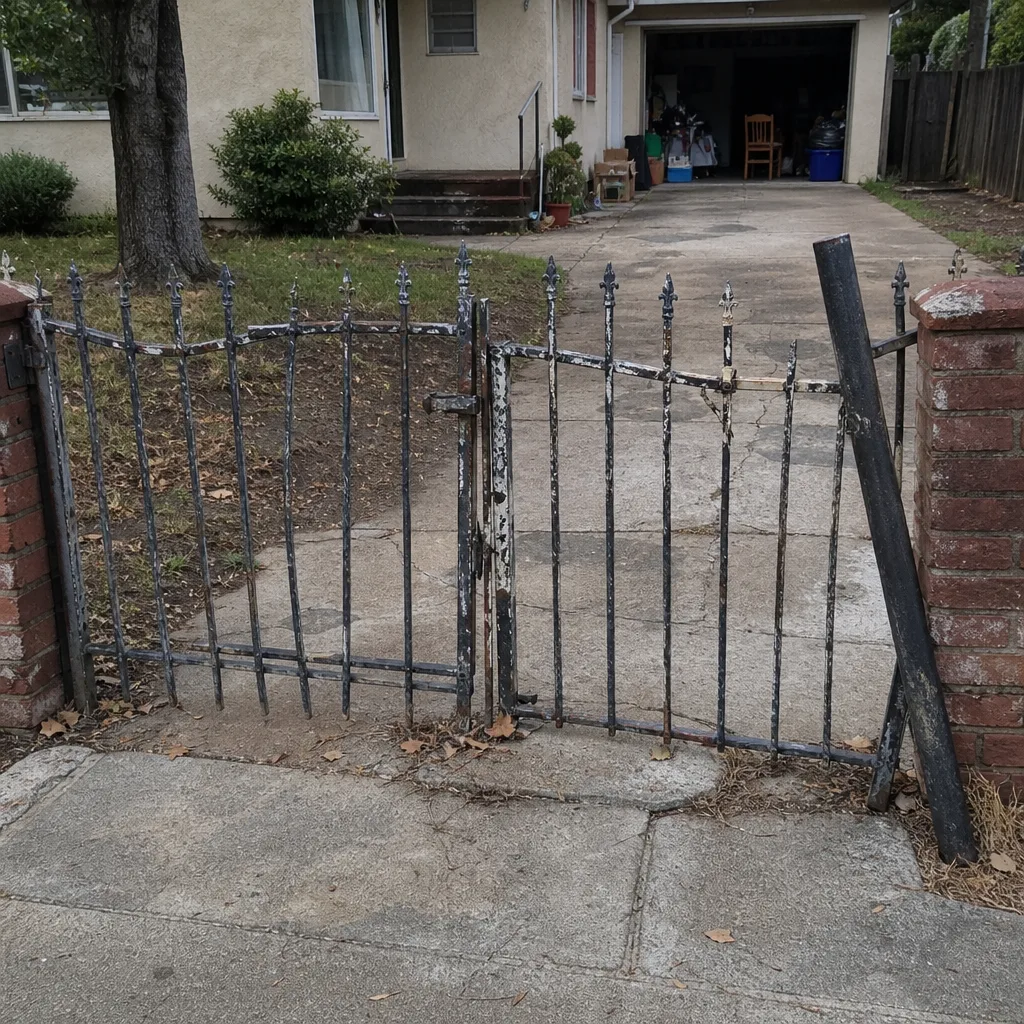 Before
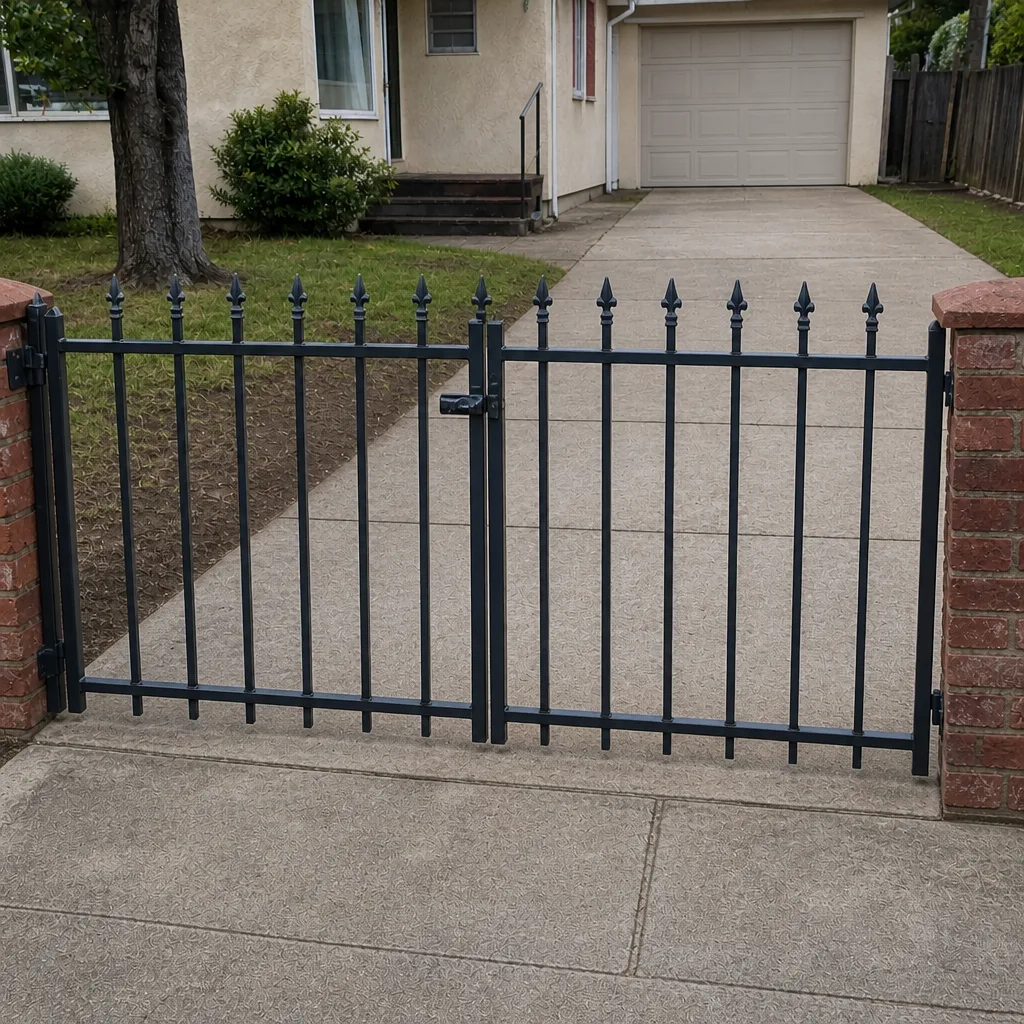 After
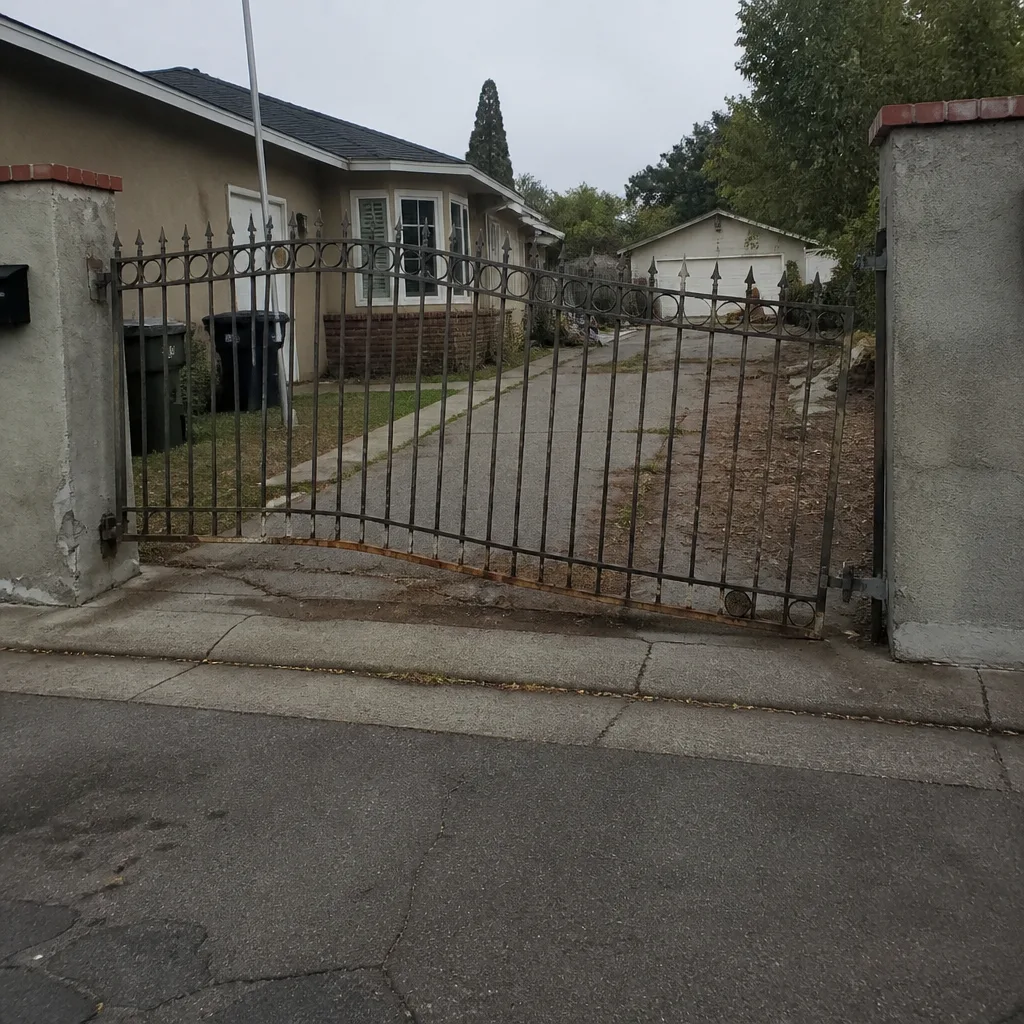 Before
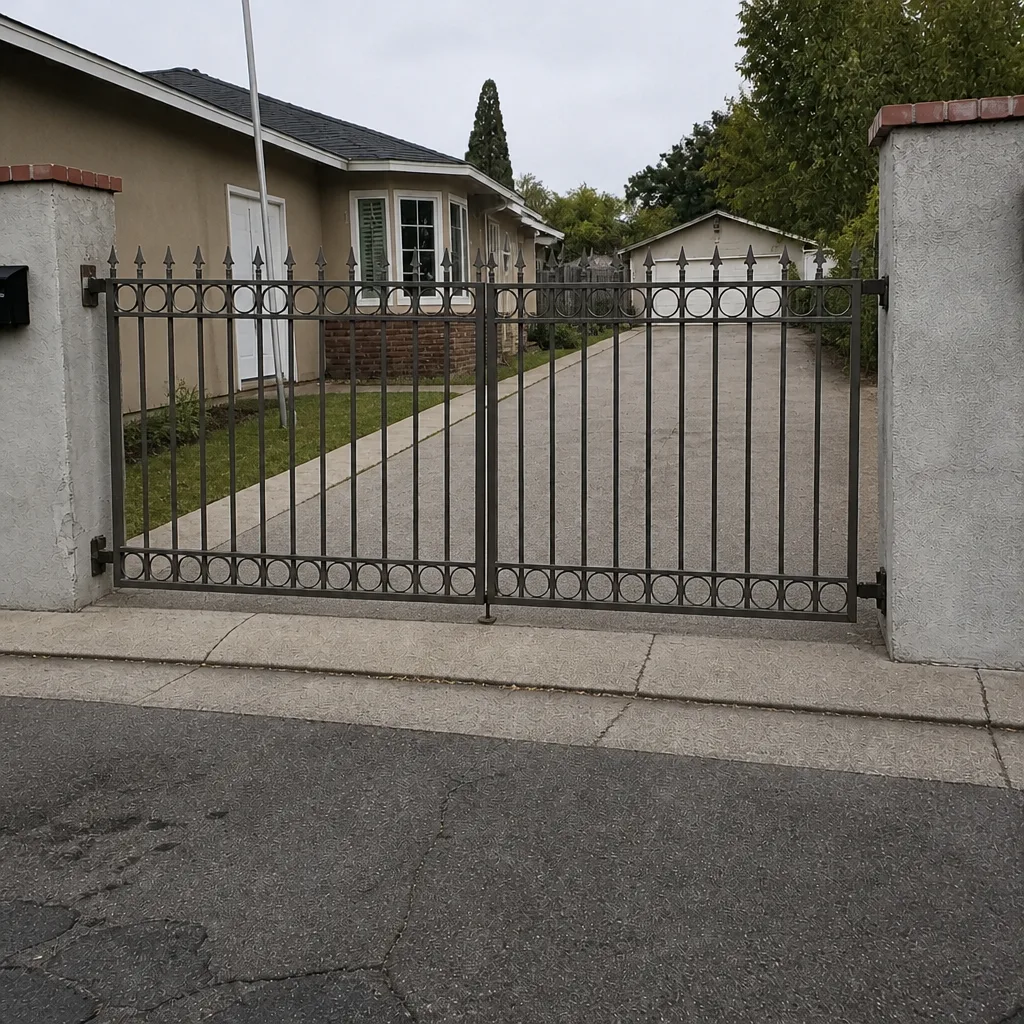 After
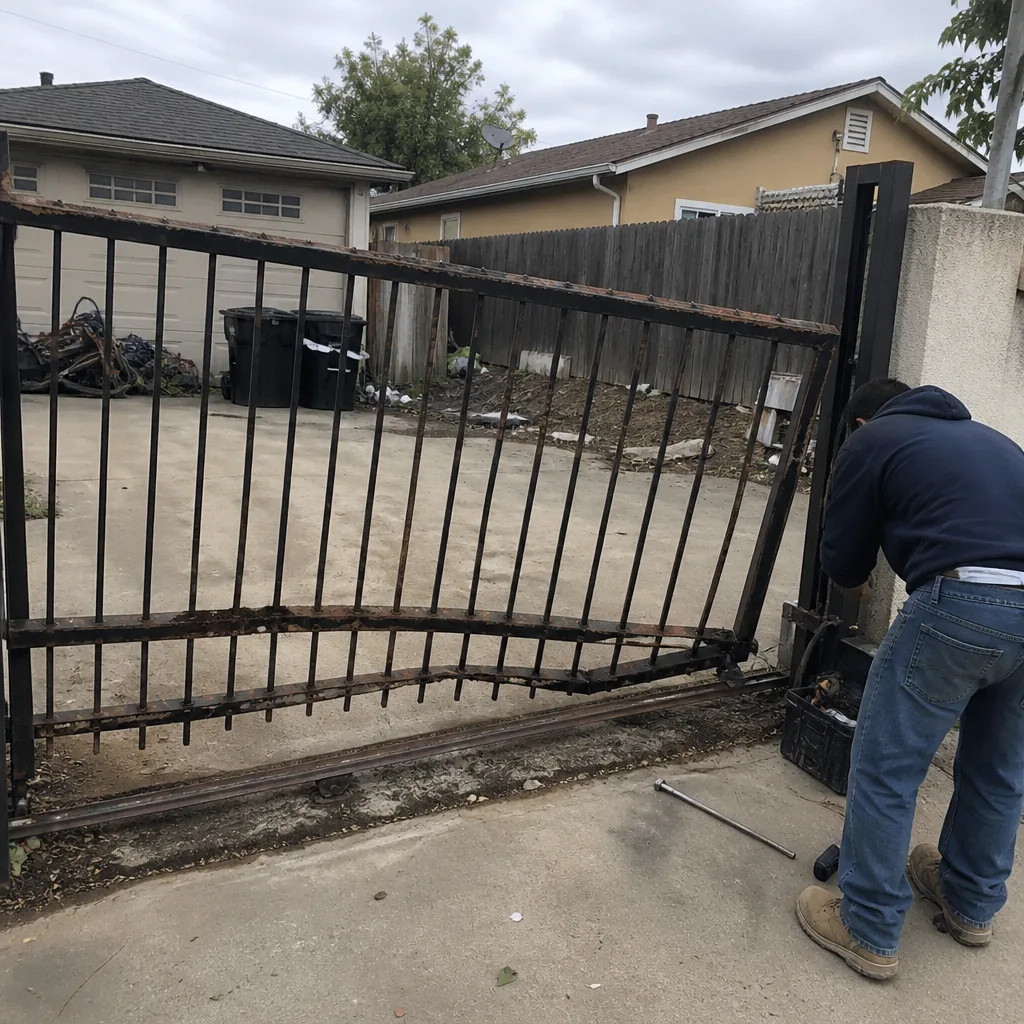 Before
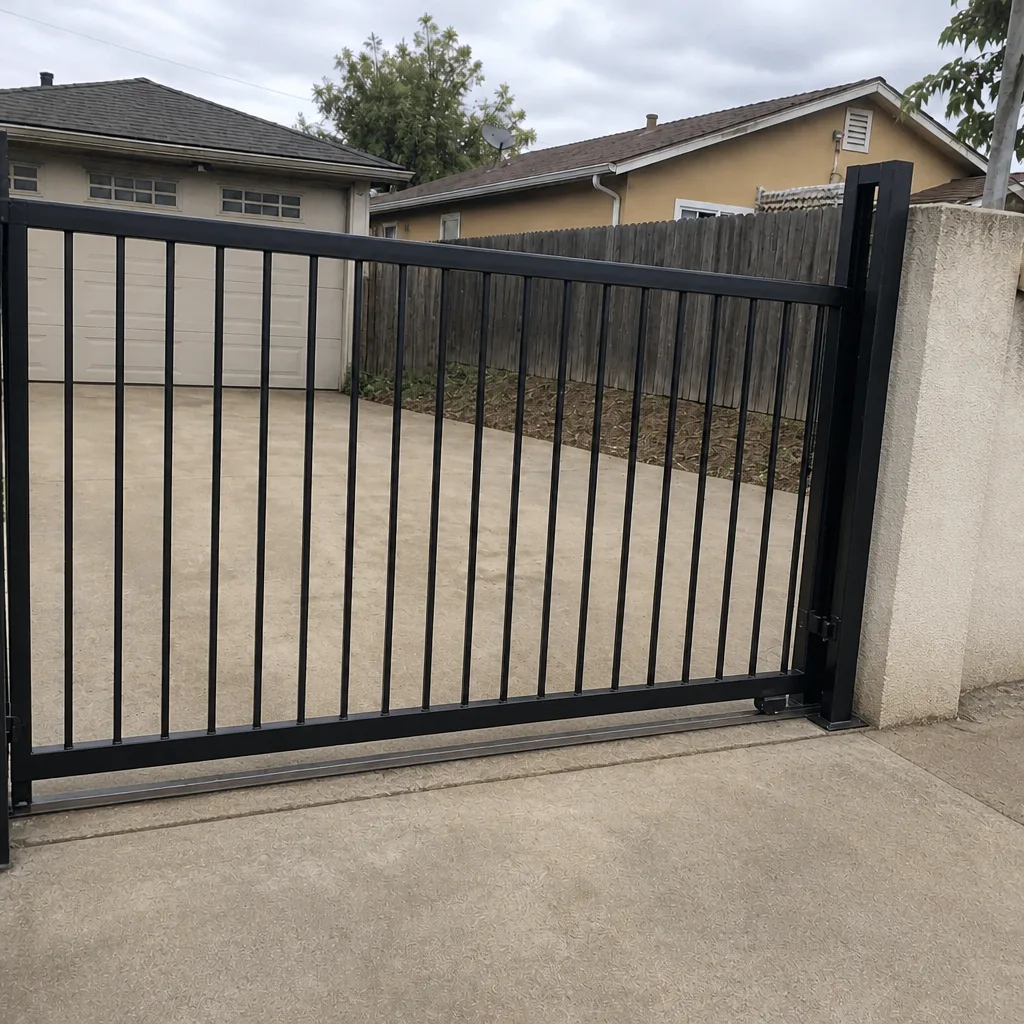 After
When to Call a Professional
You should call a gate technician – not try to troubleshoot further – if any of the following apply. The gate has reversed on an obstruction and left someone or something in its path. The gate is leaning, sagging, or unstable on its post. You see or smell smoke from the operator. The operator is making a noise it’s never made before – grinding, heavy clicking, heavy humming – while power is on. A commercial or multi-family gate is failing, because those gates carry cycle loads homeowners don’t see. The gate has failed more than once in a month. You’ve tried the safe homeowner checks in this guide and the symptom hasn’t changed. Or the gate won’t open at all and you need the driveway working today.
Gate Repair Fairfield offers free estimates in Fairfield. Call (888) 457-5442. We answer 24/7. Fast dispatch from 7am to 7pm, Sunday through Friday. Our technicians have up to 12 years of experience, and we work on your brand.
Frequently Asked Questions
Most residential gate repairs in Fairfield are quoted per job after the technician diagnoses the fault, and the price depends on the parts involved. A sensor alignment or remote re-pair is at the lower end; an operator board or a drive component is closer to the higher end. We don’t quote from a phone description alone when the answer could be several different repairs. Call (888) 457-5442 for an exact quote – the estimate is free, and we’ll give you the price before any work starts.
Yes, and we recommend it. Release the operator from the gate using the manufacturer’s lever or key, move the gate through its full travel by hand, and see whether it moves freely or drags. If it drags or the gate feels unstable, stop and put it back where it was – that’s not a gate to keep testing. The manual release test is free, safe, and tells a technician exactly what family of failure you’re dealing with.
A gate that opens fine but refuses to close is almost always a safety sensor issue. The sensors are reading an obstruction when there isn’t one – likely because the beam has drifted out of alignment. On Ghost Controls and Mighty Mule systems this is the most common call we get. Wipe the sensor lenses and check that they’re aimed at each other. If the indicator lights aren’t steady, the alignment is the problem. Call (888) 457-5442 if it’s not an easy alignment fix – the estimate is free.
We don’t recommend it. On commercial operators, a misaligned limit switch can drive the gate into its mechanical stops at full force, damaging the gate and the operator, and creating a real injury risk for anyone nearby. Limit-switch diagnosis is part of the technician’s visit and doesn’t need to be a separate appointment. Call us and we’ll take care of it during the repair.
Yes. When we install a gate or an operator, we handle the full system, including the operator’s power supply and the safety sensors and edges that make the gate safe to use. We work with your home’s existing electrical where it makes sense and advise on what’s needed for a safe installation. Call (888) 457-5442 for a free on-site measure and a written price.
Simple repairs – a sensor alignment, a remote re-pair, a hinge replacement – are usually done in a single visit. Control board or drive component repairs sometimes need a part ordered for your specific brand, which can add a few days to the schedule. We’ll tell you the expected timing before the technician starts, and we won’t leave you guessing. Call (888) 457-5442 for a free estimate.
The Bottom Line
Gate problems in Fairfield come down to three root families: electrical, mechanical, and operator overload. They look identical from the driveway, and that’s why so many repairs fail – a wrong part gets replaced, the real fault remains, and the gate breaks again a week later. The fix is to diagnose from the source: run the manual release test before you touch a wire, note the exact symptom, check the safe items, and get a technician to the actual fault on the first visit. Our gate-only technicians work on the widest range of brands we handle in the area, and there’s a written price before anything starts.
Call Gate Repair Fairfield at (888) 457-5442 for a free estimate. We answer 24/7. Fast dispatch from 7am to 7pm, Sunday through Friday. Whether your gate needs a hinge, a sensor, or an operator, we’ll diagnose it on-site and quote it accurately. The price is agreed before any work begins.
Written by the team at Gate Repair Fairfield.