
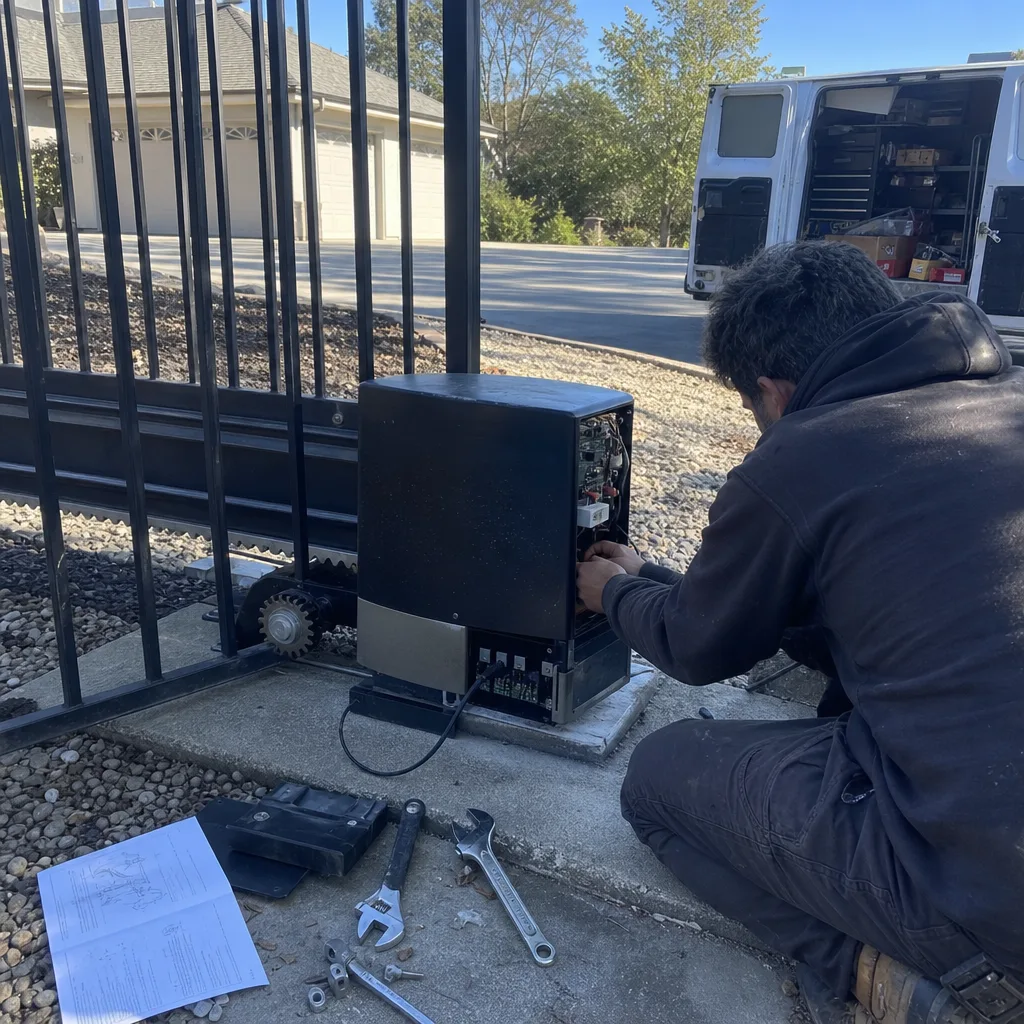
Last updated November 15, 2026
 Wrought iron
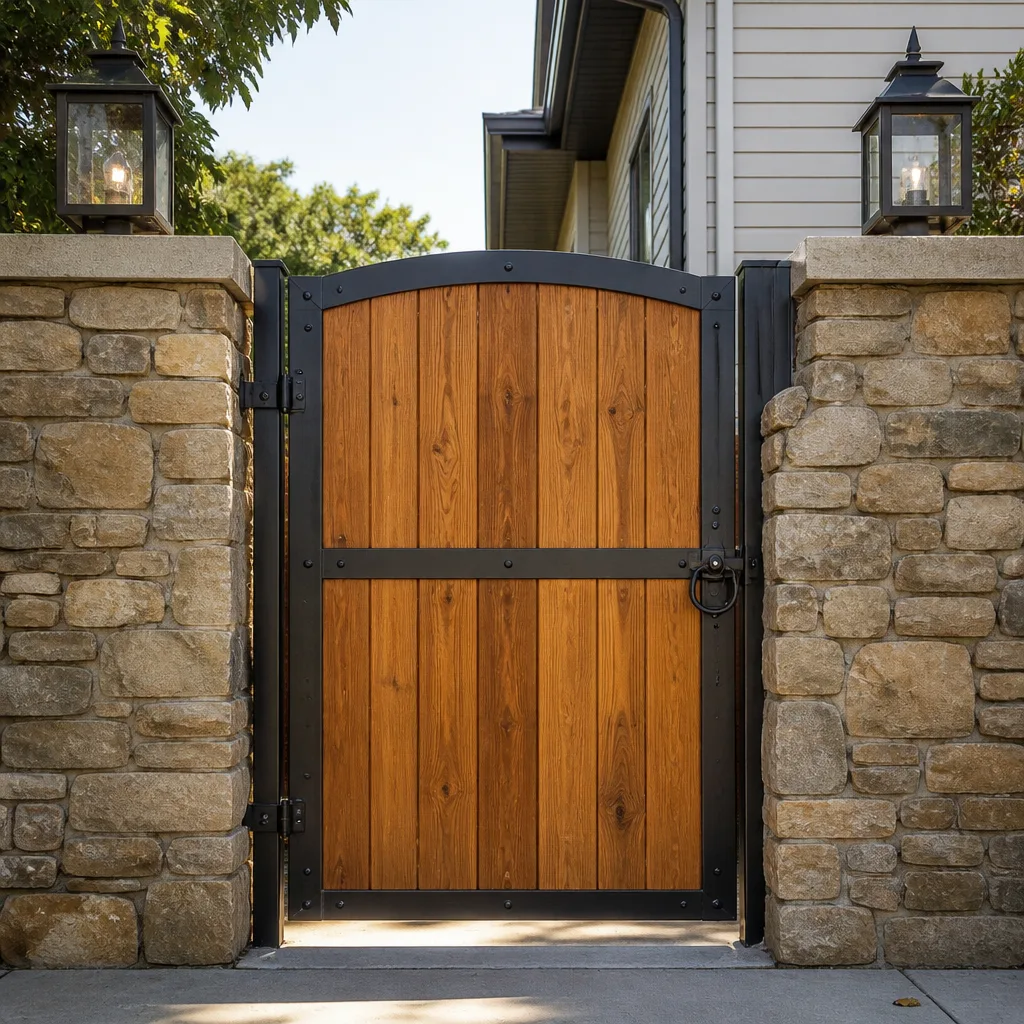 Wood & steel frame
 Farm & ranch
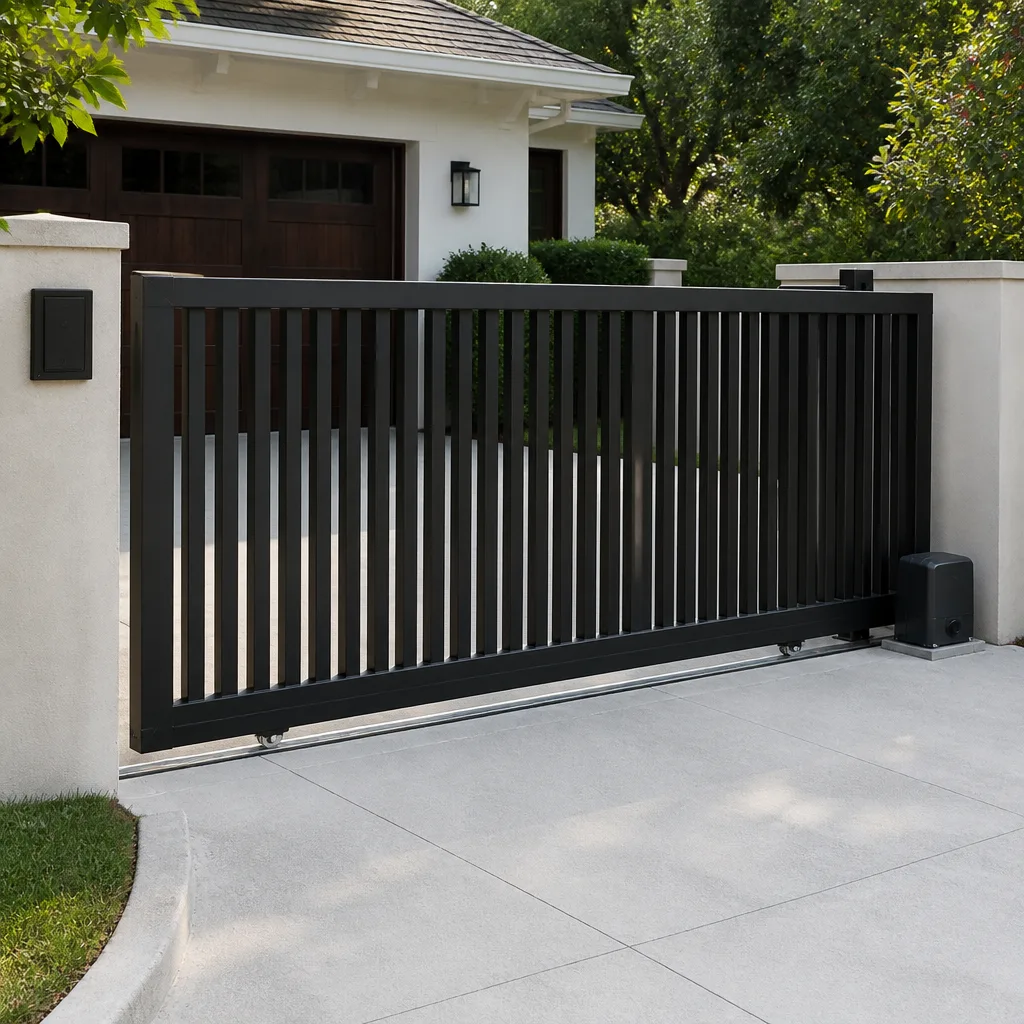 Sliding driveway gates
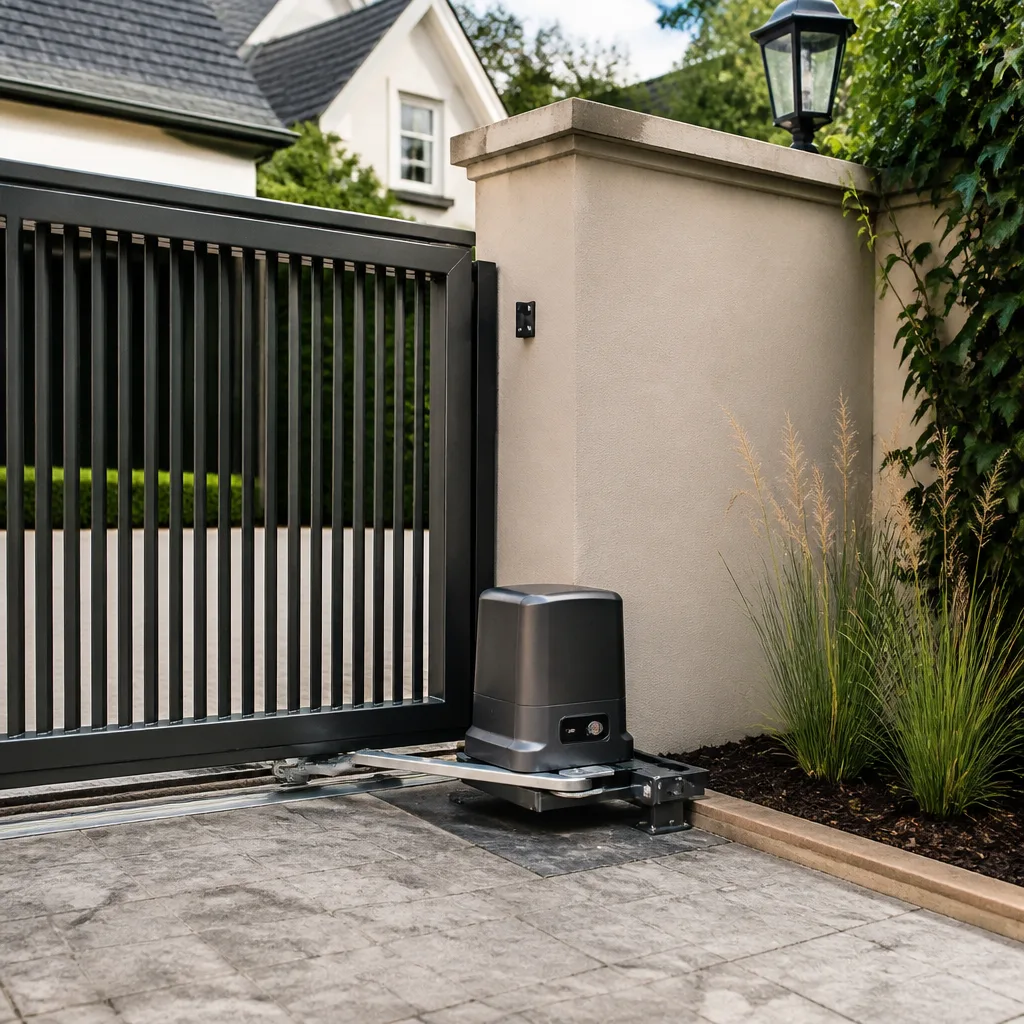 LiftMaster operators
Free on-site gate assessment - hinges, posts, and your LiftMaster or Nice gate operator checked before anything is quoted
The assessment is free and the quote is the invoice.
Get your free estimateGate Repair Emergency Preparedness Guide for Fairfield Homes
Most gate emergencies aren’t actually about the gate. They’re about the two hundred things you can’t do once it stops moving. A gate stuck open leaves your driveway, your yard and your back entrance exposed for however long it takes to get help. A gate stuck closed can trap a car in the driveway, block a caregiver or delivery, and in a worse case keep a fire engine or an ambulance from reaching your front door. The Fairfield homeowners we talk to usually have a phone in one hand and no plan in the other. This guide fixes that. You’ll learn how your specific operator releases by hand, what Fairfield fire code expects of an automated residential gate, what to do in the first ten minutes of a failure, and the three items to keep within reach so a bad afternoon stays a small problem.
Quick Answer
A gate emergency in Fairfield is handled in this order: make the opening safe or secure, release the gate manually if you can do it without touching the operator’s wiring or a heavy panel, then call a gate specialist. Fairfield fire code requires automated gates on residential properties to have a Knox Box or a manual release that emergency crews can reach from the street, so a seized or corroded release is a safety problem, not just a maintenance one. Call (888) 457-5442 for a free estimate. We answer 24/7. Fast dispatch from 7am to 7pm, Sunday through Friday.
Styles & brands we work with
- Wrought iron
- Wood & steel frame
- Farm & ranch
- Sliding driveway gates
- LiftMaster operators
Table of Contents
- Why a Gate Failure Is a Security Event, Not an Inconvenience
- What Fairfield Fire Code Expects From Your Automated Gate
- How to Release Each Type of Gate Operator by Hand
- If Your Gate Fails in the Open Position
- If Your Gate Fails in the Closed Position
- Building Your Three-Item Gate Emergency Kit
- Is It the Gate or the Operator? A Quick Diagnosis
- What You Can Check Before a Failure Happens
Why a Gate Failure Is a Security Event, Not an Inconvenience
A driveway gate does two jobs at once. It keeps vehicles and people out, and it lets the right ones through. When it stops mid-cycle, one of those jobs fails completely. That’s the part most people underestimate. A gate that hangs open overnight is an open invitation, and a gate that won’t open is a barrier between you and the street, sometimes with your car on the wrong side of it.
We work on gates across Fairfield every week, and the pattern is consistent. The failures that turn into long, stressful days are almost never the hardest repairs. They’re the ones where nobody knew how to release the gate, nobody had the key, or nobody had the phone number of a company that works on their brand. A gate is equipment. Equipment fails. What separates a twenty-minute inconvenience from a six-hour headache is whether a plan already exists.
There’s a second reason preparedness matters here. Fairfield’s housing stock runs from older single-family homes with narrow driveways to newer developments and multi-family properties with shared vehicle gates. Each has a different failure mode. A swing gate on a residential driveway might leave a gap you can walk around. A slide gate on a shared access road can shut down every resident at once. The plan has to match the gate.
Think of this guide as the plan. It’s written for the person who owns or manages the property, not for a technician, so it stays at the level of “what to check and who to call” rather than “how to take the operator apart.”
What Fairfield Fire Code Expects From Your Automated Gate
Fairfield fire code requires that automated gates on residential properties have a Knox Box or a manual release accessible from the street. The reason is simple: in a fire or medical emergency, crews may need to get through your gate in seconds, and they can’t wait for you to find the remote. If your gate doesn’t have one of these, or if the release mechanism is corroded and inoperable, emergency vehicles may not be able to reach your property when it matters most.
Here’s what to verify. You don’t need tools for most of it, and you don’t need to touch any wiring.
- Find the release. Walk to the street side of your gate and locate the manual release or the Knox Box. If you can’t find it in a minute, that’s the first problem to solve.
- Test it by hand, gently. If the release is a lever, key or pull handle, operate it the way it’s designed to be operated. Don’t force anything. If it won’t move, stop and note it.
- Look for corrosion. Fairfield winters are mild, but we still get wet stretches, and exterior hardware takes on moisture season after season. Rust on a release pin or a seized lock cylinder is the most common reason a release that technically exists doesn’t actually work.
- Check the key or code is available. A Knox Box is only useful if the fire department can open it. A keyed release is only useful if the key exists and is where it should be.
- Confirm the gate’s travel is clear. A release only helps if the gate can actually swing or slide once it’s freed. Debris, settled hinges or a bent track can defeat the whole system.
If anything fails that check, the gate needs attention before the next emergency, not during it. This is also a good moment to confirm your property’s specific requirements with the City of Fairfield, since the details can vary by property type and gate configuration. A quick call to the city, or a conversation with us during a Fairfield service visit, will tell you where you stand.
How to Release Each Type of Gate Operator by Hand
Every automated gate has a way to be opened by hand. The method depends on the operator, not the gate. Knowing yours before you need it is the single most useful piece of preparedness there is. Below is how each common operator family releases in general terms. We’re describing what the release is and where to look, not walking you through a repair. If a release won’t operate, stop and call a technician rather than forcing it.
Chain drive operators
Chain drive units, common on slide gates, typically have a release lever or a keyed clutch on the operator housing that disengages the chain drive from the gate. Once disengaged, the gate slides by hand. The catch is that the clutch can seize from lack of use, and forcing it can bend linkage. If it doesn’t release smoothly, that’s a service call, not a struggle.
Ram and articulated arm operators
Ram operators and swing-arm operators on swing gates usually have a manual release lever near the arm pivot. Pulling or turning it decouples the arm from the gate so the leaf swings freely. On some units, a keyed release cylinder is mounted on the housing. On a heavy or wide leaf, the gate will have weight behind it once released, so keep hands and body clear of the closing edge.
Underground operators
Underground operators sit in a housing below grade with a cover at the gate’s pivot point. Most have a release accessible through that cover, often with a key. Because the mechanism lives in a below-grade box, it’s the type most likely to collect grit and moisture over time. Test it before you need it, and never reach into the housing while the operator has power.
Battery-backed residential operators
Brands like Ghost Controls and Mighty Mule are built around low-voltage, solar or battery-backed operation for residential driveways, and their manual release is usually a simple keyed lever on the unit. Because these systems are common on Fairfield residential properties, the release is generally the easiest to operate. The most frequent issue we see is a homeowner who has never located the key.
One rule covers every type: if the release requires you to open a housing that contains wiring, a control board or a battery bank, close it and call us. Coming between a person and live low-voltage equipment is not a reasonable trade for a faster fix. That’s what we’re here for.
If Your Gate Fails in the Open Position
A gate stuck open is a security problem first and a repair problem second. Prioritize the opening, not the diagnosis. Here’s the order we’d recommend.
- Secure the opening. If the gate leaf can be pushed closed by hand after a manual release, do that and prop or tie it in place with something soft so it can’t swing. Don’t jam metal against metal or wedge anything into the operator mechanism.
- Move anything valuable out of sight. An open gate turns a private driveway into a public one. Park vehicles inside the secured area if you can, and bring in anything left near the opening.
- Don’t leave the property unattended if you can avoid it. If you have to leave, treat the gate as if it isn’t there and make sure doors and windows on the exposed side are locked.
- Photograph and note the failure. Was the gate partway through a cycle? Was it after a power interruption? Did the operator click and then nothing? That detail shortens the diagnosis and often the visit.
- Call a gate specialist. Call (888) 457-5442. We answer 24/7. Fast dispatch from 7am to 7pm, Sunday through Friday.
Resist the urge to try the remote repeatedly. On an operator with a control board fault, repeated cycles can push a struggling board into a full failure, and on a slide gate, repeated attempts against an obstruction can strip a gear or overheat a motor. One try, then stop.
If the gate is a shared entrance for a multi-family property, let neighbors know what’s happening and whether the opening is being watched. A short message saves a lot of confusion.
If Your Gate Fails in the Closed Position
A gate stuck closed with a vehicle inside or outside needs a decision, and the safe decision is usually not the fastest one. The options that damage the gate or hurt someone are exactly the ones that look most obvious in the moment. Here’s what’s safe and what isn’t.
Safe options
- Manual release, if you know it and it operates freely. Follow the release method for your operator type. If it moves without force, open the gate by hand, drive through, and close it behind you.
- Use another route. If the property has a pedestrian gate or a second vehicle entrance, use it and leave the failed gate alone until a technician arrives. This is almost always the better call.
- Wait for the technician if the gate is heavy or the release is stiff. A wide steel swing leaf or a commercial slide gate carries real weight. A leaf that slips loose while you’re standing in its path can cause serious injury.
Options that risk damage or injury
- Forcing the gate leaf while the operator is still engaged. This fights the gearbox and can destroy a drive component that was otherwise repairable.
- Disconnecting or jumping the operator’s wiring to “see if it opens.” Low-voltage wiring is still wiring, and a control board is not a place to experiment.
- Backing a vehicle into or against the gate to push it open. Panels bend, hinges tear out of posts, and the repair grows.
- Removing hinge pins or bolts on a leaf you can’t hold. Gates fall.
If someone on the property has a medical need or an urgent appointment and the gate won’t open, call us first. Tell us what’s happening and what operator you have. Getting the gate moving is the priority, and knowing the brand and symptom in advance shortens everything.
Building Your Three-Item Gate Emergency Kit
Three items, all reachable within sixty seconds, cover the vast majority of gate emergencies. Keep them together in a drawer, a cabinet or a hook near the door you use most. Not in the garage behind the holiday boxes.
- The manual release key or tool for your operator. Every keyed release has a specific key, and every brand is different. A Ghost Controls release key won’t work on a Linear unit. Label it and keep it with the gate’s documents. If you don’t have it, that’s the first thing to order.
- A written card with three facts. The operator brand and model, the name and number of a gate specialist, and the location of your manual release. Tape it inside a cabinet. In a real emergency, nobody wants to be reading a sticker on the back of the operator housing with a flashlight. Our number is (888) 457-5442.
- A soft tie or strap rated for the weight of holding your gate open or closed. A cam strap or a heavy nylon strap lets you secure a released gate so it can’t swing in wind or roll on a slope. Not rope against a sharp edge, and nothing metal wedged into the mechanism.
That’s it. You don’t need a toolbox. You need the key, the information and a way to secure the leaf once it’s free. Homeowners and property managers who keep these three things on hand handle a failure in minutes instead of hours.
If your property has multiple gates, build one kit per gate and label them. A shared garage key that opens the wrong housing is worse than no kit at all.
Is It the Gate or the Operator? A Quick Diagnosis
Knowing which half of the system failed tells you what to expect when you call, and it stops you from paying for a diagnosis you could have given over the phone. The gate is the physical structure: the leaf, the frame, the hinges, the track, the rollers, the latches. The operator is the motor, the control board, the sensors, the keypad and the remote system. They fail in different ways.
Signs the gate itself is the problem
- The gate drags, binds or scrapes somewhere along its travel.
- A hinge is loose, or the leaf sags and no longer meets the latch cleanly.
- The track is bent, or a roller has worn or come off.
- The gate moves freely by hand once released, but won’t complete a cycle under power.
Signs the operator is the problem
- The gate moves smoothly by hand but the operator doesn’t respond at all.
- The operator clicks, hums or beeps and nothing happens.
- The gate reverses for no visible reason, which often points to a safety sensor.
- The remote or keypad stopped working but the wall control still does.
- The gate stops at the same point every time.
The overlap matters more than the split. On electric gates, the mechanical structure and the operator are one system, and a binding gate will eventually damage the operator trying to push through it. That’s why electric gate repair has to look at both halves. A technician who only checks the motor will miss a sagging hinge, and one who only checks the hinge will miss a failing control board. We work on both sides, on brands like BFT, Linear and Viking, so the diagnosis covers the whole system in one visit.
Whatever you find, don’t try to adjust a limit switch or a sensor alignment yourself. Those settings interact with the safety reverse, and a gate that stops reversing when it should is a genuine hazard.
What You Can Check Before a Failure Happens
Most gate emergencies announce themselves first. They just do it quietly. A short seasonal walk-around catches the common ones before they become a stuck gate on a bad day.
Once a month
- Operate the manual release and confirm it moves without force. Then re-engage it and cycle the gate once.
- Watch the full cycle from outside the gate’s path. Note any hesitation, scrape or spot where it pauses.
- Test the safety sensors by passing through the beam while the gate is closing. It should reverse. If it doesn’t, stop using the gate on automatic and call us.
Twice a year
- Look at the hinges, rollers and track for wear, rust or loose fasteners.
- Clear debris from the gate’s travel path and from around any underground operator cover.
- Check the release key still turns. Corrosion in a lock cylinder is slow and then sudden.
- Confirm your Knox Box or street-side release is still accessible and unobstructed. Landscaping grows.
Fairfield’s mild winters help here. There’s no long freeze to stress the hardware, which means the wear you find is usually honest mechanical wear and not weather damage. That makes it easier to predict. A gate that’s been gradually slowing for a month isn’t going to fix itself, and the repair is smaller now than it will be after a motor burns out pushing a binding gate.
If you’d rather have someone look at it than do the walk-around yourself, that’s a reasonable call. A one-time visit to inspect and adjust the gate is priced per job after we look at it, and a free estimate is the place to start. If you need gate repair, the same visit covers diagnosis and the written price before any work begins.
Common Mistakes to Avoid
- Never testing the manual release until the night you need it. A release that hasn’t moved in years often doesn’t move when it counts. Test it monthly, gently.
- Forcing a gate that’s fighting the operator. Pushing a leaf while the motor is still engaged turns a small repair into a gearbox or drive replacement. Release first, then move by hand.
- Not knowing your operator brand. When you call, “it’s a slide gate” isn’t enough. BFT, Linear, Viking and Ghost Controls all release differently, and knowing the brand shortens the visit.
- Letting the release corrode because it’s out of sight. Exterior hardware on a Fairfield gate sits in moisture season after season. A stuck lock cylinder is the most common reason a compliant gate fails an emergency access check.
- Assuming a stuck-open gate can wait until morning. An open gate is an open property. Secure the opening first, then schedule the repair.
- Blocking the Knox Box or street-side release with landscaping or stored items. If a fire crew can’t reach it, it may as well not exist. Keep the approach clear.
- Calling a general handyman for an operator fault. Gates are their own trade. A generalist learning on your control board is a slow, expensive way to get a gate fixed.
See the difference
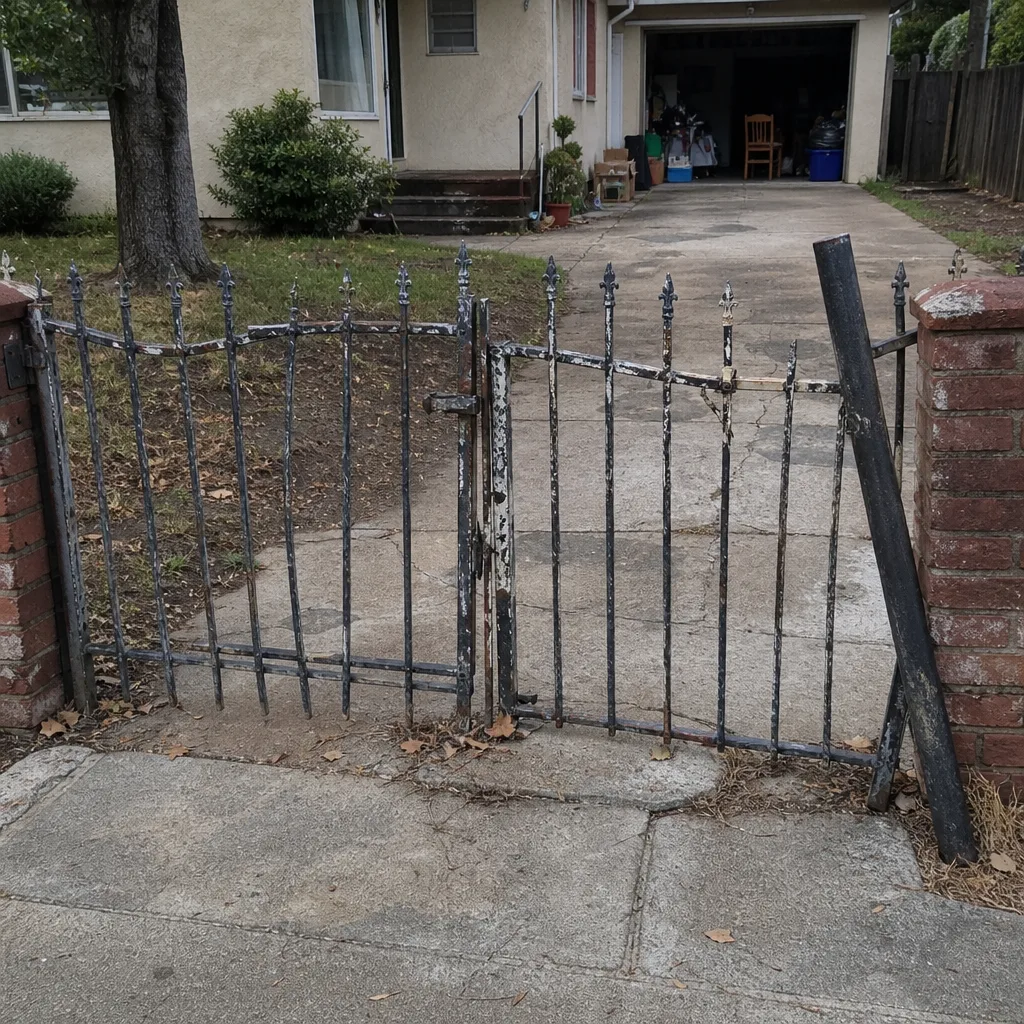 Before
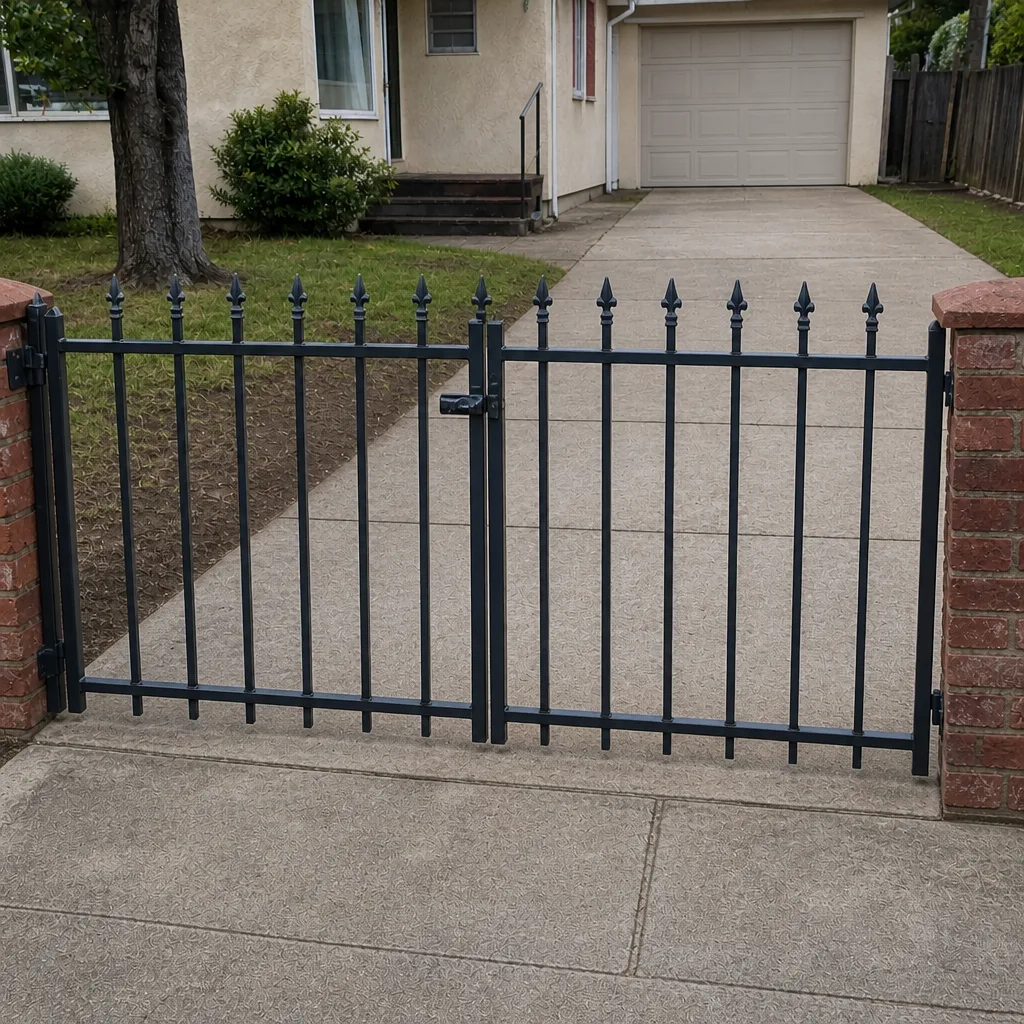 After
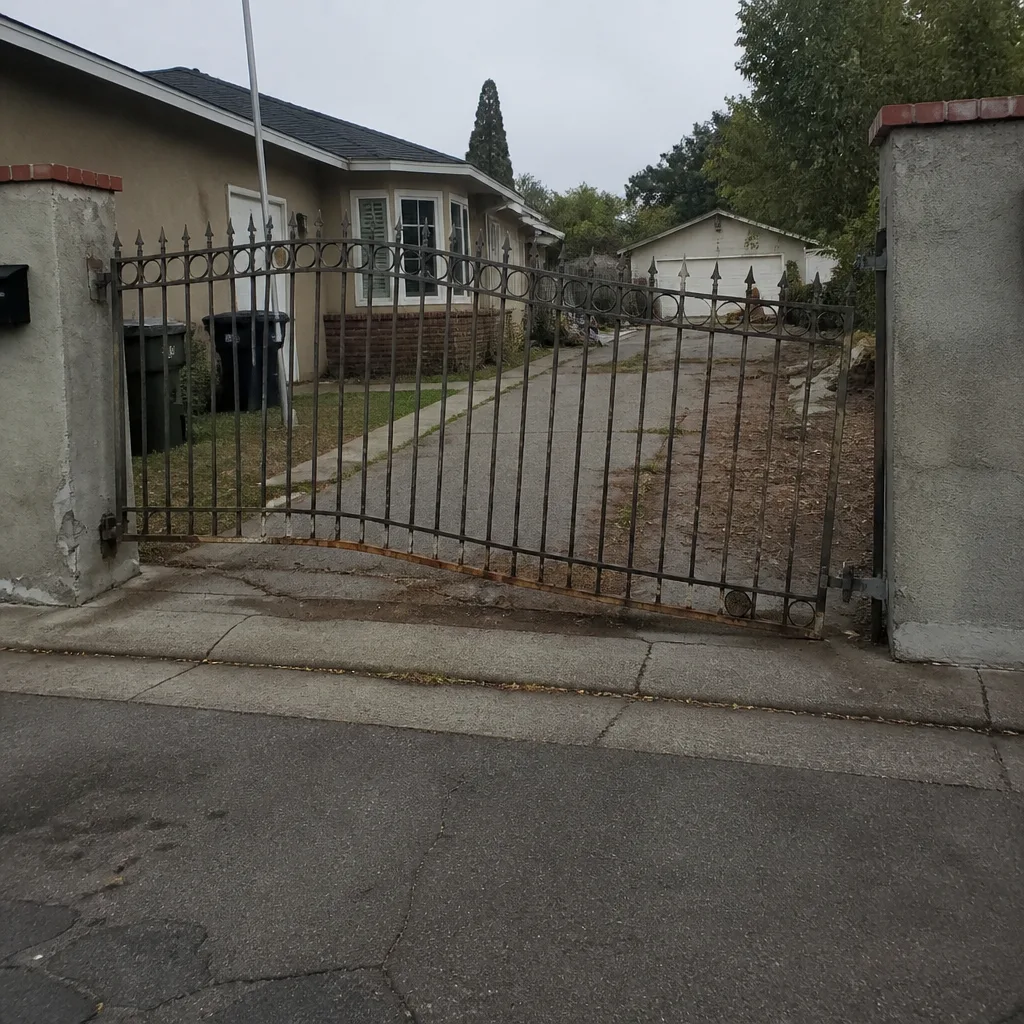 Before
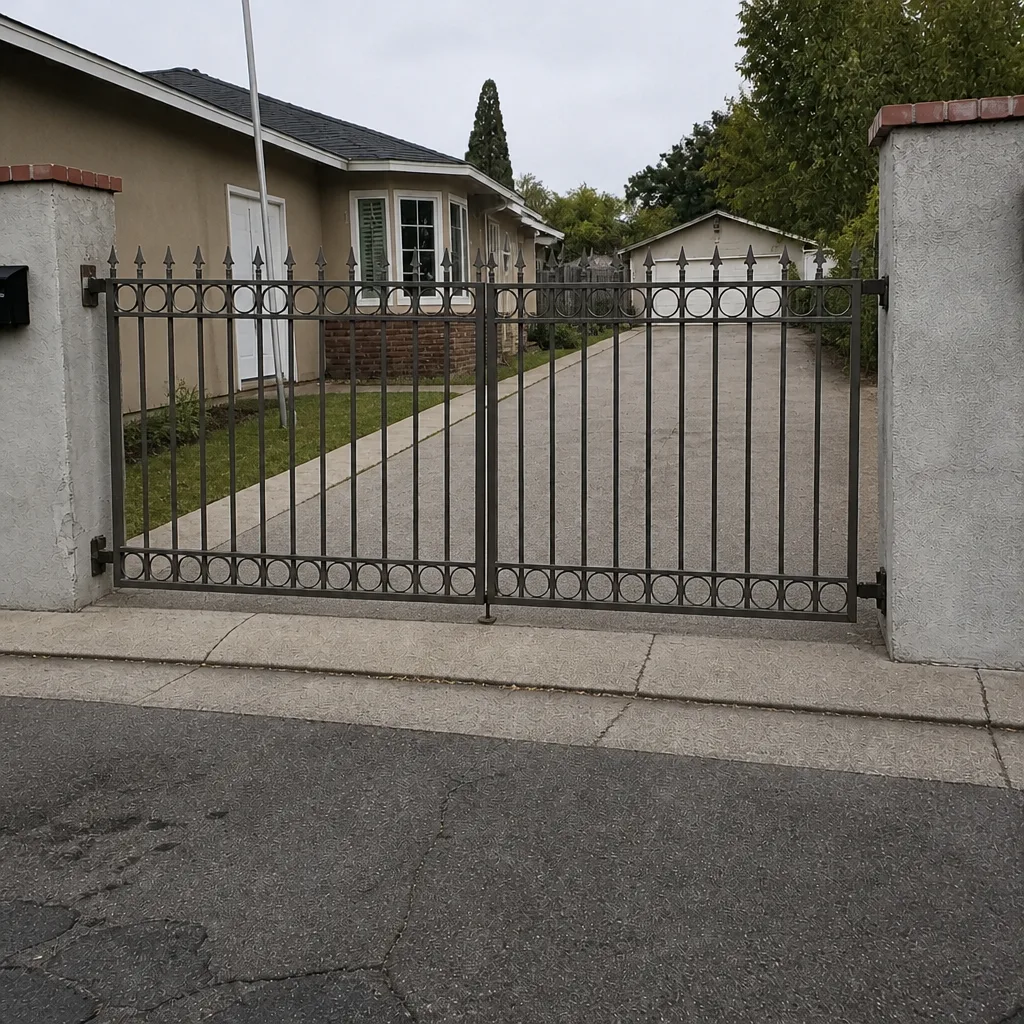 After
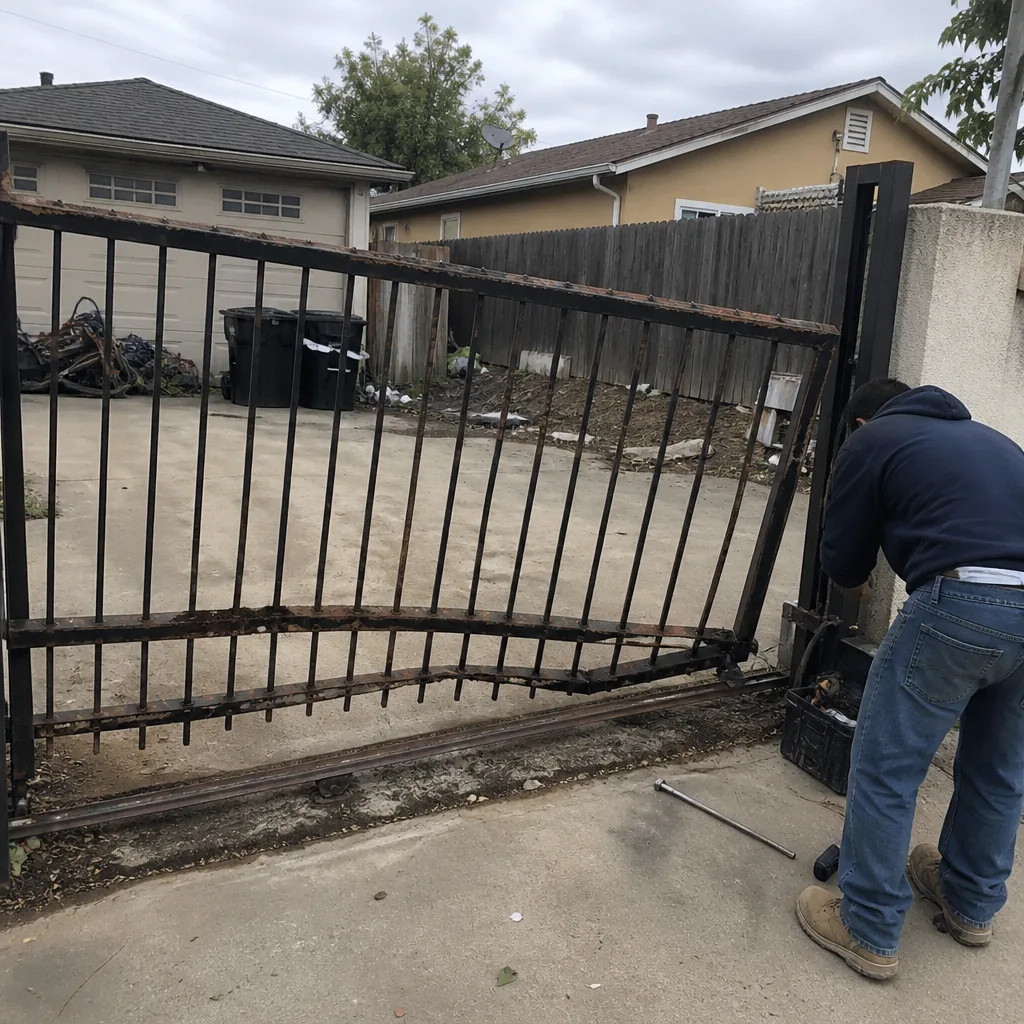 Before
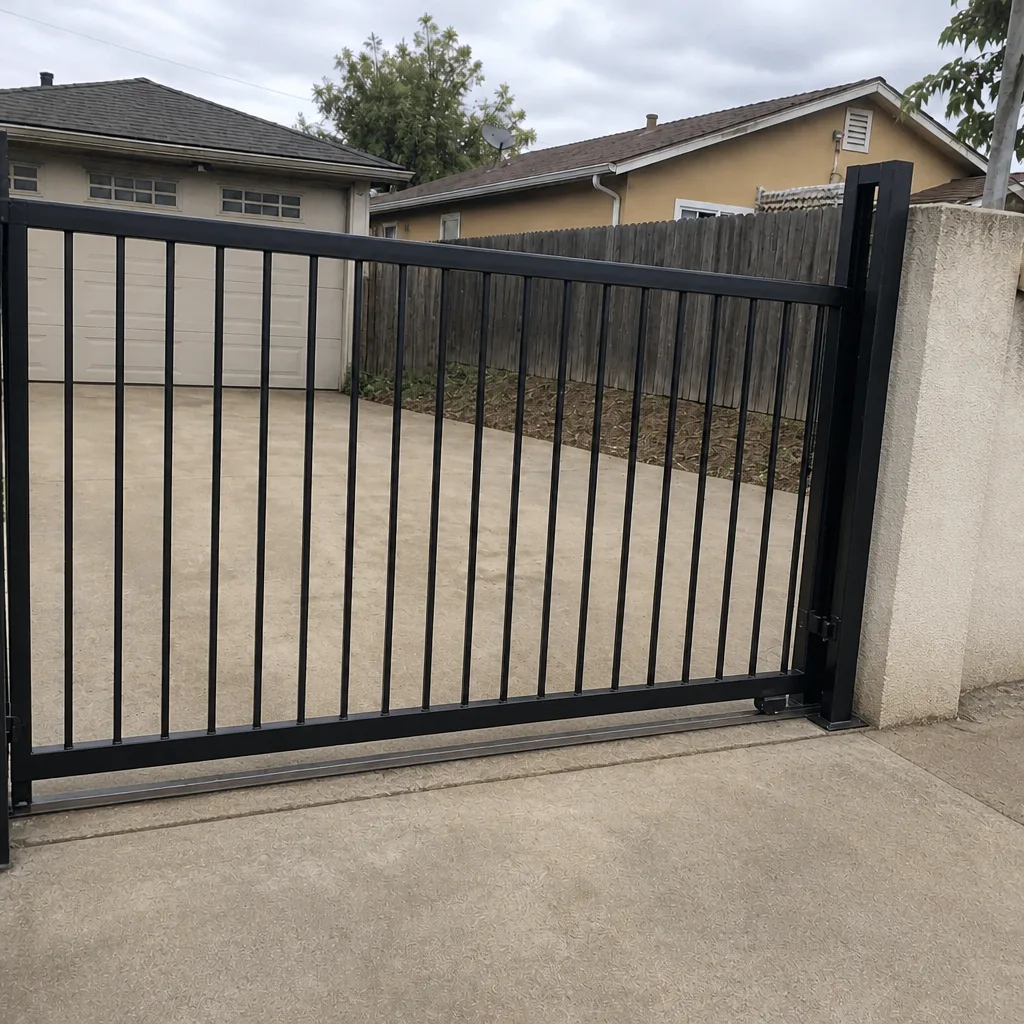 After
When to Call a Professional
Call a gate specialist when the gate won’t complete a cycle, when the manual release won’t operate, when the safety reverse doesn’t work, when you see sparking, burning smell or repeated tripping at the breaker, or when any part of the operator housing needs to come open. Call us too if the gate is heavy, wide or on a slope and you’re not confident in releasing it safely by hand. Those are the situations where a trained technician saves you money and risk. We’ve seen plenty of gates where a homeowner’s careful attempt at a fix was fine, and a few where it made a repairable gate into a replacement. There’s no way to tell which one you’re in from the outside. Gate Repair Fairfield offers free estimates in Fairfield. Call (888) 457-5442. We answer 24/7. Fast dispatch from 7am to 7pm, Sunday through Friday. Our technicians have up to 12 years of experience, and every one of them works on gates, not a mix of trades.
Frequently Asked Questions
Make the opening safe or secure first, then try the manual release, then call a specialist. If the gate is stuck open, secure the opening before anything else. If it’s stuck closed, use another route rather than forcing the gate. Call (888) 457-5442 for a free estimate. We answer 24/7. Fast dispatch from 7am to 7pm, Sunday through Friday.
Yes. Fairfield fire code requires automated gates on residential properties to have a Knox Box or a manual release accessible from the street. The key word is accessible. A release that exists but is corroded, seized or blocked by landscaping doesn’t satisfy the intent. Check yours now, and call us if it won’t operate.
Yes, every automated gate has a manual release, and the method depends on the operator type. Chain drive, ram, swing arm and underground operators each release differently, and battery-backed residential units usually use a simple keyed lever. If the release requires opening a housing with wiring or a battery bank, don’t do it yourself. Call (888) 457-5442 for guidance.
The price is set per job by a written estimate after we’ve looked at the gate, so there’s no flat figure we can quote over the phone. What we can promise is that the estimate is free and the price is agreed before any work starts. You’ll know the number before we touch the gate. Call (888) 457-5442 for an exact quote.
Use the manual release if you know it and it moves without force, or use a pedestrian gate or second entrance if the property has one. Don’t force the leaf against the operator, and don’t push it with a vehicle. A wide or heavy gate released by hand can cause serious injury if it slips. Call us and we’ll get it moving.
Yes. We diagnose and repair the whole system, from the operator and control board to the safety sensors, keypads and remotes, as well as the gate’s physical structure and hardware. That includes brands like BFT, Linear and Viking for residential and commercial properties. If you’re weighing repair against a new installation, we’ll tell you plainly which makes more sense.
The Bottom Line
A gate emergency in Fairfield comes down to three things: secure the opening, release the gate only if you can do it safely, and call a specialist who works on your brand. Fairfield fire code expects a Knox Box or a street-accessible manual release on automated residential gates, so a seized release is a safety issue, not a small annoyance. Keep the release key, your operator’s details and a soft tie within sixty seconds of your door. Test the release monthly. And remember the gate and the operator are one system, which is why Gate Repair Fairfield looks at both. Call (888) 457-5442 for a free estimate.
Written by the team at Gate Repair Fairfield.