
Last updated November 15, 2026
 Wrought iron
 Wood & steel frame
 Farm & ranch
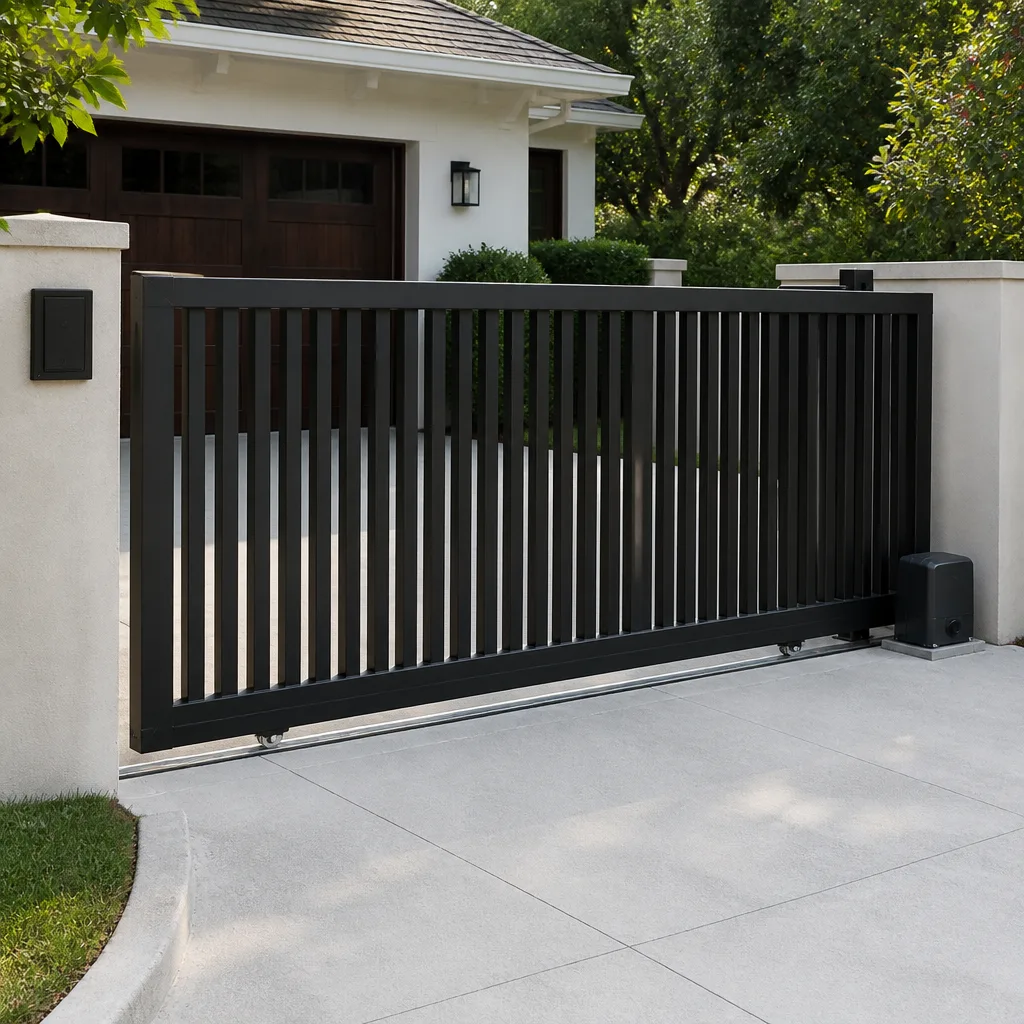 Sliding driveway gates
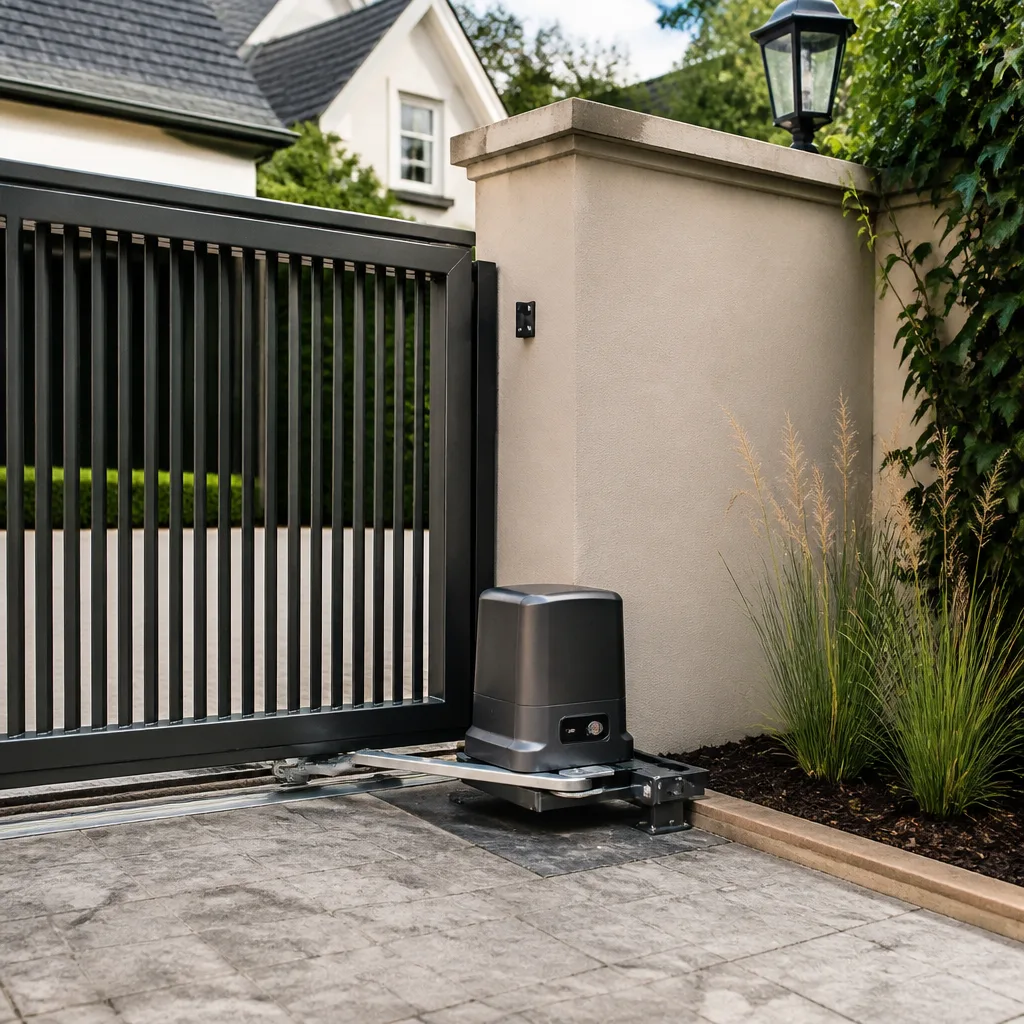 LiftMaster operators
Free on-site gate assessment - hinges, posts, and your LiftMaster or Nice gate operator checked before anything is quoted
The assessment is free and the quote is the invoice.
Get your free estimateGate Repair Maintenance Schedule: What to Do and When
Most gate maintenance advice gets one thing badly wrong, and it’s the same mistake you’ll see on nearly every checklist online: lubricate everything, every season, with the same product. That’s a problem. Chain-drive operators, pivot hinges, and limit switches are three completely different mechanisms, and the wrong lubricant on any of them can do more cumulative harm over a year than skipping the task altogether. A chain packed with the wrong grease collects grit and wears faster. A hinge doused in the wrong spray attracts dust and stiffens. Here in Fairfield, where summers run hot and dry and rain arrives in a concentrated season, those errors compound. This guide gives you a maintenance schedule built around your actual gate, not a generic quarterly template.
Quick Answer
A gate maintenance schedule isn’t one checklist for every gate. It’s built from your gate’s drive type (manual, swing, or slide), its material (wood, iron, or vinyl), and how often it cycles per day. Manual gates need lubrication, hinge inspection, and material care two to four times a year. Automated gates need operator and safety-device checks layered on top, with frequency scaled to cycle counts: a low-traffic driveway gate can run on a lighter schedule than a commercial slide gate cycling more than 20 times daily. If you’d rather not build the schedule yourself, a specialist visit once a year covers the high-ROI checks no homeowner can safely do alone.
Styles & brands we work with
- Wrought iron
- Wood & steel frame
- Farm & ranch
- Sliding driveway gates
- LiftMaster operators
Table of Contents
- How to Build a Schedule Around Your Gate Type
- Maintenance Tracks by Drive Type and Material
- Matching Lubricants to Specific Components
- Seasonal Tasks for Fairfield’s Climate
- Usage-Volume Thresholds: When Frequency Changes
- The Annual Checks With the Highest Payoff
- Common Mistakes to Avoid
- When to Call a Professional
How to Build a Schedule Around Your Gate Type
A maintenance schedule starts with three questions: what drives the gate, what it’s made of, and how hard it works. Answer those and the rest of the plan writes itself. A wooden swing gate on a quiet residential driveway in Cordelia shares almost no maintenance needs with a high-cycle commercial slide gate at a Fairfield business park. Both are gates, but the tasks, products, and timing diverge sharply.
Here’s how to sort your gate before you set a single reminder:
- Identify the drive type. Manual gates move on hinges or rollers with no operator. Automated gates use an operator, either swing (arm or articulated) or slide (rack or chain). This determines whether your schedule includes operator and safety-device checks.
- Note the material. Wood needs finish and moisture care. Iron and steel need rust and fastener inspection. Vinyl and aluminum need cleaning and hardware checks. Each material degrades on a different timetable.
- Count cycles, roughly. Estimate how many times the gate opens and closes in a day. Under 20 cycles is low-use, 20 to 50 is moderate, above 50 is high-cycle. This is the single biggest driver of how often automated gates need attention.
- Map the safety devices. Automated gates include safety sensors, photo eyes, and edge sensors. These need testing on every schedule rotation regardless of cycle count.
- Schedule against the season, not the calendar quarter. In Fairfield, pre-summer heat prep and post-rain checks matter more than a fixed January/April/July/October rhythm.
Once these five inputs are settled, the schedule practically builds itself. A manual wood gate might get by on two visits a year. A high-cycle commercial slide gate on a DoorKing operator could warrant monthly checks. We work on your brand, whether that’s a residential LiftMaster arm operator or a commercial DoorKing slide unit, and the schedule is built the same way for each.
Maintenance Tracks by Drive Type and Material
Every gate fits into one of six practical maintenance tracks. Find yours below and use the tasks listed. This is the core of why a generic checklist fails: a single lubrication-and-wipe plan doesn’t address operator electronics, safety devices, or material-specific wear.
Manual Swing Gate, Wood
- Inspect hinges for looseness and rust two to three times per year
- Check post stability and footing for movement after heavy rain
- Refresh finish every 1-2 years depending on exposure
- Lubricate hinges with a dry-film or light oil, not heavy grease
- Check the latch and strike alignment after any post settling
Manual Slide Gate, Iron or Steel
- Clean and lubricate rollers and the track two to four times per year
- Inspect for rust at welds and fastener points after the rainy season
- Check the track for debris and level; slide gates come off the track when the track is fouled
- Test the stop and catch hardware for secure capture
Automated Swing Gate (Arm or Articulated Operator)
- Test the reverse and safety sensors on every maintenance visit
- Inspect the operator arm and linkage for wear
- Check the control board enclosure for moisture and pest intrusion
- Lubricate hinges and the operator arm separately, with the right product for each
- Verify the manual release works
Automated Slide Gate (Rack or Chain Operator)
- Inspect chain tension and drive sprocket wear on chain-drive units
- Check the rack for stripped or worn teeth on rack-drive units
- Test safety edges and photo eyes on every visit
- Verify the motor’s thermal cutoff behavior if the gate stops and restarts
- Lubricate the chain with a chain-specific product, never hinge oil
Vinyl and Aluminum Gates
- Wash and inspect hardware two to three times per year
- Check all fasteners for looseness; vinyl expands and contracts with temperature
- Inspect hinges and latches for wear equal to wood or iron
- Confirm no operators or sensors have been loosened by vibration
Commercial High-Cycle Gates
- Monthly operator and safety-device inspection
- Frequent drive-component wear checks (chain, sprocket, rack, rollers)
- Control board and wiring inspection for heat and moisture
- Loop detector and keypad functional testing
Whether your gate is a driveway swing gate in Green Valley or a commercial slide gate serving a multi-family property, the track you choose determines the whole schedule. From the operator to the hardware, we treat the gate as one system, because the tasks above overlap in ways a piecemeal checklist misses.
Matching Lubricants to Specific Components
This is where most guides fall apart. You can’t swap products across components. Chain drives, hinges, and limit switches each need a different approach, and using the wrong one is worse than using none. Here’s the breakdown that matters.
Chain Drives (Chain-Operator Slide Gates)
Chains need a chain-specific lubricant, ideally one formulated for roller chain, applied sparingly and wiped so it penetrates links rather than sitting on top. Heavy general grease is the classic error. On a chain-drive operator, thick grease traps grit against the rollers, accelerates wear, and can cause links to stiffen and bind. That’s the cumulative damage: not immediate failure, but a chain that stretches and fails faster. Apply light, wipe excess, repeat on your schedule rather than over-applying at long intervals.
Hinges (Swing Gates)
Hinges want a dry-film or light spray lubricant, not heavy grease and not chain oil. Heavy grease on a hinge collects dust and stiffens the gate’s swing, which puts more load on the operator on automated swing gates. A dry film stays cleaner and does the actual job: reducing metal-on-metal friction at the pivot.
Limit Switches and Control Boards
Limit switches and control boards need no lubricant at all. This is the component where a well-meaning DIYer does real damage: spraying oil into a limit switch or onto a control board can cause a short or a false signal. These components need inspection, cleaning with a dry method, and testing, not lubrication. If your operator uses a LiftMaster, Elite, or similar control board, keep the lubricant canister well away from it.
Rollers and Tracks (Slide Gates)
Rollers benefit from a light lubricant that won’t collect grit from the track. Many slide gates use sealed or shielded rollers, in which case cleaning matters more than lubricating. The track itself should be clean and dry, not greased.
Rack and Pinion Gears
Rack drives tolerate a light gear grease better than a chain does, but only a thin coat, and only when the rack actually needs it. Excess attracts debris into the teeth.
Getting these product choices right is the detail most maintenance schedules skip. It’s also the difference between a schedule that extends equipment life and one that quietly shortens it.
Seasonal Tasks for Fairfield’s Climate
Fairfield runs hot and dry in summer and gets concentrated rain in the wet season. That’s a calendar with two clear pressure points, not four equal quarters. Build your schedule around them.
Pre-Summer Heat Prep (Late Spring)
Before the hottest stretch, focus on heat-sensitive components. Operator control enclosures should be checked for ventilation and dust buildup, since heat buildup stresses electronics. Metal gates and iron gates expand with rising temperatures, which can change latch and strike alignment. Wood gates dry out and can crack at joints, so finish condition matters more going into summer than at any other time. Check safety sensors and test the reverse function before the busy season, when a failing sensor is most likely to go unnoticed. On residential gates in Fairfield neighborhoods like Cordelia and Green Valley, this pre-summer pass is the single most valuable maintenance window of the year.
Post-Rain Corrosion and Moisture Checks (End of Wet Season)
Once the rain tapers off, inspect everything moisture reaches. Iron and steel gates need a rust check at welds, fasteners, and the bottom rail where water collects. Hinges and tracks on outdoor gates should be checked for corrosion and cleared of debris washed onto the track. Control enclosures and wiring runs should be inspected for water intrusion; a control board with moisture inside is a slow failure waiting to happen. Safety sensors and photo eyes should be checked for alignment and cleanliness after a wet season.
Between the Pressure Points
For a low-use manual gate, these two seasonal passes plus one mid-season check may be all you need. For an automated gate, add operator and safety-device tests on each of those visits plus one more if you’re cycling more than 20 times a day. Seasonal timing matters more than frequency for Fairfield gates, because the climate applies its stress in two concentrated periods.
Usage-Volume Thresholds: When Frequency Changes
Cycle count changes everything. A gate that opens twice a day wears on a completely different clock than one opening fifty times. Here’s how to translate usage into frequency.
Under 20 Cycles Per Day (Low Use)
Typical for most residential driveways. Manual gates need lubrication, hinge, and material checks two to four times per year. Automated gates need the same plus operator and safety-device tests on roughly the same cadence, plus the two seasonal passes above. This is a forgiving schedule; the gate rarely punishes missed minor tasks.
20 to 50 Cycles Per Day (Moderate Use)
Common for busy households, small multi-family properties, and light commercial gates. Frequency should rise: drive-component inspections (chain tension, sprocket wear, rollers) move to quarterly. Safety devices get tested monthly, because a device that fails on a moderately busy gate fails far more often. Control-board and enclosure checks tighten.
Above 50 Cycles Per Day (High Cycle)
Commercial gates, multi-family entry gates, and any gate serving regular traffic. Move to monthly specialist checks: drive components, safety devices, control board, wiring, and loops. High-cycle gates are built for it, but at this volume any single worn component reaches its failure point quickly. A specialized operator like the commercial-grade DoorKing systems we see on these gates is designed for the cycles; the maintenance has to match. Skipping monthly checks above this threshold is where a minor worn part becomes a full operator failure.
The threshold isn’t arbitrary. Most automated gate operators are designed for a rated cycle count over time, and pushing past the maintenance that supports your actual usage is the fastest route to premature failure. For residential gates on LiftMaster or similar operators, staying at the low-use schedule is usually correct. For anything commercial, tighten the schedule as soon as traffic justifies it.
The Annual Checks With the Highest Payoff
If you only do a handful of things per year, do these. In our experience, these are the checks that prevent the failures that would otherwise cost far more to repair than to prevent.
- Safety device and reverse test. Photo eyes, safety edges, and reverse function need to be tested, not just looked at. A failed safety device is both a repair and a liability. This is the highest-value check on any automated gate.
- Control board and enclosure inspection. Moisture, heat, and pest intrusion into the control enclosure cause board failures that are expensive and often avoidable. A visual and moisture check catches early signs.
- Drive component wear inspection. Chain tension, sprocket wear, rack teeth, and rollers should be checked by someone who can read wear patterns. Catching a stretching chain or a worn sprocket before it fails on a gate is a fraction of the cost of an operator failure.
- Hinge, pivot, and track condition. Worn hinges and fouled tracks load the operator, which is what actually causes early operator failure on swing and slide gates.
- Manual release verification. On any automated gate, the manual release must work in a power failure. Testing it once a year catches seized releases before you need them.
- Post and footing check. A leaning post from settling changes gate alignment and loads every hinge and operator part. Catching it early is cheap.
These are the checks where a specialist visit really pays. A specialist reads wear patterns, hears the operator load, and knows the difference between a component near its end and one with years left. If you’re looking for the annual visit that prevents the most costly repairs, it’s the combination above.
That’s the same scope we cover in gate repair when a visit turns up something to fix, and it’s why a single well-built annual check beats a long list of surface tasks.
Common Mistakes to Avoid
- Using one lubricant everywhere. Chain drives, hinges, and limit switches each need a different product, and the wrong one does cumulative damage. Keep chain lubricant off hinges and every lubricant off control boards and limit switches.
- Greasing the chain heavily. Heavy grease on a chain-drive operator traps grit and accelerates wear. Apply chain-specific lubricant lightly and wipe the excess.
- Skipping safety-device tests. Homeowners often clean and lubricate the gate and never test the reverse, photo eyes, or safety edges. On an automated gate, the safety devices are the most important thing on the schedule.
- Following a fixed quarterly calendar in Fairfield. A generic four-times-a-year checklist ignores how this area’s hot summers and concentrated rainy season actually stress gates. Pre-summer heat prep and post-rain corrosion checks do more than evenly spaced visits.
- Ignoring cycle count. A gate that cycles 50 times a day is being maintained on a low-use schedule if the owner doesn’t adjust. Frequency has to scale with usage or the schedule quietly stops protecting the gate.
- Spraying control boards and limit switches. A well-meaning oil application into the control enclosure is a common cause of shorted boards and false signals. These components need dry inspection, not lubrication.
- Skipping the manual release. An automated gate with a seized manual release is fine until it isn’t. Test it once a year.
When to Call a Professional
Some tasks belong on your own schedule. Others need a trained technician. Call a professional when any of these come up:
- The operator, control board, or safety wiring needs diagnosis or repair
- The gate has come off its track, or a slide gate isn’t tracking straight
- The safety sensors or reverse function fail any test
- Chain, sprocket, or rack wear needs a real assessment
- The gate is cycling heavily and needs a proper high-cycle maintenance plan
- A post is leaning or a track is fouled beyond basic cleaning
- You want an annual check that covers the high-ROI items above in one visit
For anything involving the operator’s wiring and power, heavy gate panels that could crush, or a slide gate off the track, don’t attempt it yourself. A trained professional with the right tools and experience is the safe and cheaper path in the long run. Our technicians have up to 12 years of experience, and every technician on every call is a gate specialist, not a generalist. Gate Repair Fairfield offers free estimates in Fairfield, with the price quoted and agreed before any work starts; call (888) 457-5442. We answer 24/7. Fast dispatch from 7am to 7pm, Sunday through Friday. For a full repair or diagnostic visit, see how electric gate repair works.
See the difference
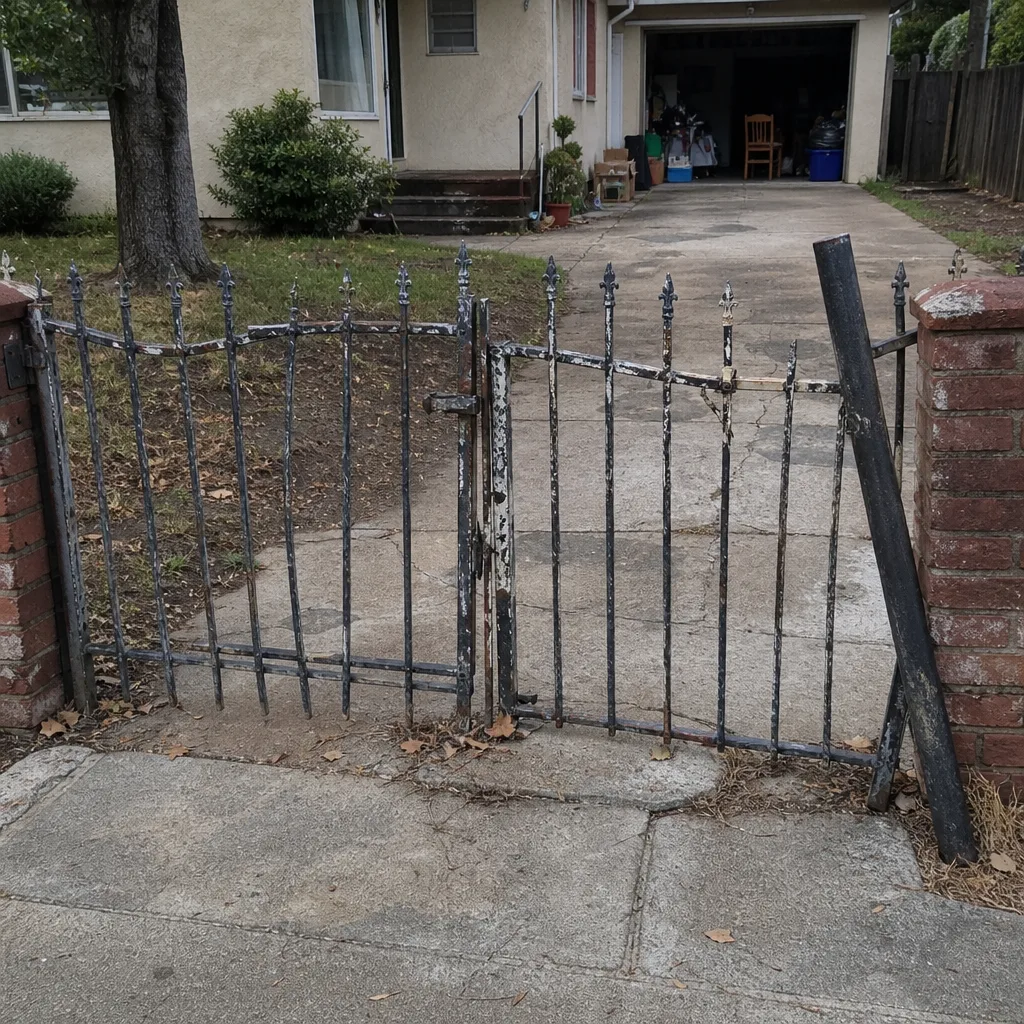 Before
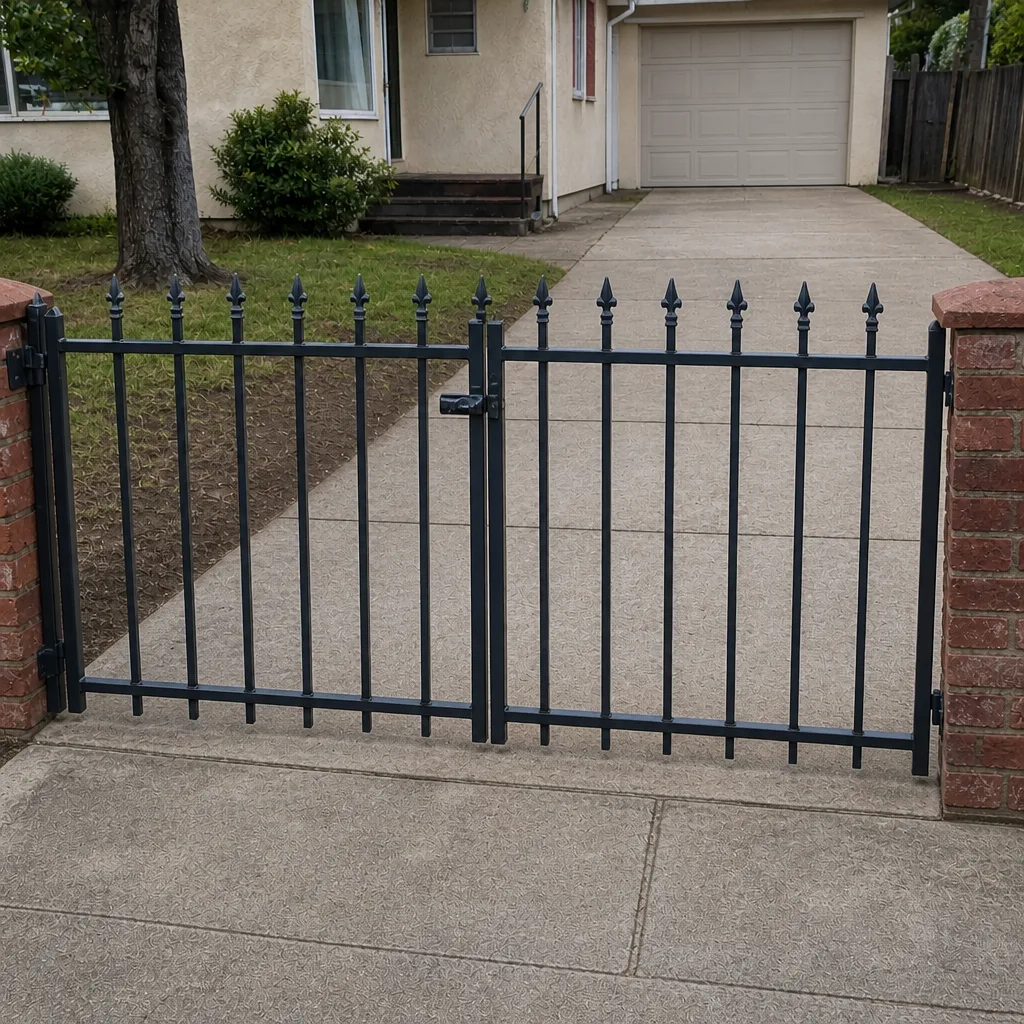 After
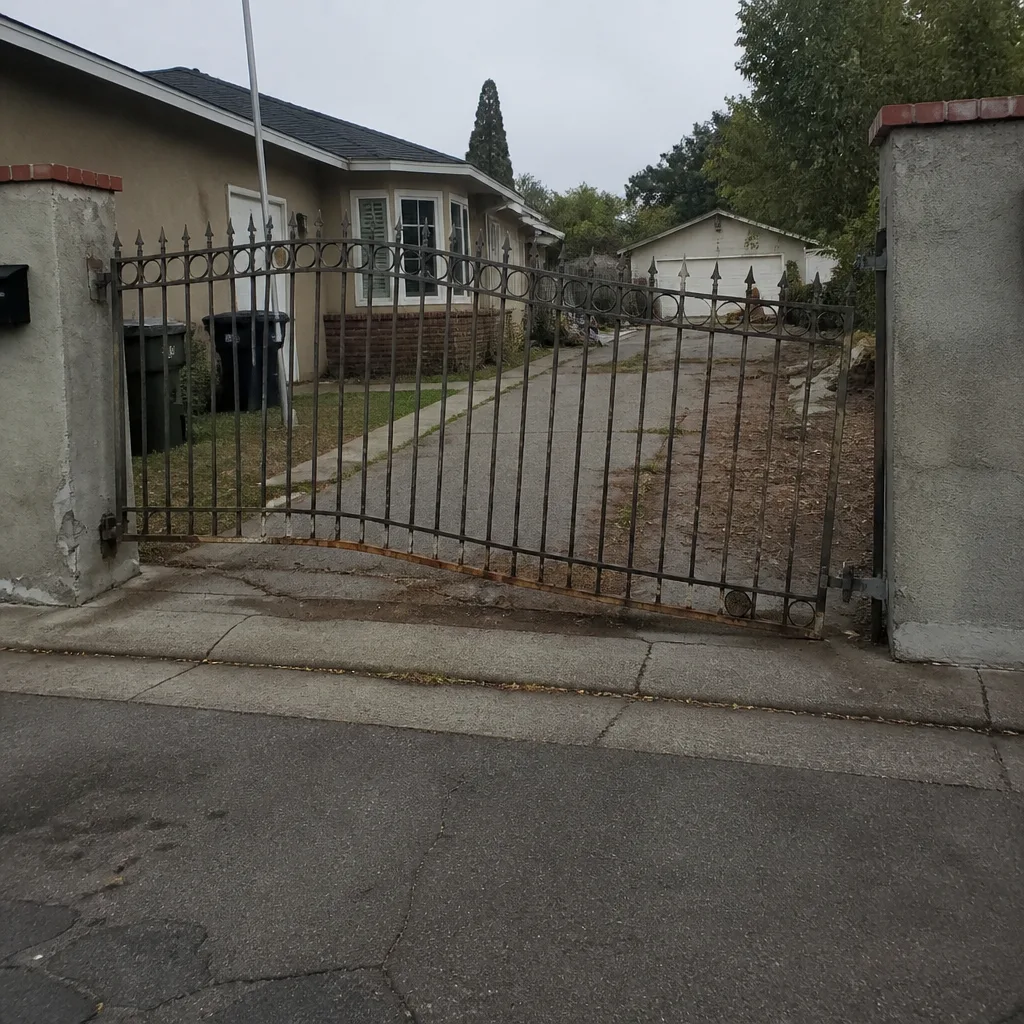 Before
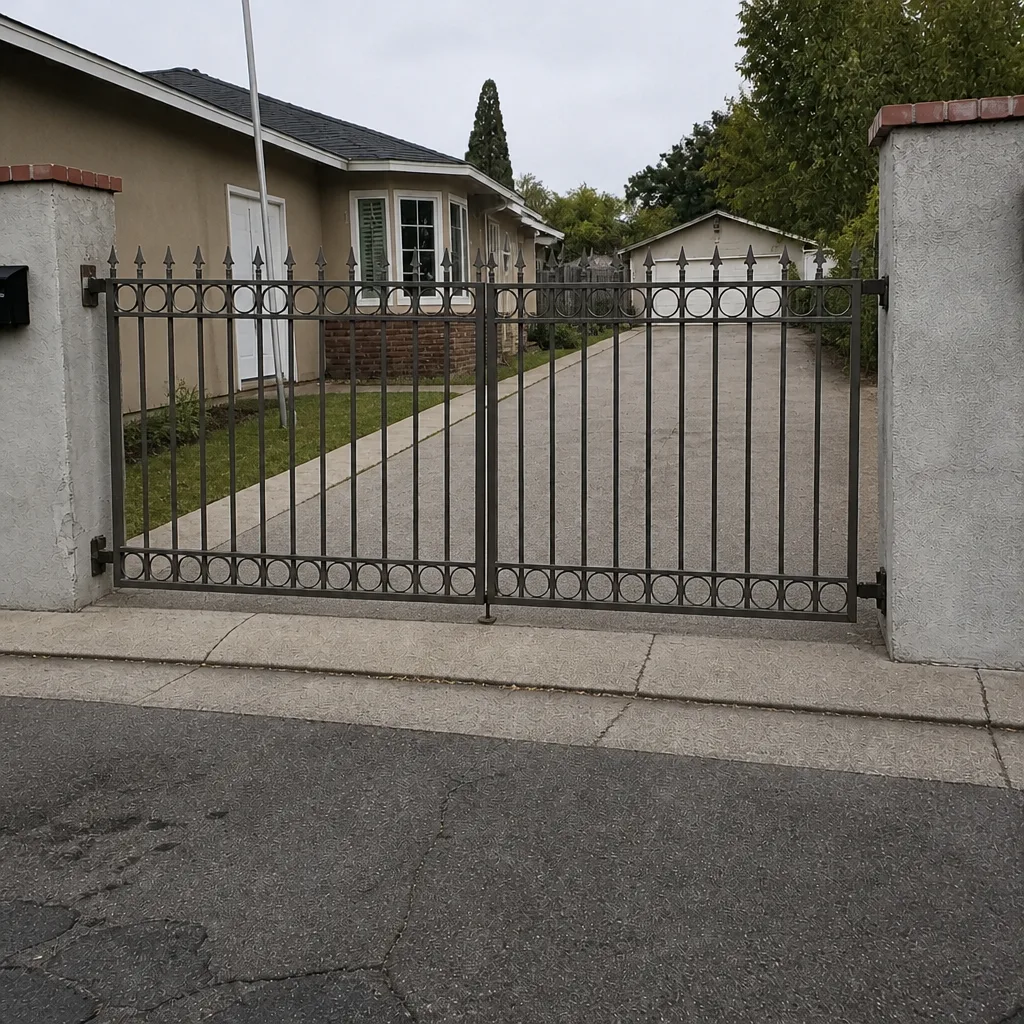 After
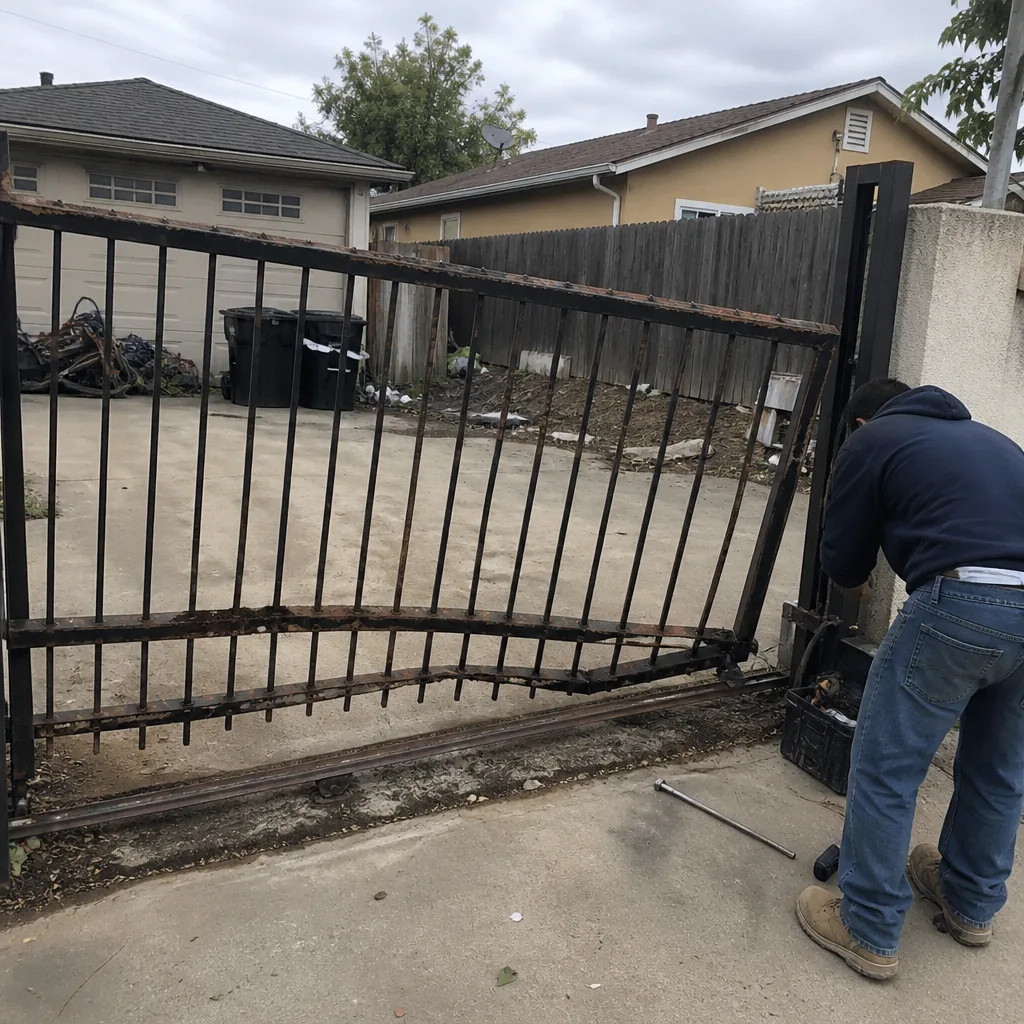 Before
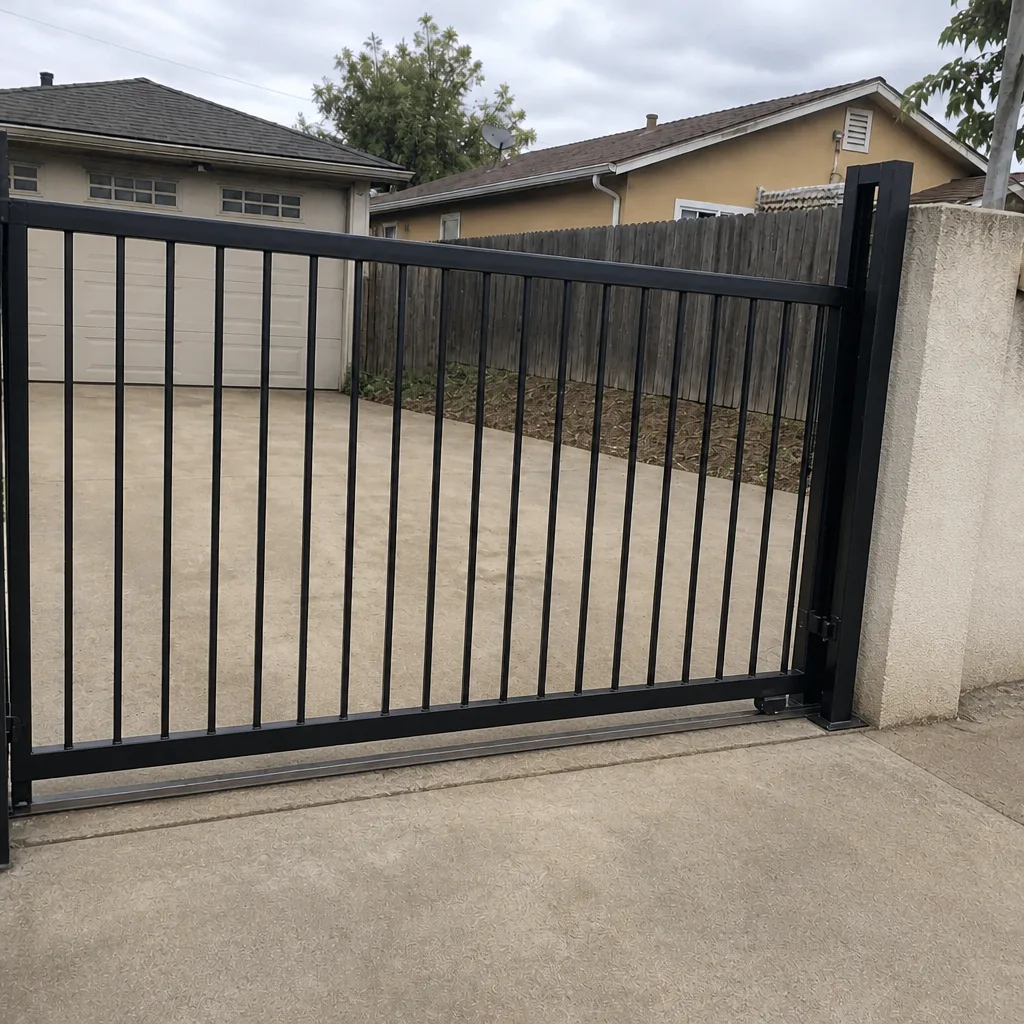 After
Frequently Asked Questions
On a chain-drive operator, lubricate the chain on your schedule but always sparingly with a chain-specific product, wiping the excess so it penetrates links rather than sitting on top. Heavy grease traps grit and damages the chain faster. For a low-use residential gate this is typically two to four times a year; high-cycle commercial gates need more frequent attention. If you’re unsure whether your chain or sprocket needs service, call (888) 457-5442 for a free estimate.
Hinges want a dry-film or light spray lubricant, not heavy grease and definitely not chain oil. Heavy grease collects dust and stiffens a swing gate’s motion. Apply sparingly and clean the hinge first. The wrong product on hinges is one of the most common causes of a stiff, straining gate.
You can handle cleaning, finish care on wood and iron, and visual checks yourself. Anything involving the operator, control board, safety-device wiring, or a gate off its track should be handled by a professional. The parts that could cause injury or a large repair are the ones best left to a trained technician. Call (888) 457-5442 for a free estimate.
Count how many times your gate opens and closes in a day. Under 20 cycles is low use, 20 to 50 is moderate, and above 50 is high cycle. Low-use gates can run on a two-to-four-time-per-year schedule; high-cycle gates should be on monthly specialist checks. When in doubt, a professional can read your gate’s wear and build the schedule around its actual usage.
Fairfield’s hot, dry summers stress electronics, wood, and alignment, while the concentrated rainy season drives corrosion and moisture intrusion. Pre-summer heat prep and post-rain corrosion checks do more than a fixed quarterly schedule because the climate applies its stress in two concentrated periods. Build your schedule around those two windows.
In most cases, yes. Operator, control board, and safety-sensor issues are often diagnosed and repaired the same visit when parts are available. Call (888) 457-5442. We answer 24/7. Fast dispatch from 7am to 7pm, Sunday through Friday. We work on your brand, including LiftMaster, DoorKing, Elite, Mighty Mule, and more.
The Bottom Line
A gate maintenance schedule is not a generic quarterly checklist. It starts with your drive type, material, and cycle count, and it’s timed to Fairfield’s two climate pressure points: pre-summer heat prep and post-rain corrosion checks. Match your lubricant to each component, scale frequency when usage climbs above 20 cycles per day, and don’t skip the safety-device and manual-release tests that prevent the most expensive failures. Whether your gate is a manual wood swing gate or a high-cycle commercial slide gate, the schedule should fit the gate. If you’d rather have a specialist build that schedule and handle the high-value checks in one annual visit, Gate Repair Fairfield is here to help. Call (888) 457-5442 for a free estimate. We answer 24/7. Fast dispatch from 7am to 7pm, Sunday through Friday.
For details on the area we cover, see Fairfield.
Written by the team at Gate Repair Fairfield.